
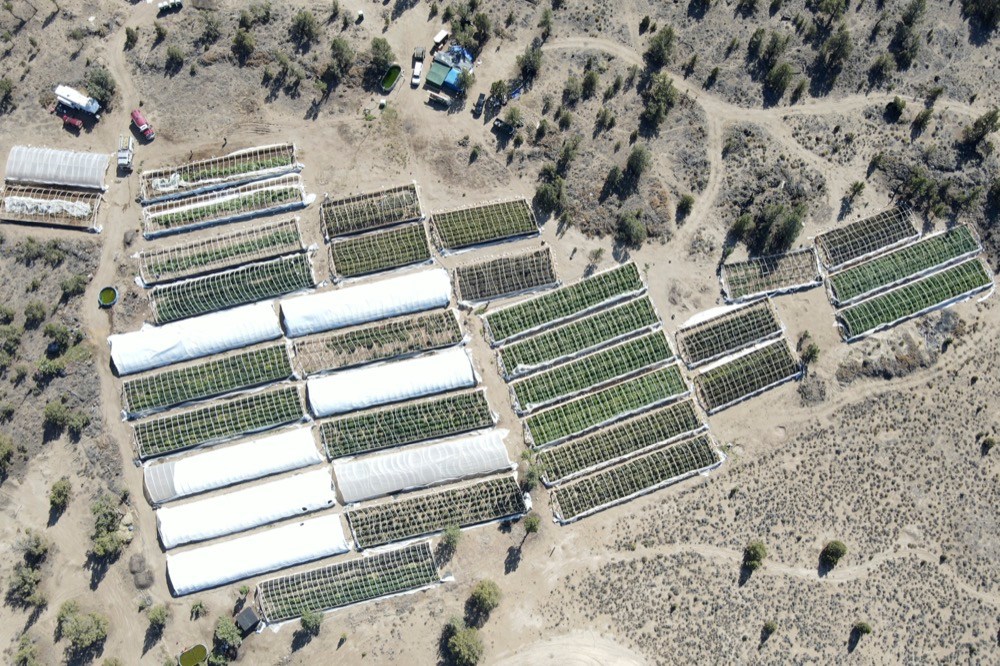
LA PINE, Ore. (AP) – Jack Dwyer pursued a dream of getting back to the land by moving in 1972 to an idyllic, tree-studded parcel in Oregon with a creek running through it.
“We were going to grow our own food. We were going to live righteously. We were going to grow organic,” Dwyer said. Over the decades that followed, he and his family did just that.
But now, Deer Creek has run dry after several illegal marijuana grows cropped up in the neighborhood last spring, stealing water from both the stream and nearby aquifers and throwing Dwyer’s future in doubt.
From dusty towns to forests in the U.S. West, illegal marijuana growers are taking water in uncontrolled amounts when there often isn’t enough to go around for even licensed users. Conflicts about water have long existed, but illegal marijuana farms – which proliferate despite legalization in many Western states – are adding strain during a severe drought.
In California, which legalized recreational marijuana in 2016, there are still more illegal cannabis farms than licensed ones, according to the Cannabis Research Center at the University of California, Berkeley.