
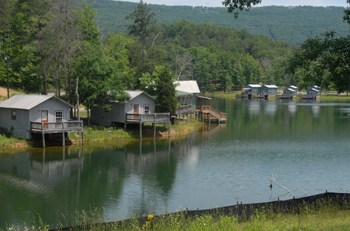
A luxury development in Rising Fawn, Ga., was marketed as a solid investment with promises of future profits, but even splendid views and close proximity to Chattanooga couldn’t save it.
Before the real estate collapse of 2009, three investors who now are struggling to make payments say they were duped into buying the lots on the promise of big returns. They are suing.
But the developer said the property suffered because there weren’t enough buyers to make good on predicted investment returns. Everything was completely above board, although the land was offered for zero money down and there were offers to make payments for the first year, the developer said.
A lawsuit filed in U.S. District Court in Rome, Ga., alleges that the Kimball, Tenn., developers of the Wild Moon Ranch & Resort committed racketeering, fraud and negligence; didn’t uphold their contract; practiced deception and conversion; and breached their fiduciary responsibility.
Plaintiffs Jose Velasquez, Maria Roldos and Paul Dyer say Southern Group LLC; its chief operators, Josh and Thomas Dobson; and 10 other defendants sold lots in their development — first called The Preserve at Rising Fawn — on the promise that within years the land’s value would be increased significantly when Southern Group added buildings, lakes and other utilities.
In the meantime, Southern Group extended the buyers an option to buy back the land within a year. During that period, Southern Group was supposed to develop the land and assist in making buyers’ mortgage payments and tax obligations.
The lawsuit alleges Southern Group never made mortgage payments, and that hurt the defendants’ credit standing. Now that the market has soured, landowners can’t sell their property and lenders aren’t offering money to build homes, either, the suit alleges.
“Southern Group defendants’ actions showed such willful misconduct, malice, fraud, wantonness, oppression or the entire want of care as to raise the presumption of conscious indifference to consequences and specific intent to cause harm,” wrote Richard Wayne, an attorney for the suing parties.
But Josh Dobson, one of the developers, said there were more than 100 buyers in the development and only three are suing. He said that supports his claim that the project was a good investment that suffered only because of the economy.
On the issue of making payments, Mr. Dobson said those promises were made only if Southern Group decided to buy back the land under a so-called “option agreement.” The intention was to use profits from the first sale to develop the land, buy it back and then sell it again at a profit sometime later, he said.
“I had to protect myself and make sure the payments were being made,” Mr. Dobson said. “There was a separate company to make the mortgage payments.”
But the contract said that there was no obligation on the part of the developers to continue those payments if they decided not to buy back the land.
“These (plaintiffs) are mad because they know we aren’t going to buy back the land,” Mr. Dobson said. “They don’t have an exit strategy.”
Mr. Dobson is encouraging all the landowners to build on their property and rent it, subdivide and sell it or wait out this financial downturn and sell their property later. In the meantime, he’s hopeful a California developer soon will buy the property and construct a resort on the grounds. He said he’s contractually prevented from naming the buyer or offering other details about the sale.
There have been a handful of deals similar to this one that have gone south, said Jim Winsett with the Chattanooga Better Business Bureau. There were no complaints against Mr. Dobson’s company, he said, but investors always should be wary.
“This was a development that required no money down,” Mr. Winsett said. “That’s always a red flag.”
On top of that, buyers always should look at investments and decide if they can afford the loss, he said.
“It’s all in the contract,” Mr. Winsett said. “When you are looking at an investment, you should always look at the flip side of what you are trying to accomplish. You have to decide if you can afford that loss.”