
Monday, November 9, 2026Nov 9

Former South Korean President Kim Young-sam dies at age 87

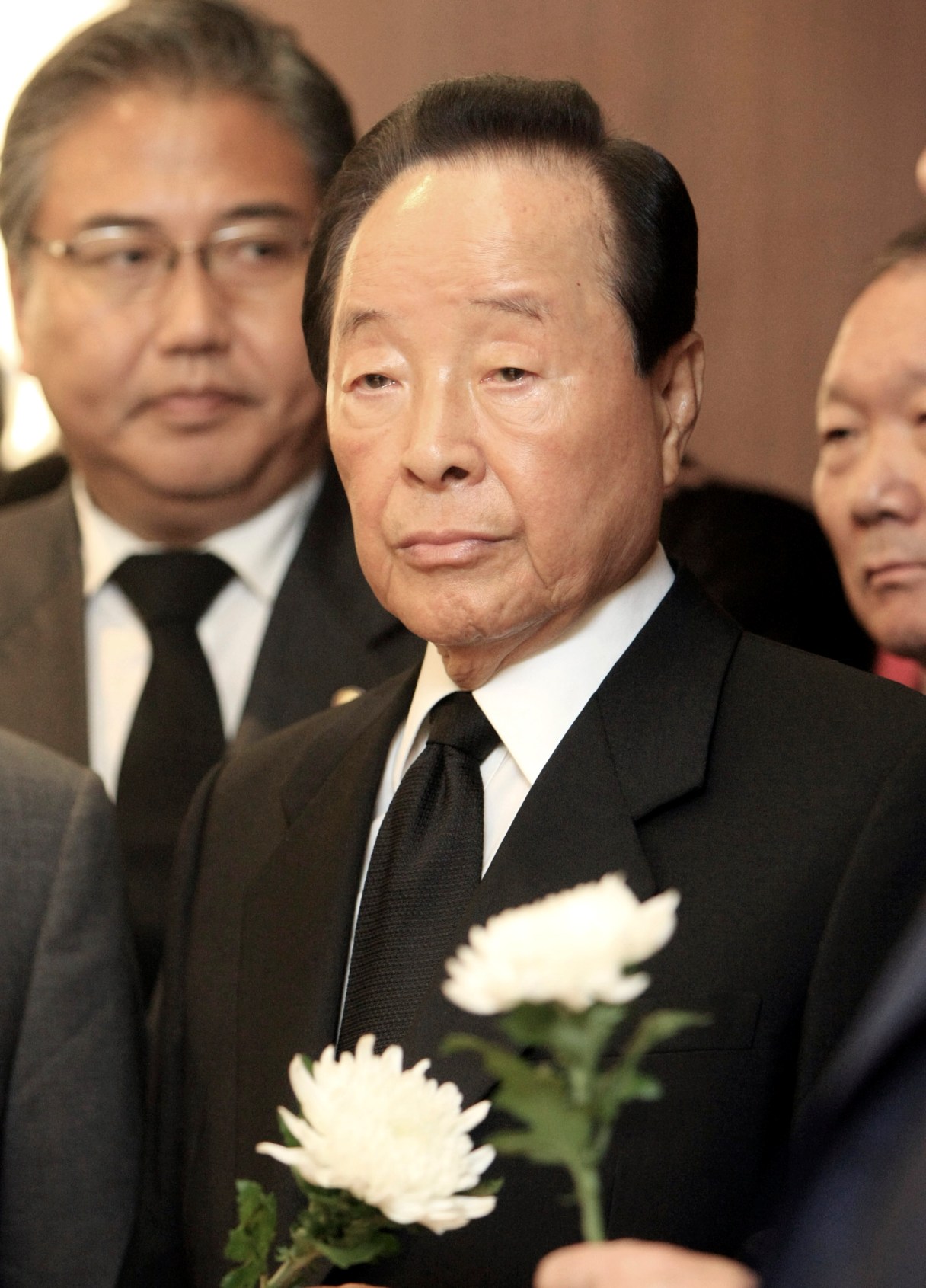
FILE - In this Aug. 18, 2009 file photo, former South Korean President Kim Young-sam visits the memorial room for the late former South Korean President Kim Dae-Jung at a hospital in Seoul, South Korea.  A South Korean hospital official says Kim Young-sam has died. He was 87. The chief of Seoul National University Hospital, Oh Byung-Hee, said Kim died there early Sunday, Nov. 22, 2015.(AP Photo/Yonhap, Chou Jae-koo)  ** KOREA OUT **
FILE - In this Aug. 18, 2009 file photo, former South Korean President Kim Young-sam visits the memorial room for the late former South Korean President Kim Dae-Jung at a hospital in Seoul, South Korea. A South Korean hospital official says Kim Young-sam has died. He was 87. The chief of Seoul National University Hospital, Oh Byung-Hee, said Kim died there early Sunday, Nov. 22, 2015.(AP Photo/Yonhap, Chou Jae-koo) ** KOREA OUT ** FILE - In this Aug. 18, 2009 file photo, former South Korean President Kim Young-sam visits the memorial room for the late former South Korean President Kim Dae-Jung at a hospital in Seoul, South Korea. A South Korean hospital official says Kim Young-sam has died. He was 87. The chief of Seoul National University Hospital, Oh Byung-Hee, said Kim died there early Sunday, Nov. 22, 2015.(AP Photo/Yonhap, Chou Jae-koo) ** KOREA OUT **

SEOUL, South Korea (AP) – Former President Kim Young-sam, who formally ended decades of military rule in South Korea and accepted a massive international bailout during the 1997-1998 Asian financial crisis, died Sunday. He was 87.

The chief of Seoul National University Hospital, Oh Byung-Hee, said Kim died there early Sunday. He said Kim is believed to have suffered from a severe blood infection and acute heart failure before he died.

Kim was taken to the hospital on Thursday due to a high fever, Oh said. In recent years, Kim had been treated at the hospital for stroke, angina and pneumonia, Oh added.

Kim was an important figure in South Korea’s pro-democracy movement and opposed the country’s military dictators for decades. As president, Kim laid the foundation for a peaceful power transfer in a country that had been marked by military coups.

During his presidency from 1993-1998, he had his two predecessors indicted on mutiny and treason charges stemming from a coup. Still, Kim pardoned the two convicted military strongmen – Chun Doo-hwan and Roh Tae-woo – at the end of his term.