
Wednesday, November 11, 2026Nov 11

Sovereignty fears cloud EU debate over new border guard plan

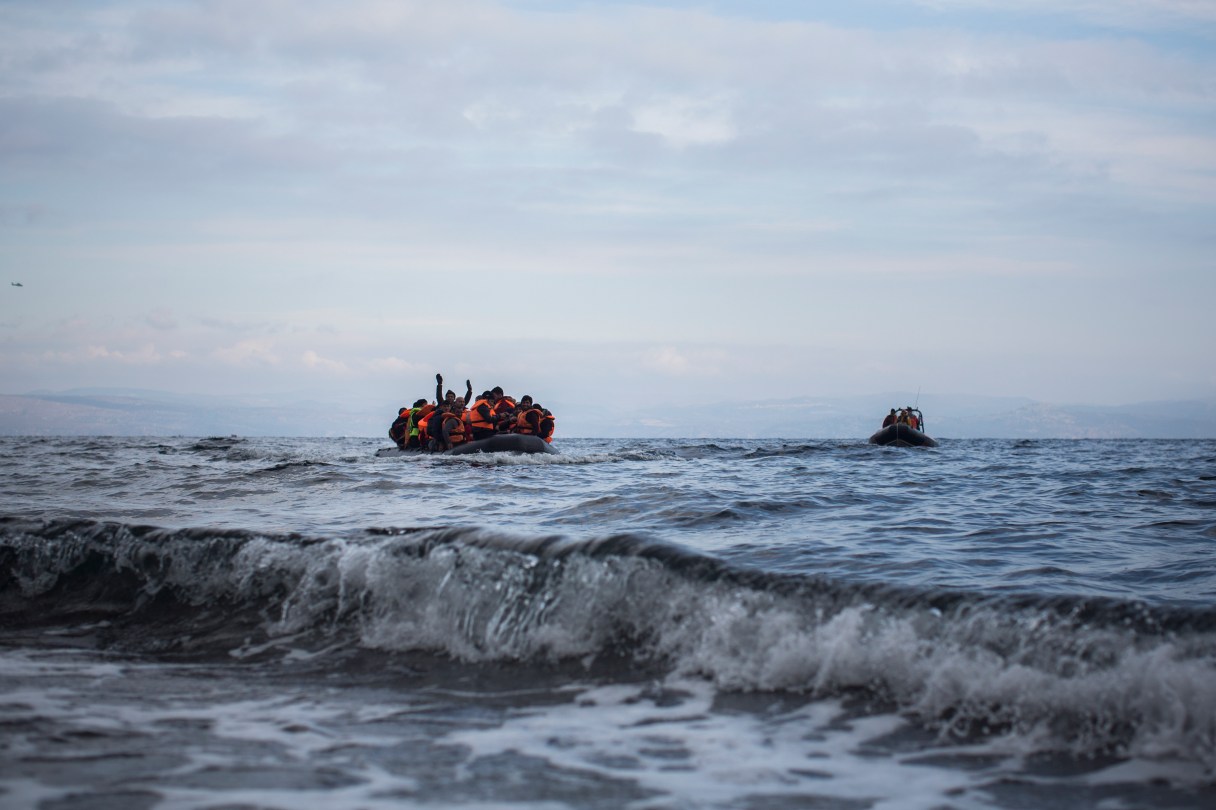
Migrants and refugees onboard a dinghy approach a coast after crossing a part of the Aegean sea from the Turkish coast to the northeastern Greek island of Lesbos, on Wednesday, Dec. 16, 2015. Greek authorities say two people have drowned and 83 others have been rescued after a wooden boat crammed with refugees sank in the Aegean Sea off the eastern Greek island of Lesbos. (AP Photo/Santi Palacios)
Migrants and refugees onboard a dinghy approach a coast after crossing a part of the Aegean sea from the Turkish coast to the northeastern Greek island of Lesbos, on Wednesday, Dec. 16, 2015. Greek authorities say two people have drowned and 83 others have been rescued after a wooden boat crammed with refugees sank in the Aegean Sea off the eastern Greek island of Lesbos. (AP Photo/Santi Palacios) Migrants and refugees onboard a dinghy approach a coast after crossing a part of the Aegean sea from the Turkish coast to the northeastern Greek island of Lesbos, on Wednesday, Dec. 16, 2015. Greek authorities say two people have drowned and 83 others have been rescued after a wooden boat crammed with refugees sank in the Aegean Sea off the eastern Greek island of Lesbos. (AP Photo/Santi Palacios)

BRUSSELS (AP) – European Union leaders were gathering Thursday for a potentially divisive debate amid a migration crisis on whether to create a new border guard with powers to unilaterally deploy to countries unable to manage their borders.

Hundreds of thousands of migrants have entered Greece this year, hopping into Europe through the Greek islands from Turkey, but barely a quarter of them have been registered or fingerprinted.

With pressure building on nations further north – preferred migrant destinations like Germany or Sweden – the EU’s executive arm has floated the border and coast guard plane to force Greece to act.

But the plan touches at the very heart of national identity – a country’s right to decide what kinds of forces can be allowed on its territory – and Greece, Italy, Croatia and Hungary are likely to oppose it.

Before chairing the summit in Brussels, European Council President Donald Tusk acknowledged that the plan is a “most controversial idea” but said that the passport-free Schengen area must be bolstered.