

Local sourcing
* Bi-Lo has about 20 local suppliers, including: Alchemy Spice Co., Barley Bones, LoAdebar, MayFly Coffee, Pure Sodaworks, Shuptrine’s Twisted Products, Smokin’ Joe’s Food Products, Taste of Gluten Free, Tennessee Moonshine Cakes, Uncle Bud’s Deep Fried Peanuts * Whole Foods Chattanooga has 80-100 local suppliers, including: Appalachian Bee, Big River Brewing Co., Blackberry Hills, LoAdebar, Niedlov’s, Old Mill Kettle Corn, Ruby’s Gold Granola, Sequatchie Cove Creamery, Tennessee Moonshine Cakes, Tranquil Acres Eggs, Velo Coffee RoastersSources: Bi-Lo, Whole Foods
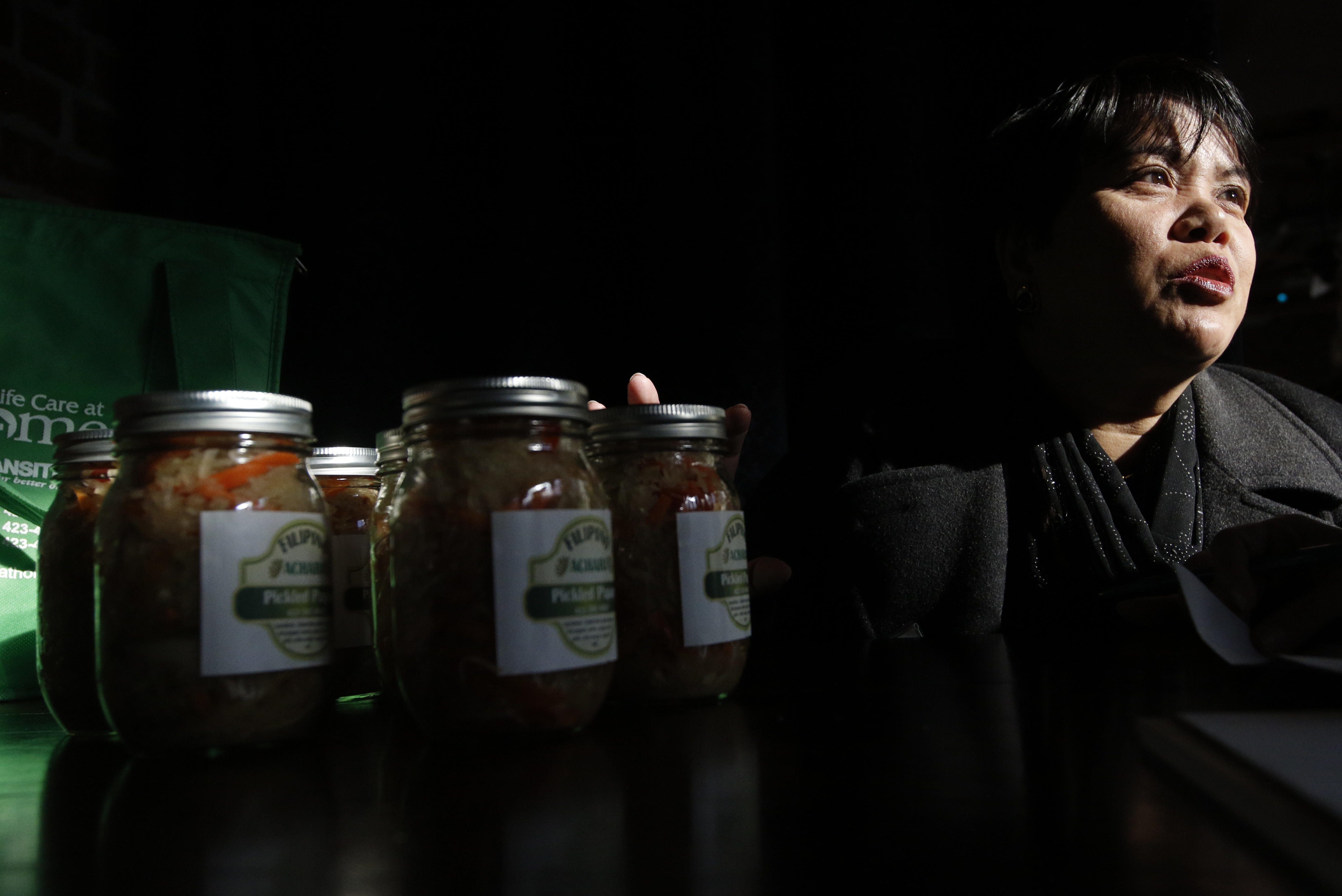 Lea Colegado waits to pitch her Pickled Papaya to Bi-Lo representatives.
The road from a neighborhood baker’s kitchen or a family farmer’s fields to the shelves of heavyweight corporate grocers can seem too complicated to navigate. But a growing groundswell for locally sourced foods and the public’s tilt toward healthier living are helping bridge that intimidating span.
The Bi-Lo chain one year ago launched its “Bi-Local” program, which has put products from 19 Chattanooga-area businesses in its stores. Small companies — sometimes just one-person operations — that made sauces and sweets, among other things, pitched their products to Bi-Lo executives in a Hixson Bi-Lo store last spring.
This year, like last year, another crop did the same, though in mid-January and in Blue Orleans restaurant in Chattanooga’s Southside.
“What’s the shelf life?” and “How are you going to seal the package?” were two in a long list of questions executives had. Many of the dozen or so makers and suppliers were not far enough along to be in grocery carts: They didn’t have UPC codes or labels; they didn’t have proper packaging or hadn’t nailed down distribution.