
Monday, November 9, 2026Nov 9

McManus: Why McCarthy and McConnell want you to forget about the Jan. 6 riot

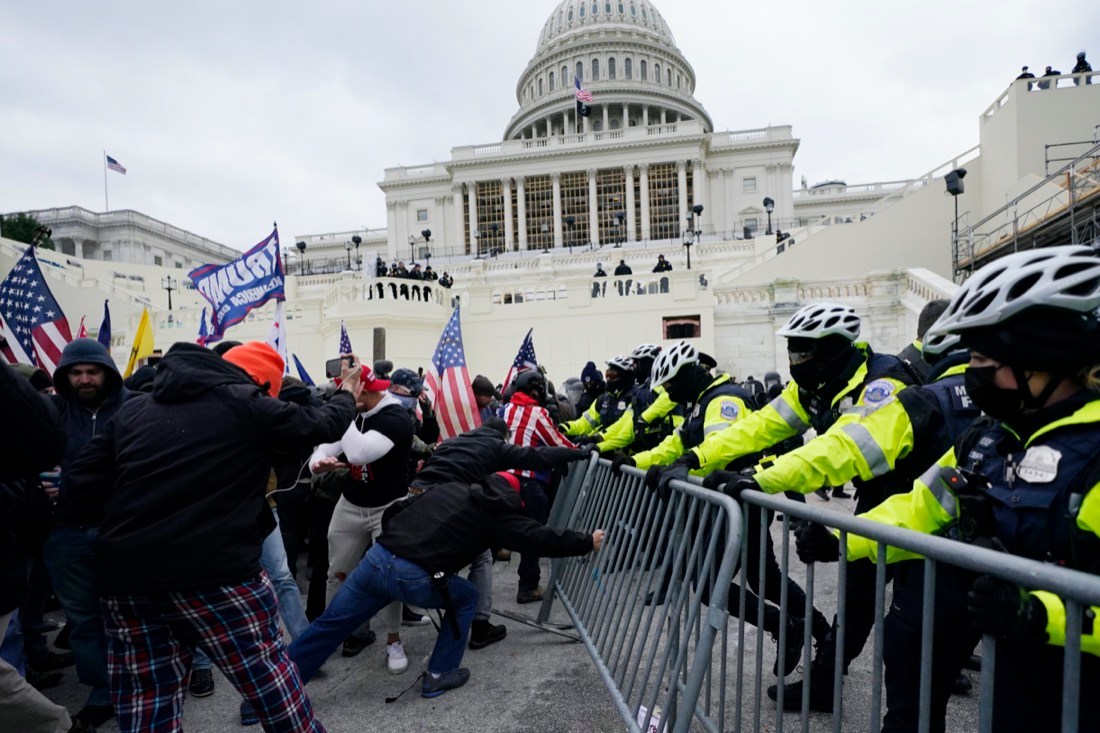
FILE - In this Wednesday, Jan. 6, 2021 file photo, Trump supporters try to break through a police barrier at the Capitol in Washington. Right-wing extremism has previously mostly played out in isolated pockets of America or in smaller cities. In contrast, the deadly attack by rioters on the U.S. Capitol targeted the very heart of government. It brought together members of disparate groups, creating the opportunity for extremists to establish links with each other. (AP Photo/Julio Cortez, File)
FILE - In this Wednesday, Jan. 6, 2021 file photo, Trump supporters try to break through a police barrier at the Capitol in Washington. Right-wing extremism has previously mostly played out in isolated pockets of America or in smaller cities. In contrast, the deadly attack by rioters on the U.S. Capitol targeted the very heart of government. It brought together members of disparate groups, creating the opportunity for extremists to establish links with each other. (AP Photo/Julio Cortez, File) FILE - In this Wednesday, Jan. 6, 2021 file photo, Trump supporters try to break through a police barrier at the Capitol in Washington. Right-wing extremism has previously mostly played out in isolated pockets of America or in smaller cities. In contrast, the deadly attack by rioters on the U.S. Capitol targeted the very heart of government. It brought together members of disparate groups, creating the opportunity for extremists to establish links with each other. (AP Photo/Julio Cortez, File)

It may seem impossible to imagine now, but there was a time not long ago when Kevin McCarthy and Mitch McConnell were angry with Donald Trump.

It was just after the invasion of the Capitol by a pro-Trump mob Jan. 6.

“The president bears responsibility,” McCarthy, the Republican leader in the House, said back then.

“The mob was fed lies,” McConnell, the Senate Republican leader, said. “They were provoked by the president.”

That was then; this is now.