
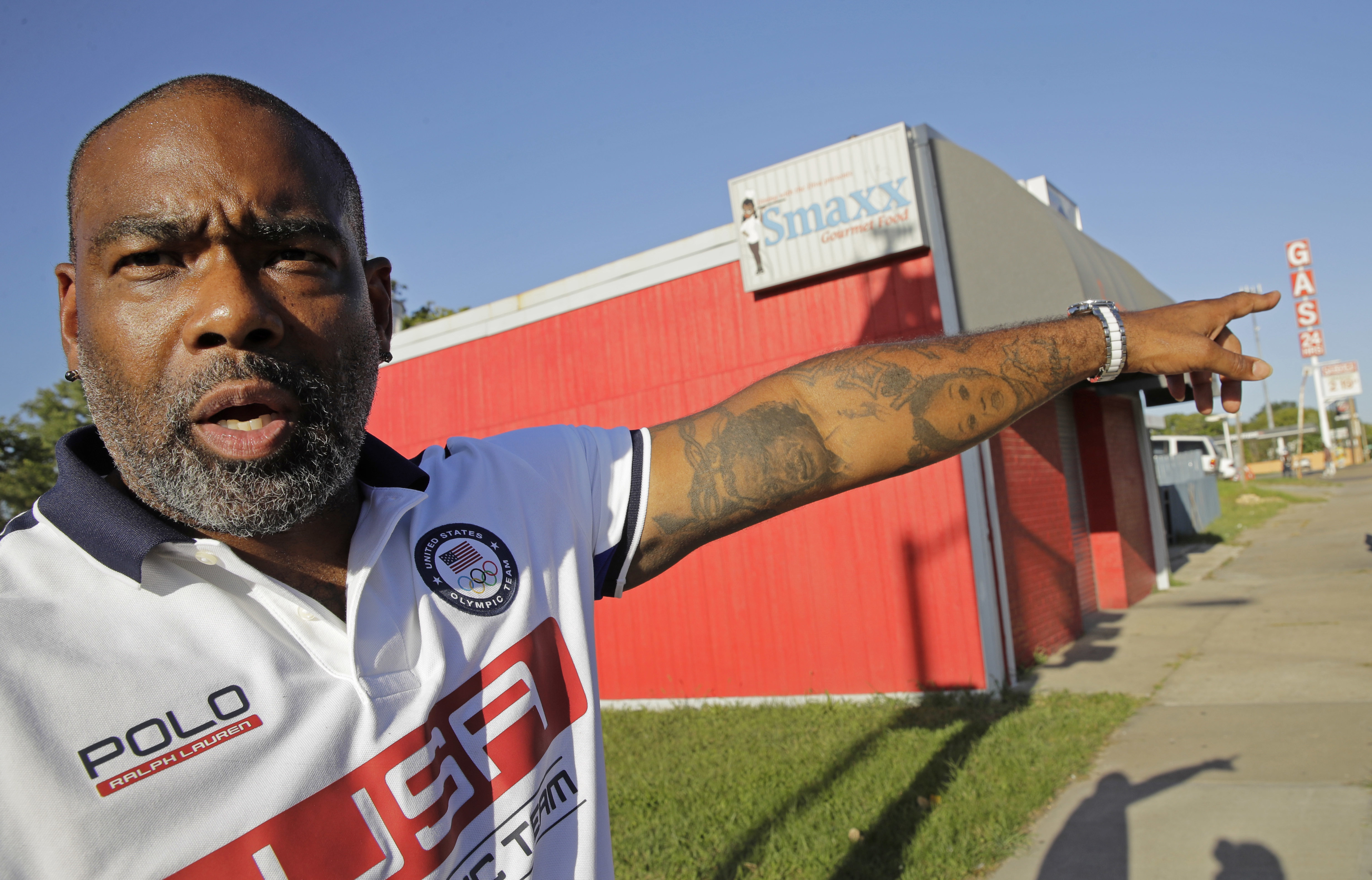
 Brandon Dixon stands outside the restaurant he is trying to open in Kansas City, Mo., on Tuesday, Sept. 6, 2016. He gave up his work in construction and decided to plow his family’s life’s savings into opening a restaurant in the impoverished neighborhood where he grew up. “We’ve always seen adversity,” Dixon says. “You have to not stand still, not be stagnating, keep moving forward.” (AP Photo/Charlie Riedel)
This year’s presidential campaign has underscored an economic paradox: Financially, black Americans and Hispanics are far worse off than whites, yet polls show minorities are more likely than whites to believe in the American Dream. And they are less anxious about the outcome of the election.
At 71, Carole Ramsey knows she has long been fortunate. She married a man who became a successful lawyer, raised their children in Kansas City’s affluent western suburbs and now enjoys a comfortable retirement full of international travel.
“We’ve lived a very good life,” Ramsey, who is white, said at an upscale shopping center in Leawood, Kan. Even so, she says she’ll vote for Donald Trump because she fears economic stagnation and global terrorism. “Our kids will not be able to live the way we did, that’s for sure.”
Ethel Tuggle, 72, backs Hillary Clinton, and a big reason is that her grandchildren’s circumstances show how life has improved for her family. “They’re starting jobs at $15, $20 an hour; I’ve never seen that sort of money,” said Tuggle, who is black and worked construction for Kansas City government until injuries forced her to retire early.
Tuggle says she’s amazed at the progress she’s witnessed since her childhood in rural Missouri, when she was barred from entering shoe stores and had to trace her foot on a sheet of paper so a salesman inside could fit her for shoes. Her grandchildren live under the nation’s first black president.