
Wednesday, November 11, 2026Nov 11

NYC to get huge immigration-themed exhibit by famed artist

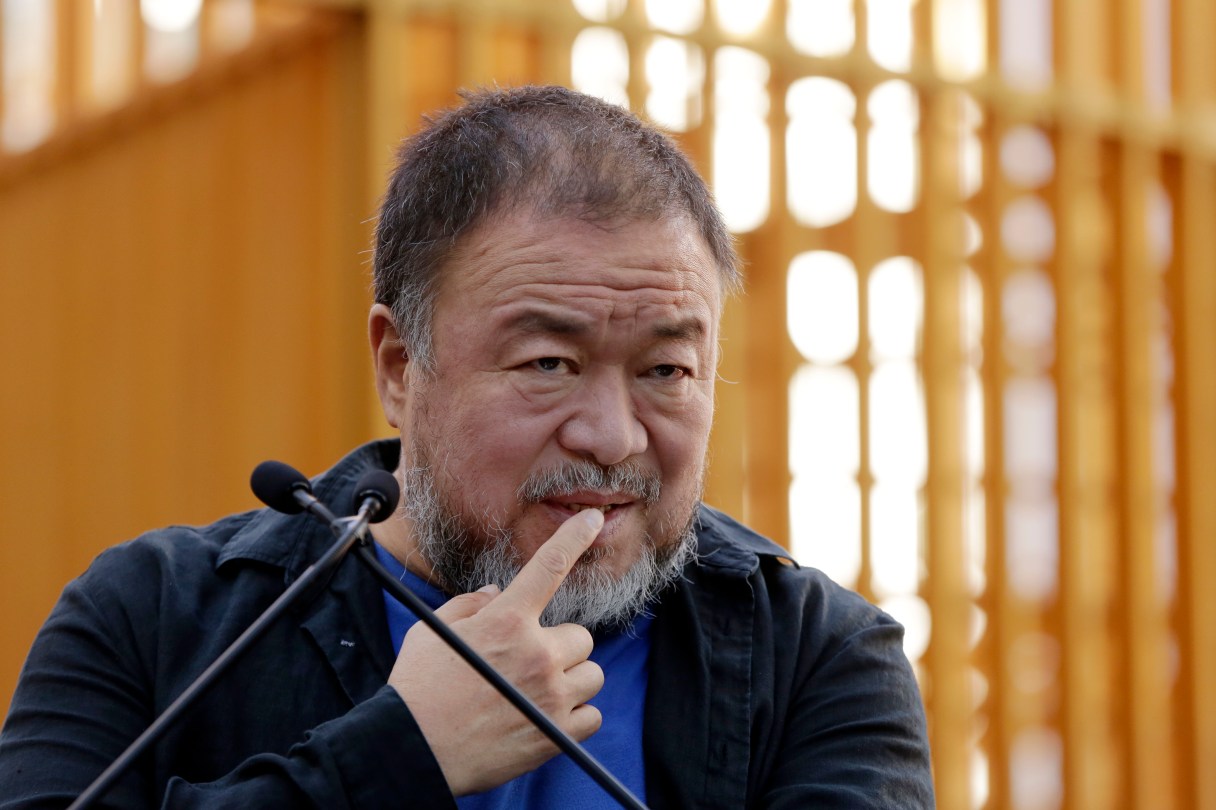
Chinese activist artist Ai Weiwei listens to a question from the audience as one of his "Good Fences Make Good Neighbors" installations is presented, in New York's Central Park, Tuesday, Oct. 10, 2017. The citywide exhibition, presented by Public Art Fund, will be on view at over 300 sites, including large-scale works in Central Park; the Washington Square Arch in Greenwich Village; and the Unisphere in Queens.(AP Photo/Richard Drew)
Chinese activist artist Ai Weiwei listens to a question from the audience as one of his "Good Fences Make Good Neighbors" installations is presented, in New York's Central Park, Tuesday, Oct. 10, 2017. The citywide exhibition, presented by Public Art Fund, will be on view at over 300 sites, including large-scale works in Central Park; the Washington Square Arch in Greenwich Village; and the Unisphere in Queens.(AP Photo/Richard Drew) Chinese activist artist Ai Weiwei listens to a question from the audience as one of his "Good Fences Make Good Neighbors" installations is presented, in New York's Central Park, Tuesday, Oct. 10, 2017. The citywide exhibition, presented by Public Art Fund, will be on view at over 300 sites, including large-scale works in Central Park; the Washington Square Arch in Greenwich Village; and the Unisphere in Queens.(AP Photo/Richard Drew)

NEW YORK (AP) – An enormous exhibition by the activist artist Ai Weiwei, designed to draw attention to the world’s refugee crisis, is going on view at some 300 sites around New York City.

“Good Fences Make Good Neighbors,” presented by the Public Art Fund, will be open to the public from Thursday until Feb. 11.

A global trend of “trying to separate us by color, race, religion, nationality” is a blow “against freedom, against humanity,” Ai said at a Manhattan press conference Tuesday. “That’s why I made a work related to this issue.”

Ai, now based in Berlin, is considered one of the world’s most successful artists.

He spent his childhood in a remote Chinese community after his father, a poet, was exiled by Communist authorities. He came to New York City as an art student in the 1980s, then returned to his homeland in 1993, using his art and public platform to address political issues. He was alternately encouraged, tolerated and harassed, spending time in detention and being barred for years from leaving the country.