
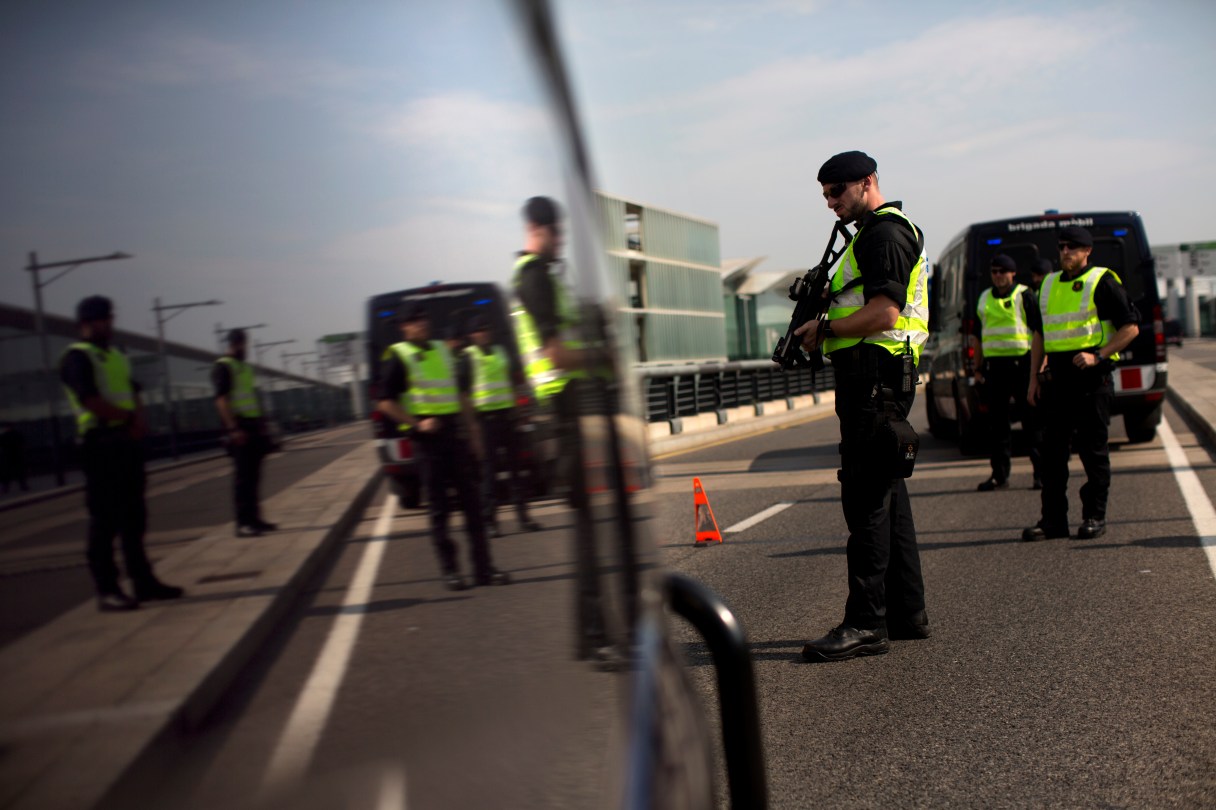
BARCELONA, Spain (AP) – Spain’s Interior Ministry began coordinating all police efforts Saturday in Catalonia, a tactic designed to halt the region’s referendum on secession following tensions with the regional police force controlled by the pro-independence Catalan government.
The move came at the request of the top prosecutor in Catalonia, an Interior Ministry official said, at a meeting Saturday with the regional Mossos d’Esquadra and the regional chiefs for the National Police and the Civil Guard, the two forces with a nationwide presence.
The “Mossos” – as they are often referred to in Catalonia – are the largest police force in the northeastern region. They have long been criticized for not cracking down hard enough on Catalonia’s planned Oct. 1 referendum on independence that the Spanish government considers illegal.
The civilian head of the Catalan police is part of the pro-secession regional government that is pushing ahead with plans for the vote despite the ballot’s suspension by Spain’s Constitutional Court.
Saturday’s meeting in Barcelona assessed the actions taken so far to stop the Oct. 1 vote, the ministry official said, requesting anonymity because he was not allowed to be named in media reports. He said the measure “does not mean taking command” of the Catalan police, but it is “simply to agree on a means of coordination.”