
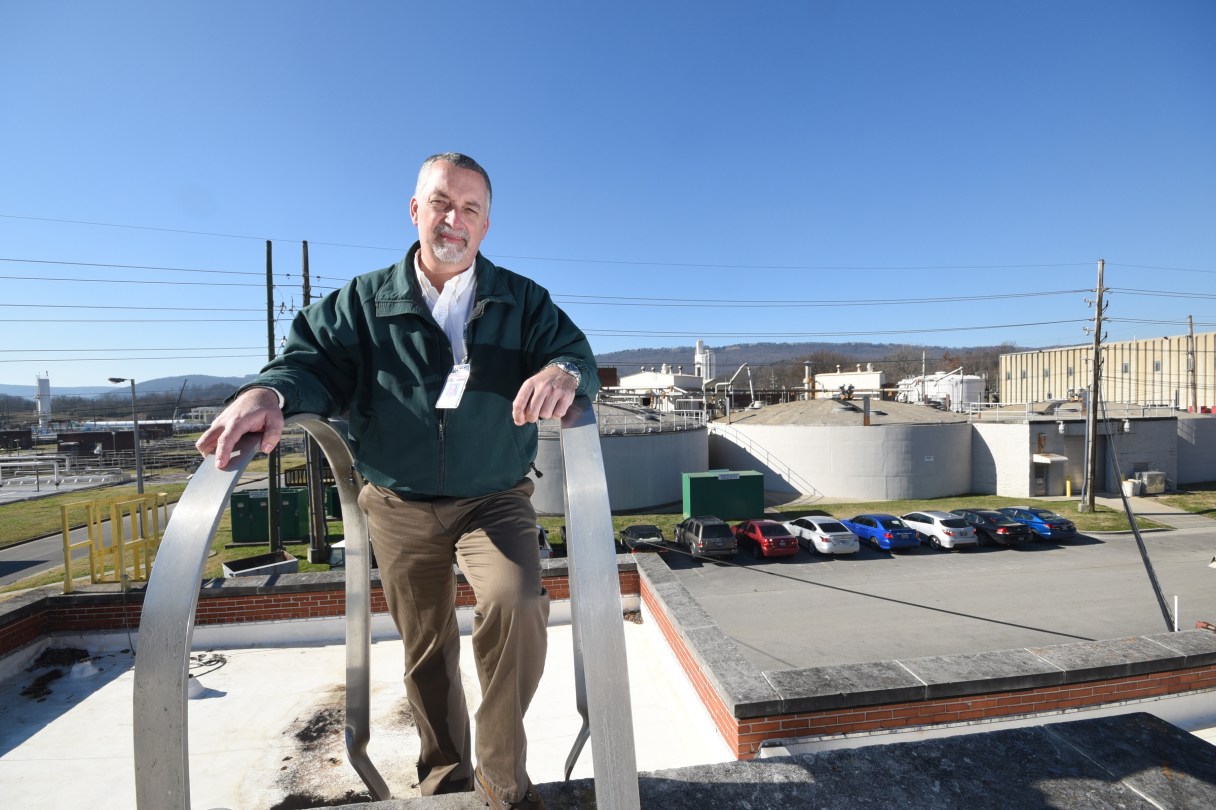
MOCCASIN BEND – Wherever you are when you flush – Fort Oglethorpe or Collegedale, Chattanooga, Lookout Mountain, Red Bank, East Ridge or unincorporated Hamilton County – it all ends up here.
From a network of pipes crisscrossing the metro area, 65 million gallons of sewage arrive every day, filling unassuming silver-painted tanks on the side of the Tennessee River, beneath the high brow of Lookout Mountain.
By the numbers
› Waste treated: 65 million gallons daily› Methane generated: 300,000 cubic feet daily› Annual electric bill: $4 million
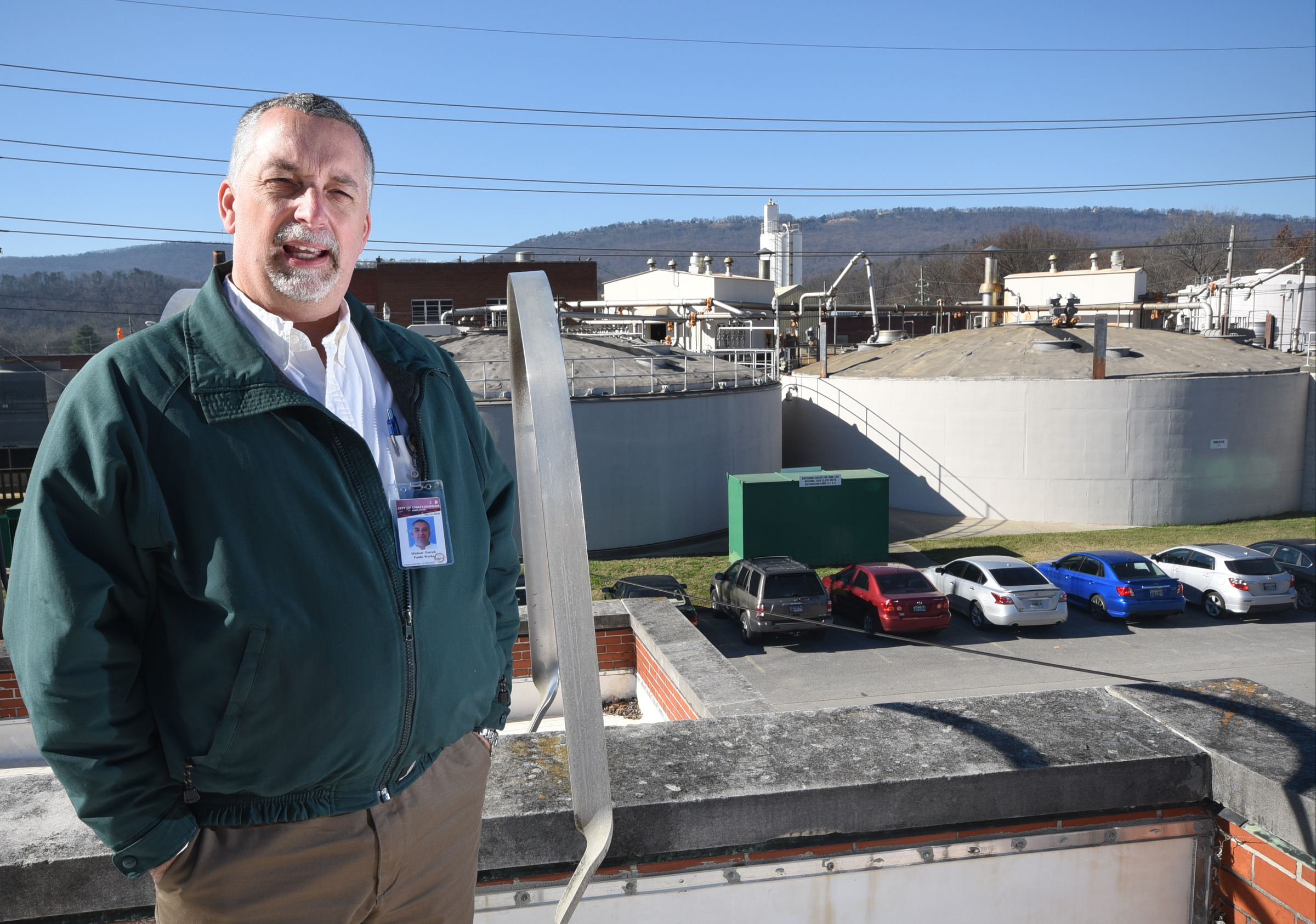 Public Works director of Waste Resources Division Michael Patrick stands in front of the six (round) anaerobic digesters at the Chattanooga Waste Water Treatment Plant on Moccasin Bend.
Tiny microbes go to work to break it down, converting the solid waste into methane gas – 300,000 cubic feet a day – that is currently burned off.
But if Chattanooga Wastewater Resources officials have their way, that gas will all be converted into electricity.