
Tuesday, November 10, 2026Nov 10

Nebraska lawmakers vote to abolish death penalty

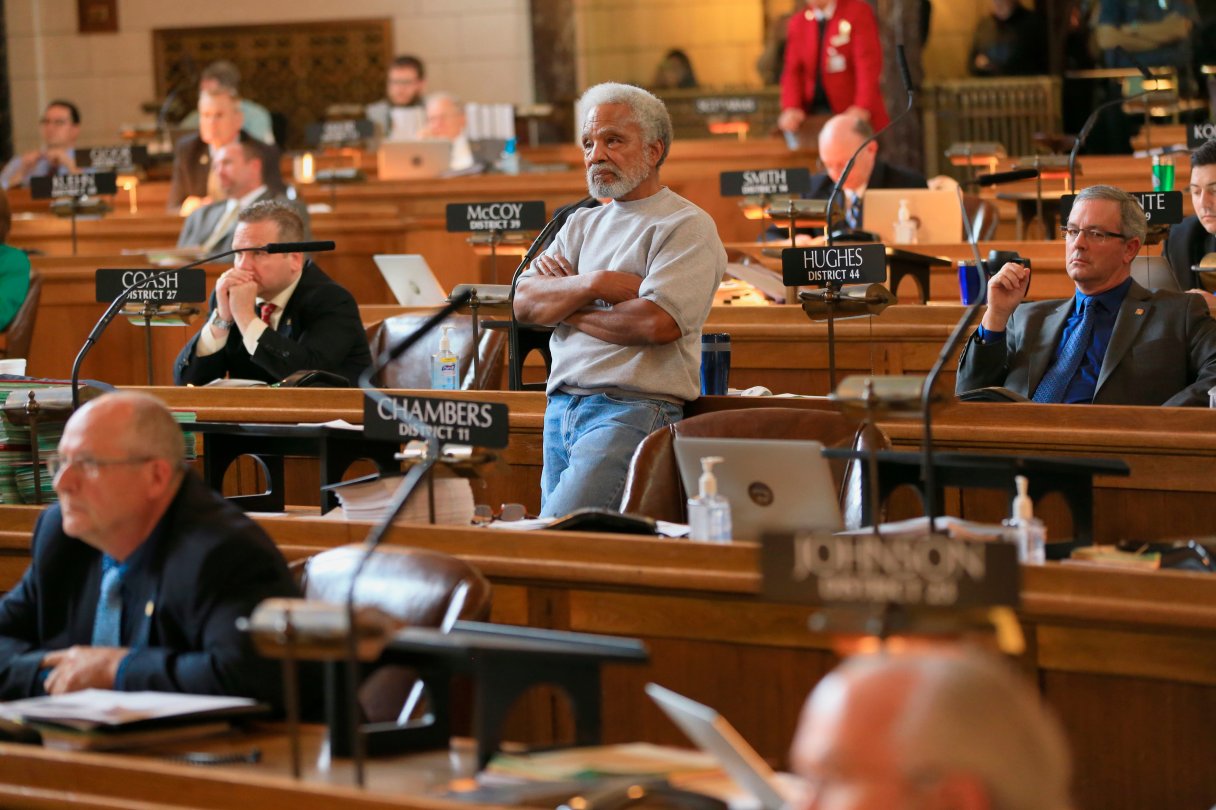
State Sen. Ernie Chambers, of Omaha, standing center, follows the vote on his bill abolishing the death penalty, which passed with enough votes to override a promised veto from Gov. Pete Ricketts, Wednesday, May 20, 2015, in Lincoln, Neb. The 32-15 vote was bolstered by conservative senators who oppose capital punishment for fiscal, religious and pragmatic reasons. (AP Photo/Nati Harnik)
State Sen. Ernie Chambers, of Omaha, standing center, follows the vote on his bill abolishing the death penalty, which passed with enough votes to override a promised veto from Gov. Pete Ricketts, Wednesday, May 20, 2015, in Lincoln, Neb. The 32-15 vote was bolstered by conservative senators who oppose capital punishment for fiscal, religious and pragmatic reasons. (AP Photo/Nati Harnik) State Sen. Ernie Chambers, of Omaha, standing center, follows the vote on his bill abolishing the death penalty, which passed with enough votes to override a promised veto from Gov. Pete Ricketts, Wednesday, May 20, 2015, in Lincoln, Neb. The 32-15 vote was bolstered by conservative senators who oppose capital punishment for fiscal, religious and pragmatic reasons. (AP Photo/Nati Harnik)

LINCOLN, Neb. (AP) – Nebraska lawmakers gave final approval on Wednesday to a bill abolishing the death penalty that would make it the first conservative state to do so since 1973 if the measure becomes law.

The vote margin in the unicameral Legislature was more than enough to override a promised veto from Republican Gov. Pete Ricketts, a staunch supporter of capital punishment, who said that it was a “dark day” for public safety.

“Nebraska has a chance to step into history – the right side of history – to take a step that will be beneficial toward the advancement of a civilized society,” said Sen. Ernie Chambers of Omaha, an independent who has fought for four decades to the end the death penalty.

The Nebraska vote marks a shift in the national debate because it was bolstered by conservatives who oppose the death penalty for religious reasons, cast it as a waste of taxpayer money and question whether government can be trusted to manage it. Traditionally, law-and-order conservatives in the United States have stood among the strongest supporters of the ultimate punishment.

Nebraska hasn’t executed a prisoner since 1997, and some lawmakers have argued that constant legal challenges will prevent the state from doing so again.