
Thursday, October 29, 2026Oct 29

This story is free to read.

1 beetle may have brought lethal tree disease now across SE

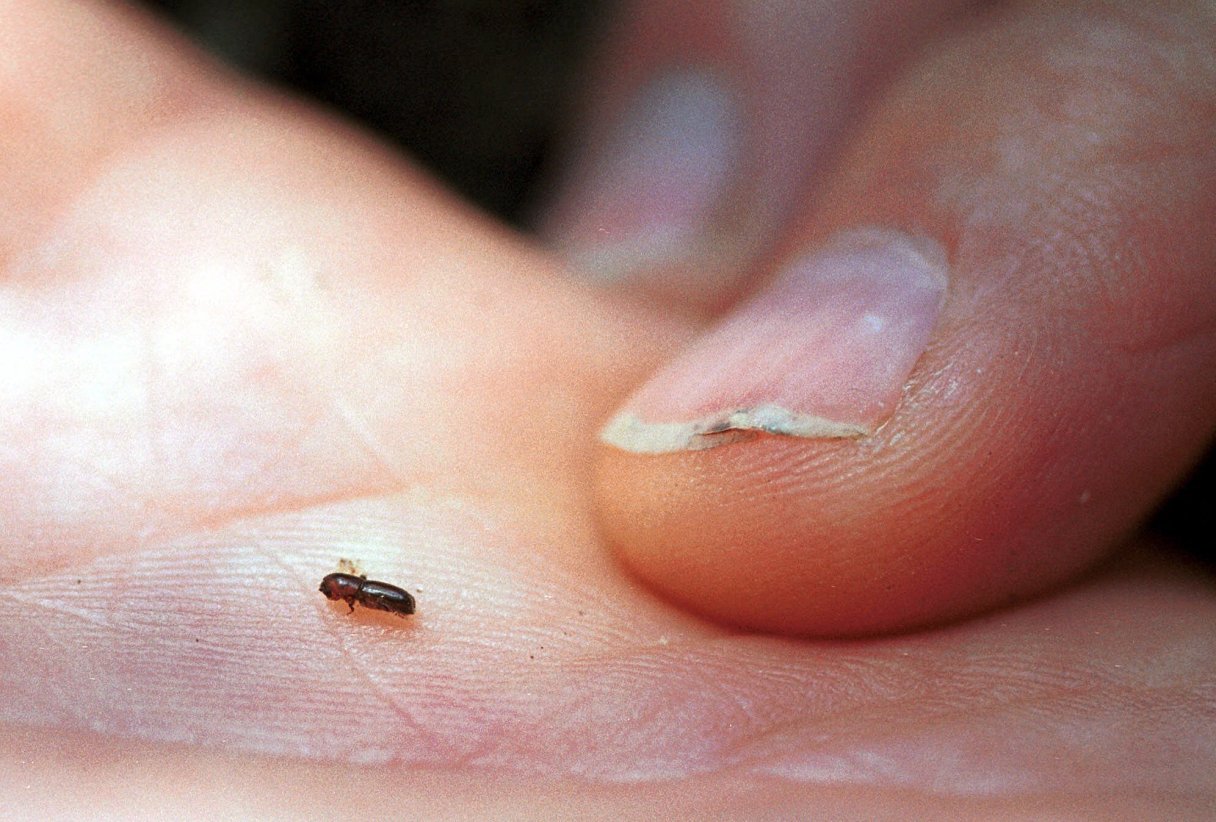
FILE - In this Tuesday, Sept. 14, 1999 file photo, Pavel Svihra, a horticultural advisor with the University of California, holds an ambrosia beetle in his palm in San Rafael, Calif. Researchers from Mississippi and Florida say a single fungus-farming beetle inadvertently imported to Georgia apparers to be the one and only source of a disease that has killed an estimated 300 million redbay trees and is threatening Florida's avocado groves. The beetle and its fungus arrived in Georgia in 2002, and their clones have spread west into Texas and north to North Carolina. (AP Photo/Eric Risberg)
FILE - In this Tuesday, Sept. 14, 1999 file photo, Pavel Svihra, a horticultural advisor with the University of California, holds an ambrosia beetle in his palm in San Rafael, Calif. Researchers from Mississippi and Florida say a single fungus-farming beetle inadvertently imported to Georgia apparers to be the one and only source of a disease that has killed an estimated 300 million redbay trees and is threatening Florida's avocado groves. The beetle and its fungus arrived in Georgia in 2002, and their clones have spread west into Texas and north to North Carolina. (AP Photo/Eric Risberg) FILE - In this Tuesday, Sept. 14, 1999 file photo, Pavel Svihra, a horticultural advisor with the University of California, holds an ambrosia beetle in his palm in San Rafael, Calif. Researchers from Mississippi and Florida say a single fungus-farming beetle inadvertently imported to Georgia apparers to be the one and only source of a disease that has killed an estimated 300 million redbay trees and is threatening Florida's avocado groves. The beetle and its fungus arrived in Georgia in 2002, and their clones have spread west into Texas and north to North Carolina. (AP Photo/Eric Risberg)

NEW ORLEANS (AP) – Researchers from Mississippi and Florida say a single female fungus-farming beetle could have been the source of a disease that has killed an estimated 300 million redbay trees and threatens Florida’s avocado groves.

The beetle and her fungus arrived in Georgia in 2002, and their clones have spread west into Texas and north to North Carolina.

Mississippi State University researcher John Riggins says they could spread nearly to Canada on sassafras, the source of the powder used to thicken filé (FEE-lay) gumbo.

Researchers at the University of Florida say bay leaves used for cooking could also face problems if this species gets into the Mediterranean areas where bay laurels are cultivated and grow wild.

The U.S. infections all apparently come from one itty bitty beetle, or one beetle and her immediate offspring.