
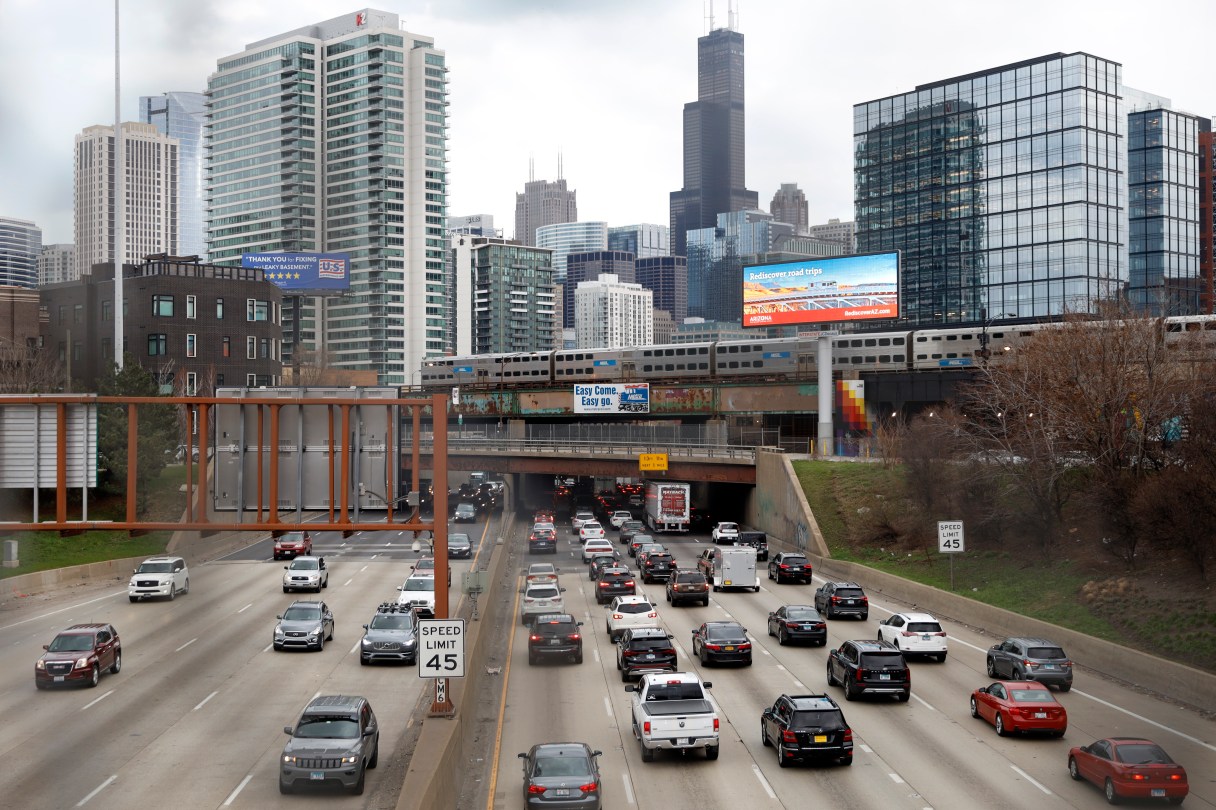
Each year since 1998, the American Society of Civil Engineers has issued its assessment of the state of U.S. infrastructure. For the first time in 20 years, the 2021 report card improved slightly: from D+ to C-. Woohoo. While marginal progress has been made primarily at the state and local government level in better allocating limited resources, too much American infrastructure remains in a dismal state.
The society’s assessment concludes with a pointed but self-evident conclusion: The only remedy for underinvestment is increased investment. Failure may leave us watching China from behind.
Only two categories got decent marks: Rail transport received a B, while ports landed a B- grade. Both sectors benefited greatly from extensive private ownership and capital investment driven by potential profits. Most public infrastructure, on the other hand, still is languishing. Aviation, schools, inland waterways and wastewater treatment systems earned D+ grades. Close behind were solid D marks for roads, dams and levees. Bringing up the rear, U.S. transit systems claimed a big fat D-.
According to the report, the United States must roughly double its annual investment between now and 2040 to attain a structural framework that efficiently supports economic growth and provides some hope for closing the gap with China.
China invested 8.5% of its GDP per year on physical and digital infrastructure between 1998 and 2011 and continues to spend nearly 6% per year on transportation alone. According to the World Bank, that investment helped China slash its poverty rate from 40% in 1999 to 0.5% in 2015. By contrast, the United States at its post-war peak during the mid-1960s invested slightly less than 6% of its output in building and supporting the nation’s critical support systems. Today, America invests around 2%.