
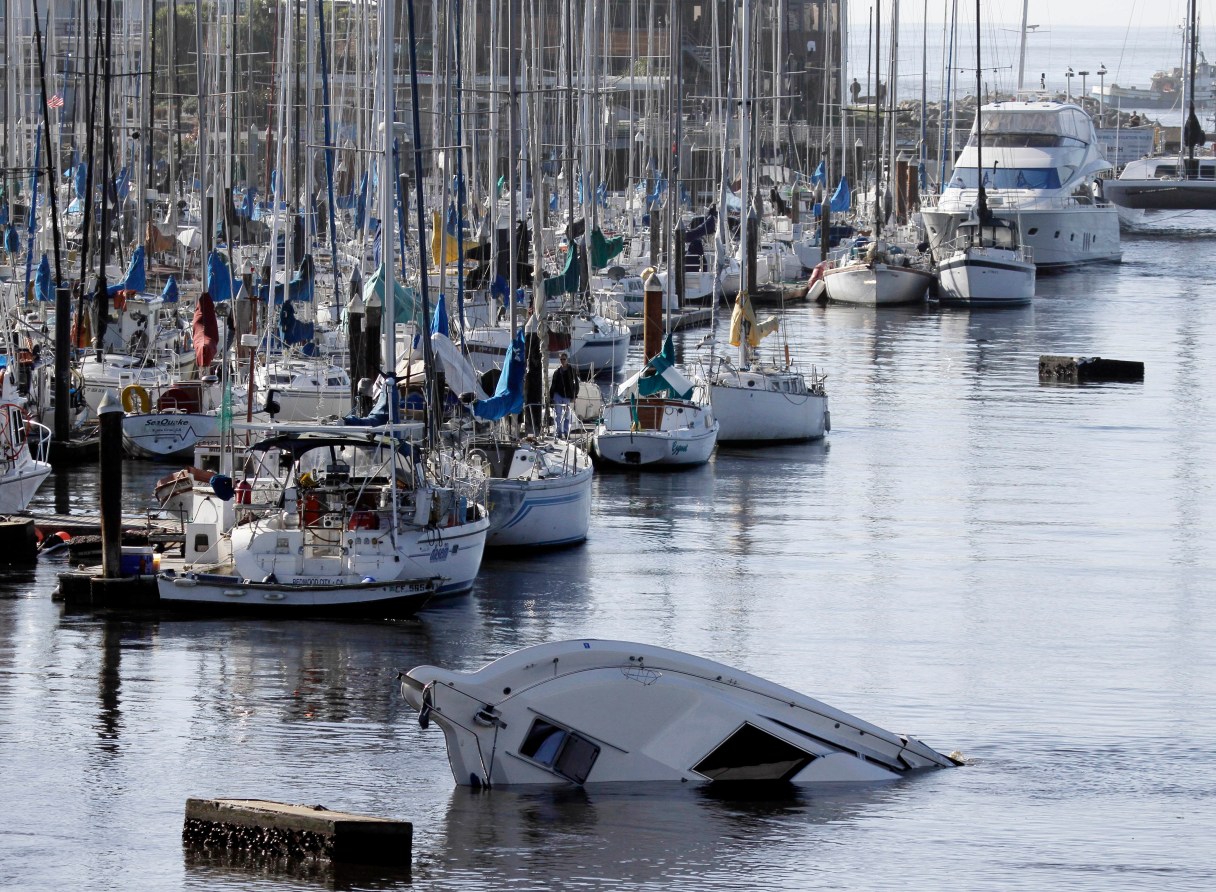
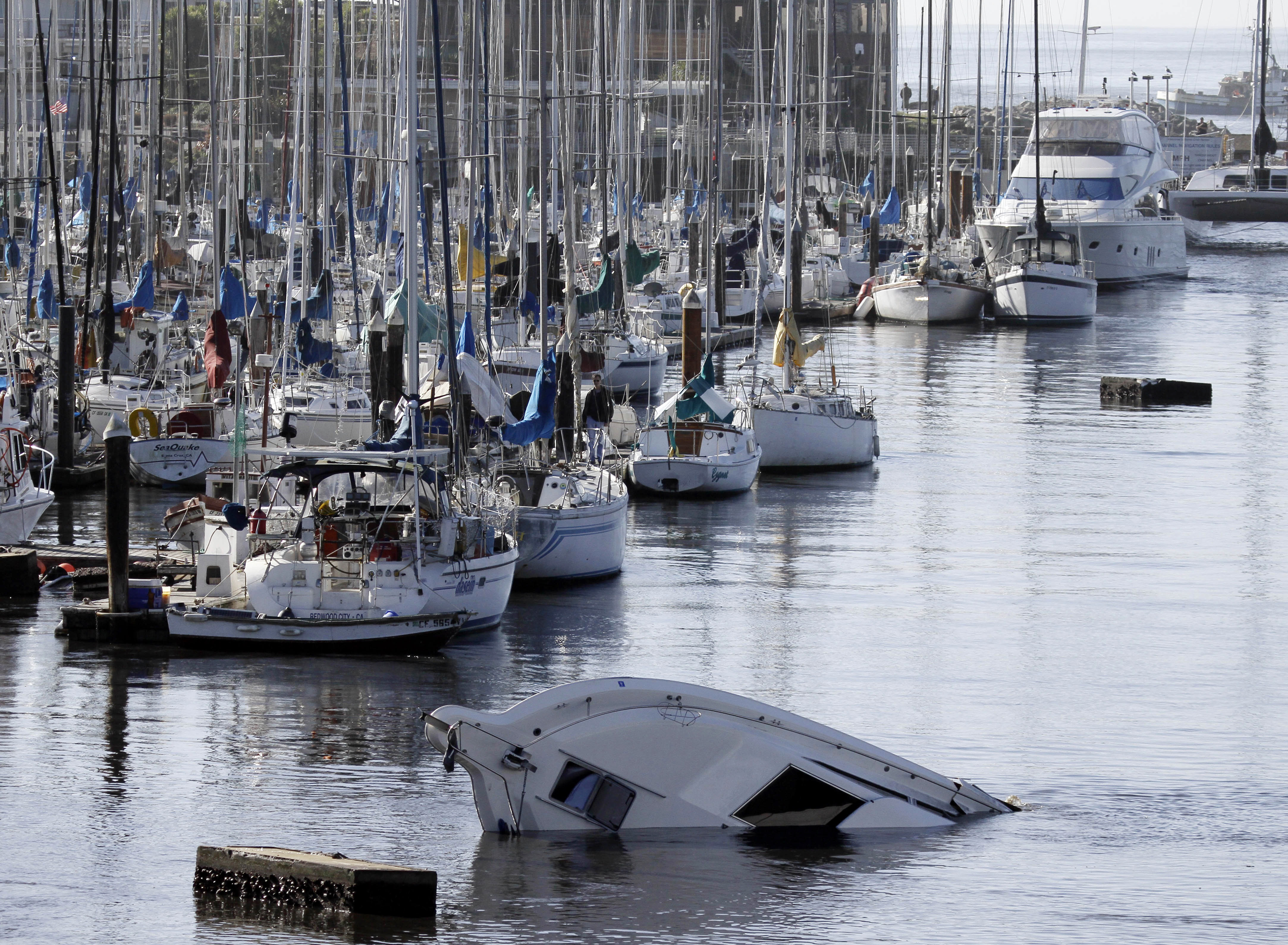
 A boat sinks into the ocean in the aftermath of the surge caused by a tsunami on the harbor in Santa Cruz, Calif., Friday, March 11, 2011. A ferocious tsunami unleashed by Japan’s biggest recorded earthquake slammed into its eastern coast Friday, killing hundreds of people as it carried away ships, cars and homes, and triggered widespread fires that burned out of control. Hours later, the waves washed ashore on Hawaii and the U.S. West coast, where evacuations were ordered from California to Washington but little damage was reported. The entire Pacific had been put on alert _ including coastal areas of South America, Canada and Alaska _ but waves were not as bad as expected. (AP Photo/Marcio Jose Sanchez)
By Matt Weiser
SACRAMENTO, Calif. – Much of California is less vulnerable to the kind of tsunami wreckage caused Friday in Japan because the state’s coastline is generally steeper, a University of California quake expert said.
Steven Ward, a research geophysicist at UC Santa Cruz, said there are exceptions to that statement, including the Los Angeles coastal plain, many harbor areas, and any place where a major river enters the sea, such as the Moss Landing area at Monterey Bay.
But in general, he said California’s steep bluff-encrusted shore would block the kind of broad waves that swept buildings and ships far inland in Sendai, the Japanese city of 1 million people near the epicenter of Friday’s quake.
Ironically, he said it is the San Andreas earthquake fault that keeps California’s coast so steep.