
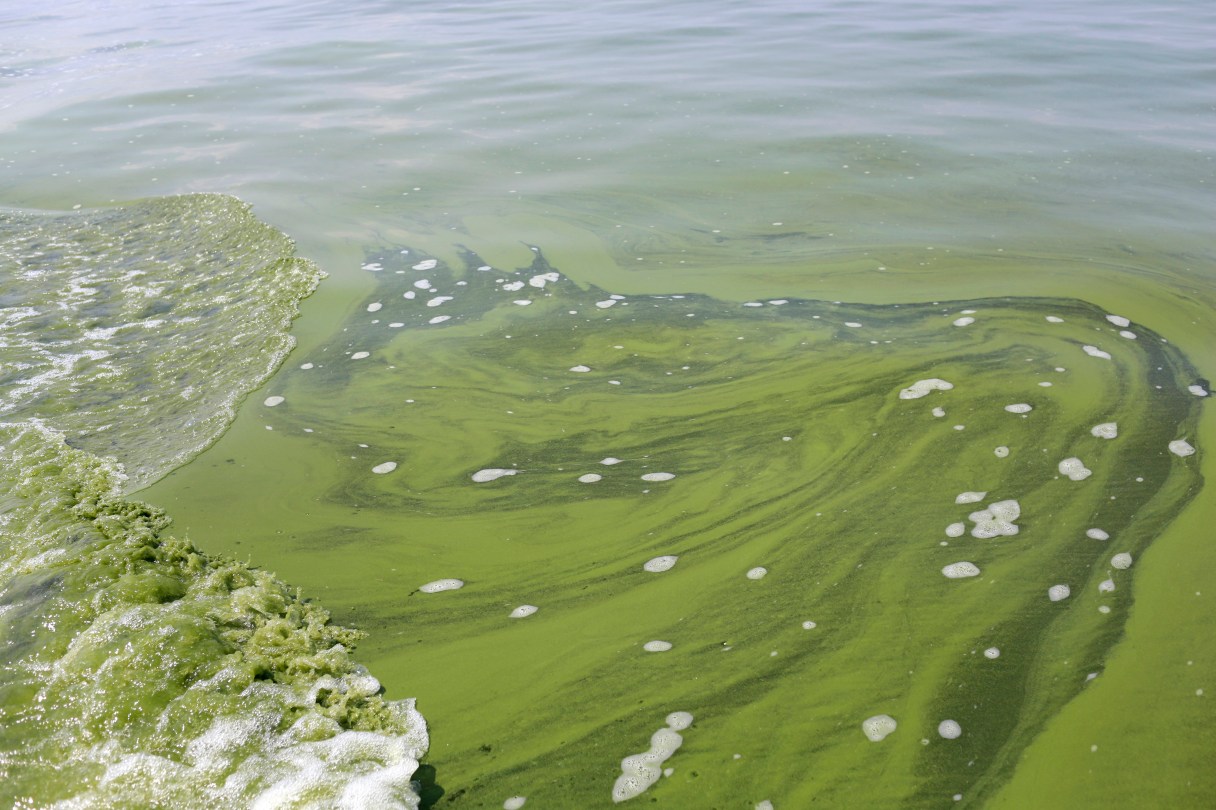
TRAVERSE CITY, Mich. (AP) – A “significant” harmful algae bloom is expected to form in western Lake Erie this summer, though it probably won’t be as large as some previous formations that posed health risks and hampered tourism, scientists said Thursday.
The National Oceanic and Atmospheric Administration and research partners released their annual algae forecast for the shallowest and warmest of the Great Lakes, where massive algae formations are a recurring threat to the environment and the economy. Toxic contamination from a 2014 bloom prompted a two-day shutdown of tap water systems for 400,000 people in Toledo, Ohio, and southeastern Michigan.
“It’ll be large, green and ugly and will cause the same kinds of issues it has in the past for charter boat captains trying to get people out to fish,” said Don Scavia, a University of Michigan scientist.
It’s unlikely to create another drinking water crisis like the one three years ago. It resulted from a rare combination of factors, including high levels of toxins generated by the bloom and its location near Toledo’s offshore water intake facility, NOAA oceanographer Rick Stumpf said. Monitoring has been stepped up since then and early-detection devices installed, he added.
Still, the situation underscores the need to reduce the flow of nutrients into the lake that feed algae and similar bacteria, primarily from farms but also sewage treatment plants and other sources, Stumpf said.