
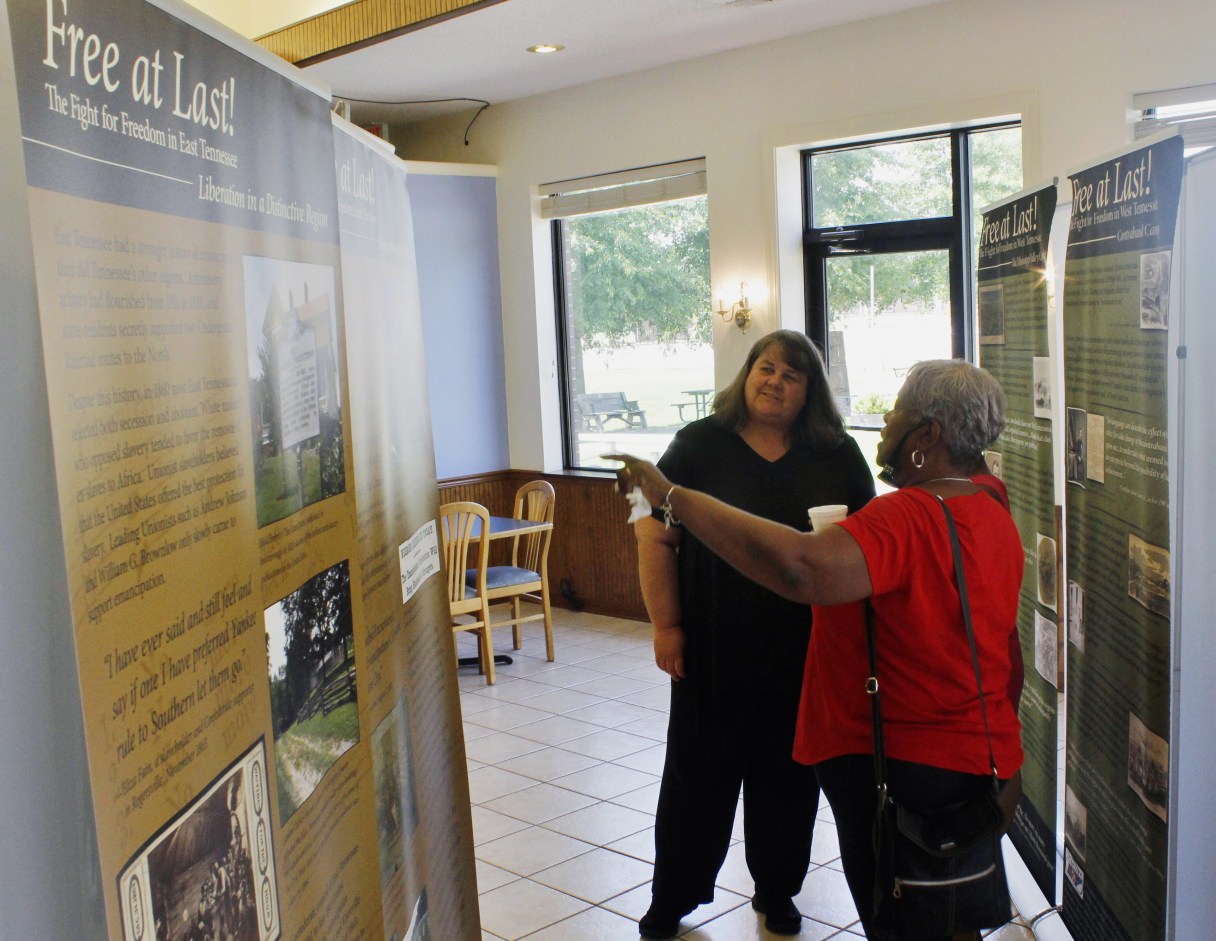
BROWNSVILLE, Tenn. (AP) – Slaves who lived through the Civil War faced the massive challenge of starting their lives over. They were free from bondage, but no clear path existed for making the most of their emancipation.
They had to establish their own schools, churches and communities and fight for their civil rights in the midst of a country still deeply divided over what freed slaves deserved.
A new exhibit at the West Tennessee Delta Heritage Center in Brownsville seeks to honor the stories of an estimated 275,000 men and women in Tennessee who persevered through reconstruction to forge better lives for themselves. “Free at Last!” will be on display through the end of the month, and is free to view.
“I think it’s important that we know as much about our history as possible,” said Sonia Outlaw-Clark, director of the West Tennessee Delta Heritage Center. “I think in light of recent events, it’s a good reminder of what a race had to go through to get where they’re at. All of these people started over from scratch.”
The eight-panel exhibit has information about reconstruction in east, middle and west Tennessee and traces emancipation, which came as early as 1862 for some slaves, but as late as 1865 for others. It was developed by the Tennessee Civil War National Heritage Area in cooperation with the Center for Historic Preservation at Middle Tennessee State University.