
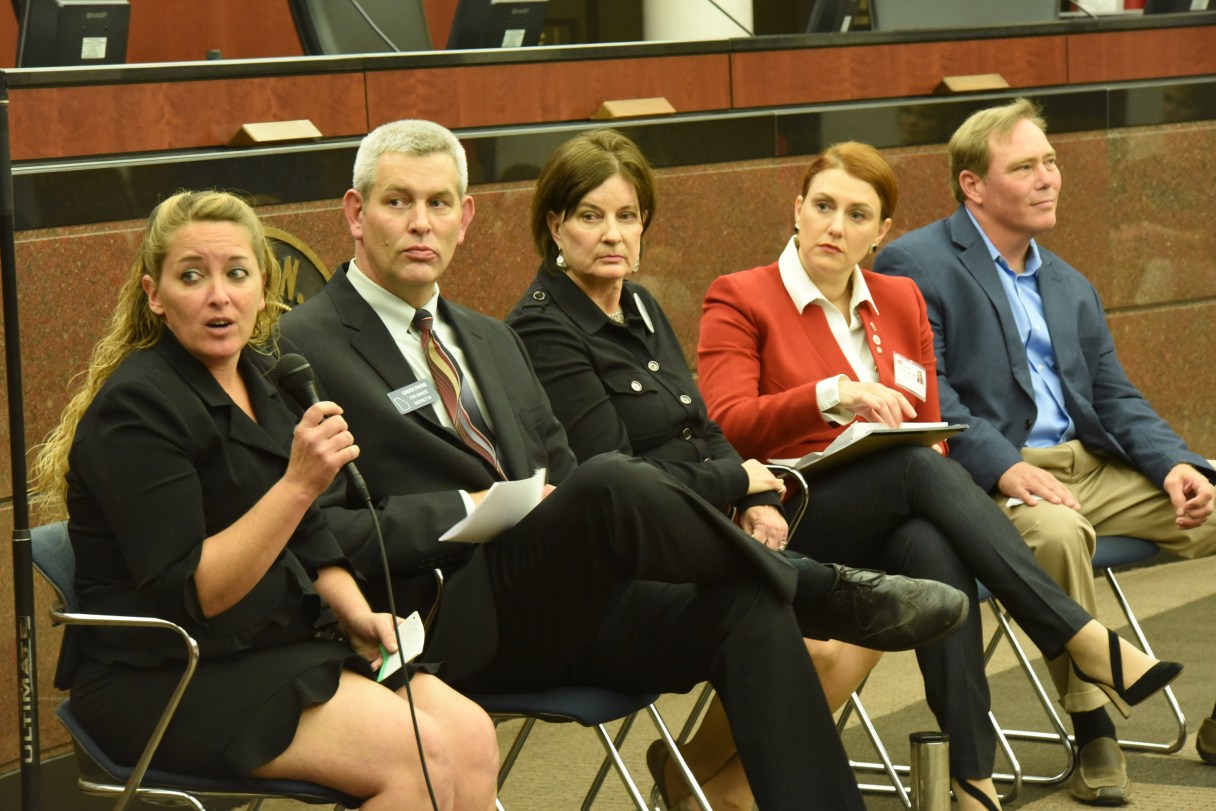
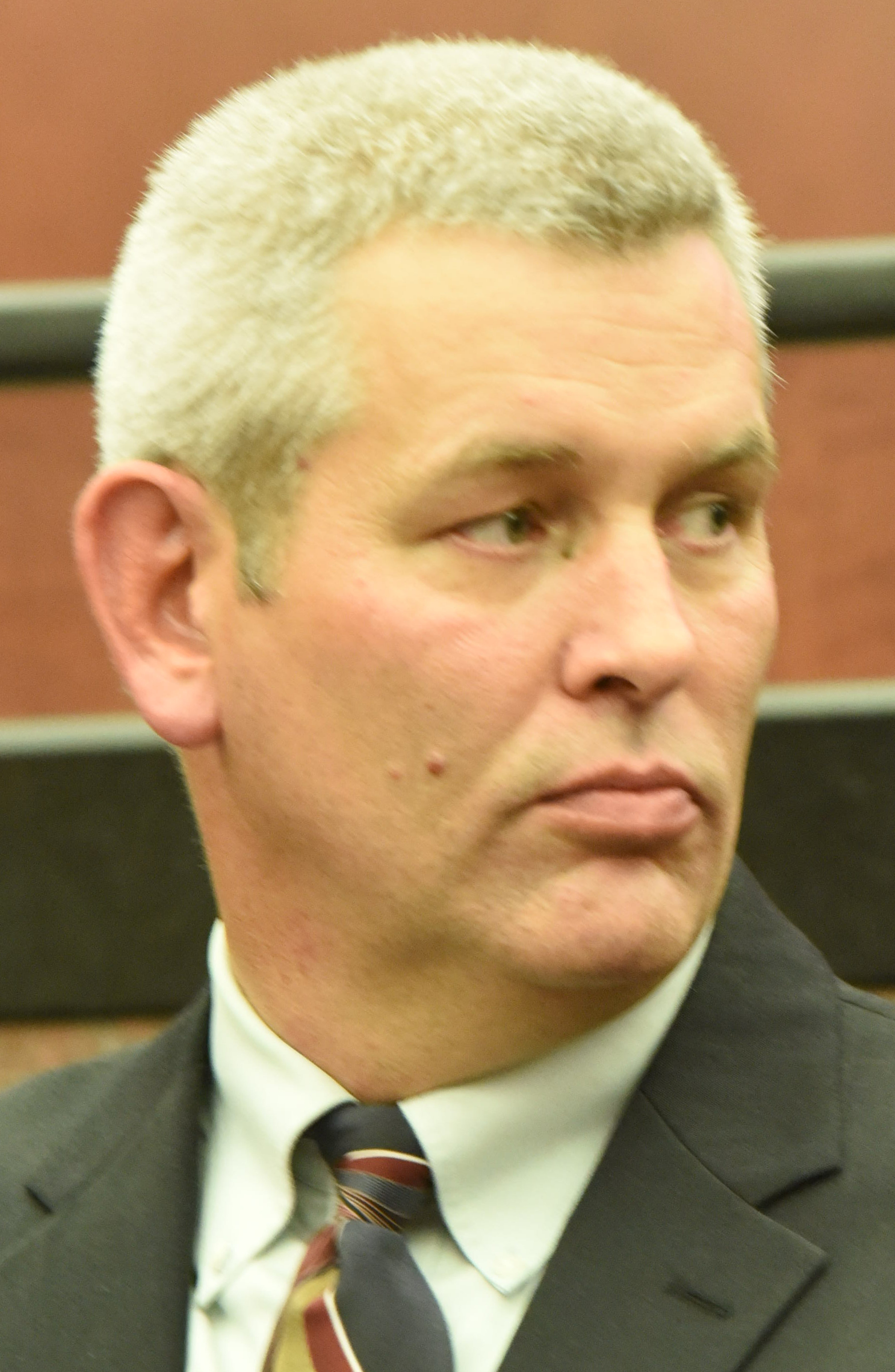
 Chuck Payne is a candidate for the Georgia state senate District 54.
Chuck Payne’s funding, at a glance
Total raised: $90,102Total spent: $72,601Top 4 donors*1. Senator Jeff Mullis Victory Account: $2,6002. Committee to Elect Butch Miller: $2,5003. Restore Our Republic PAC: $2,4004. Dean Burke for State Senate: $2,400* Does not include any donations from Dec. 14 – Dec. 31. Also does not include any donations of fewer than $1,000 from Nov. 28 – Dec. 13.
Debby Peppers’ funding, at a glance
Total raised: $69,332Total spent: $66,075Top 4 donors1. Debby Peppers: $51,764*2. Michael Foster: $2,6003. Smith Foster: $2,6004. Allison Bourg: $1,300* Peppers loaned her own campaign this money.
Days before voters decide a Georgia Senate runoff, about two-thirds of the money going to Republican Chuck Payne is a mystery.
Payne and his opponent, Debby Peppers, were both supposed to file campaign contribution reports Thursday. In his report, Payne said he has received $90,102. But of that money, according to a Times Free Press analysis, Payne has only explained where $31,589 came from.
And the other $58,500?
Payne did not return a call seeking comment Friday. But members of his campaign said those disclosures will come Monday, the day before the runoff election.
Their explanation? Byzantine state campaign laws, which allow some contributions to be reported at the last minute. In this case, Payne’s campaign left out most of the money it raised in December from its filings.
But Peppers, who filed her own contribution report about 14 hours late Friday afternoon, said her opponent misinterpreted the law as an excuse to avoid revealing donors.
“Voters deserve the truth,” Peppers said in a statement. “We’ve all been wondering whose pocket Payne is in. Apparently, Payne doesn’t want voters to know.”
Through a spokesman, Payne responded: “We did not write these laws, but we are certainly following them. With Mrs. Peppers donating large sums of money to liberal democrats for years, you would think she would have a better understanding of how the process works.”
Peppers is an independent candidate, though she said she would caucus with the Democrats if elected. According to the state ethics website, Peppers has given $3,500 to eight state-level politicians since 2006. Four Democrats received $2,450. Three Republicans received $850. A judicial candidate, who did not list a political party, received $200.
For the candidates’ runoff, the Georgia Government Transparency and Campaign Finance Commission required three contribution reports:
– One for all money received up to Nov. 27
– An end-of-the-year report, through Dec. 31
– One for all money received up to Jan. 3
What makes this confusing? The reports weren’t due in order. The report for Jan. 3 was due Thursday. But the end-of-the-year report is not due until Monday.
The two candidates interpreted the rules differently. Peppers’ campaign said it listed all donations from Nov. 28-Jan. 3 in their most recent report. Payne’s campaign, on the other hand, only listed donations from Jan. 1-3.
David Allen, one of Payne’s advisers, said the campaign will list the rest of the donors in the end-of-the-year report on Monday. This will account for the missing $58,500.
The problem, he said, is that this is an unusual race. Payne and Peppers are competing for Charlie Bethel’s former state Senate seat, which covers Whitfield, Murray, Gordon and Pickens counties.
Bethel vacated the seat in November to become a Court of Appeals judge. The state held a special election Dec. 13. Five candidates ran. Nobody received more than 50 percent of the vote, forcing a runoff Jan. 10 between the two most popular candidates: Payne and Peppers.
This created a need for the extra campaign contribution report, the one due Thursday. The state listed the end-of-the-year report, due Monday, without accounting for a potential runoff.
“This is all screwy,” Allen said. “It’s messed up because of the [runoff] being within 30 days (of the election). It’s crazy the way they did that.”
Added Justin Tomczak, a spokesman for Payne: “The state set these rules. We comply with them. We go to great lengths to make sure we’re doing stuff on time and doing it the right way. If someone has concerns with this process, they should take it up with the state.”
Regardless of how you interpret it, Tomczak said, Payne’s last contribution will be posted by Monday night.
“People can pull that up the night before if that’s going to influence their vote,” he said. “They can peruse that all night.”
Liz Ernst, Peppers’ campaign manager, disagreed.
“It’s wrong,” she said. “It’s just wrong. It’s wrong. It’s wrong. And it’s not true at all.”
Marc Hershovitz, an attorney who looked at the issue at the request of the Peppers campaign, said Payne’s team is misinterpreting the financial disclosure laws. The end-of-the-year report is a boilerplate filing for all candidates in all races at the end of an election season.
He said candidates should not withhold campaign contribution records in their most recent disclosure for a different report at a later date.
“It creates an absolute, farcical absurdity,” said Hershovitz, who served as general counsel for former Democratic Gov. Roy Barnes. “The law is not interpreted to yield ludicrous results. They are interpreting a statute designed to foster disclosure in such a way as to limit, interfere and prohibit disclosure.”
Who funds Payne’s campaign
Of the $31,000 disclosed in Payne’s reports, most donations come from current or former Republican state politicians, as well as political action committees.
Payne lists 17 politicians as donors, giving a total of $19,000. Of the money thus far disclosed, that represents 60 percent. The three largest donors were state Sen. Jeff Mullis, R-Chickamauga; state Sen. Butch Miller, R-Gainesville; and state Sen. Dean Burke, R-Bainbridge.
Payne also lists five donations from political action committees totaling $7,000. That represents 23 percent of the money disclosed.
Who funds Peppers’ campaign
Her campaign is largely self-funded. She listed about $69,000 in total contributions, but $52,000 came in the form of a loan from herself.
Her most substantial outside contributors are her family members: her father, Smith Foster; her brother, Michael Foster, and her daughter, Alison Bourg.
State Rep. Bruce Broadrick, R-Dalton, gave $500 out of his campaign fund to both candidates.
Contact staff writer Tyler Jett at 423-757-6476 or tjett@timesfreepress.com. Follow him on Twitter @LetsJett.