
Wednesday, November 11, 2026Nov 11

EU sanctions hit Russian oil companies, lawmakers

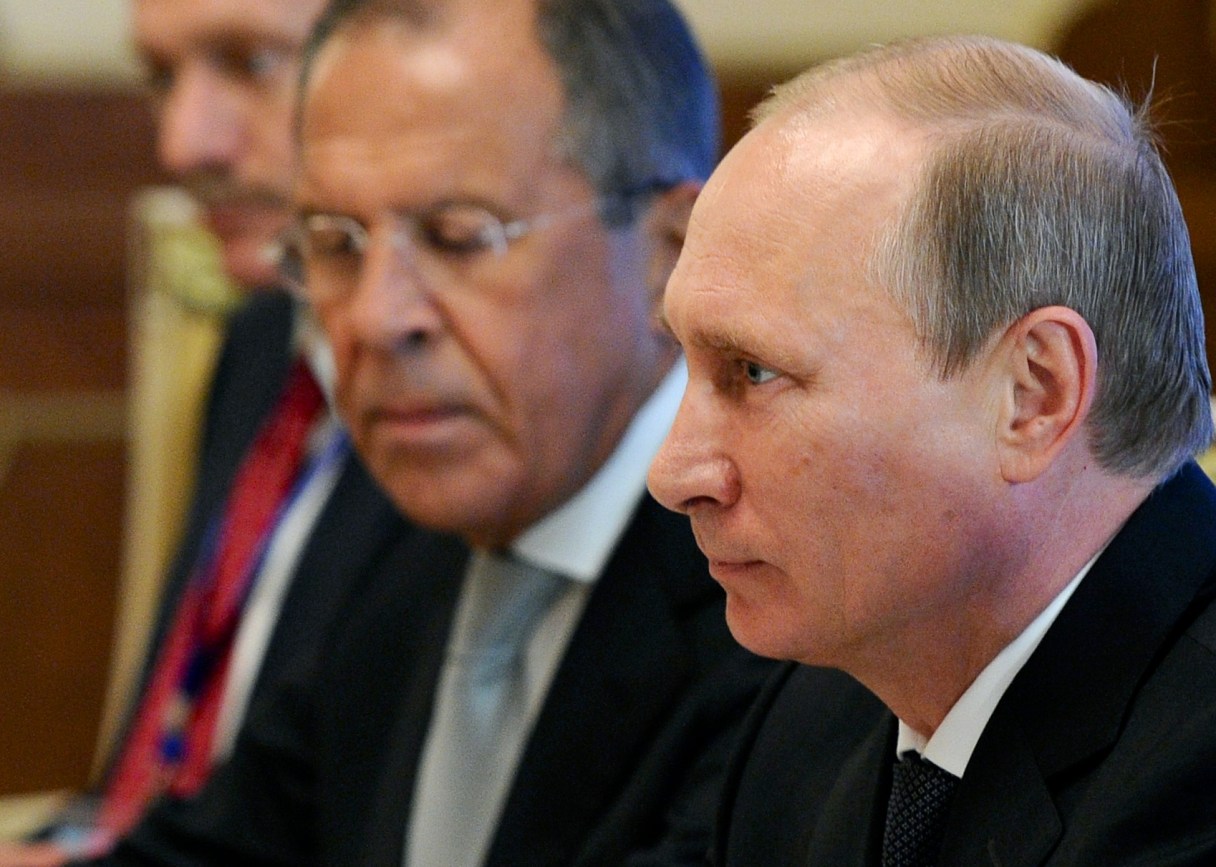
Russian President Vladimir Putin, right, speaks during his meeting with Chinese President Xi Jinping, in Dushanbe, Tajikistan, as Russian Foreign Minister, Sergey Lavrov listens Thursday, Sept. 11, 2014. Putin takes part in the two-day summit of the Shanghai Cooperation Organization, which brings together Russia, China and four former Soviet republics in Central Asia. (AP Photo/RIA Novosti, Mikhail Klementyev, Presidential Press Service)
Russian President Vladimir Putin, right, speaks during his meeting with Chinese President Xi Jinping, in Dushanbe, Tajikistan, as Russian Foreign Minister, Sergey Lavrov listens Thursday, Sept. 11, 2014. Putin takes part in the two-day summit of the Shanghai Cooperation Organization, which brings together Russia, China and four former Soviet republics in Central Asia. (AP Photo/RIA Novosti, Mikhail Klementyev, Presidential Press Service) Russian President Vladimir Putin, right, speaks during his meeting with Chinese President Xi Jinping, in Dushanbe, Tajikistan, as Russian Foreign Minister, Sergey Lavrov listens Thursday, Sept. 11, 2014. Putin takes part in the two-day summit of the Shanghai Cooperation Organization, which brings together Russia, China and four former Soviet republics in Central Asia. (AP Photo/RIA Novosti, Mikhail Klementyev, Presidential Press Service)

BRUSSELS (AP) – New European Union sanctions against Russia announced Friday toughen financial penalties on the country’s banks, arms manufacturers and its biggest oil company, Rosneft, to punish Moscow for what the West sees as efforts to destabilize Ukraine.

The United States was also expected to announce more sanctions Friday.

The EU measures, which were made official after a preliminary agreement Thursday, broaden the scope of penalties imposed in July. They increase restrictions to Europe’s capital markets, which further limits the targeted Russian companies’ ability to raise money, for example. They now also apply to major oil and defense companies, not only banks.

Similarly, the EU broadened the scope of existing limits on the export of high-technology goods and items that could also be used for military purposes, so-called dual-use goods.

The sanctions also ban another 24 officials from traveling to the EU and freeze their assets there. Among the individuals are four deputy Parliament speakers and leaders of the separatists in eastern Ukraine. They also hit businessman Sergey Viktorovich Chemezov, who served in the Soviet intelligence service in Germany alongside President Vladimir Putin during the Cold War and is now known as one of his “close associates,” according to the EU.