
Tuesday, November 10, 2026Nov 10

Elk nose into Grand Canyon water stations

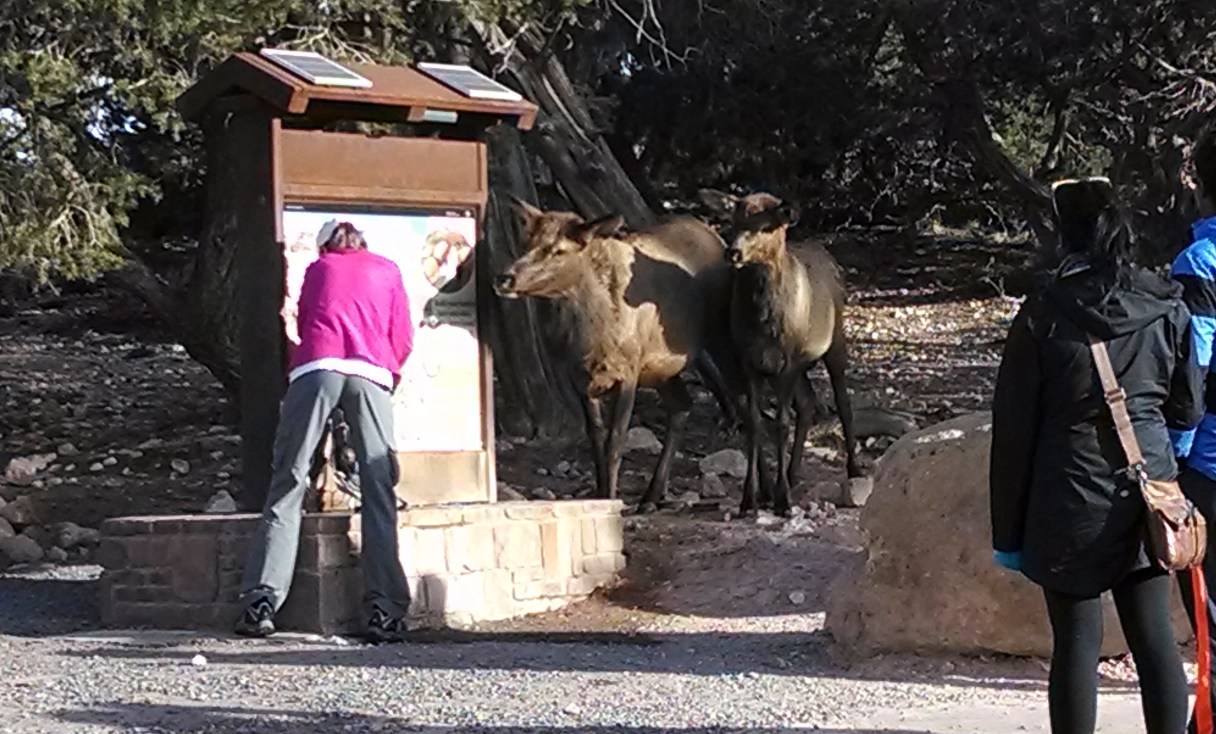
In this Nov. 10, 2013 photo provided by Brandon Holton, a Wildlife Biologist with the Science and Resource Management at the at the Grand Canyon National Park, elks interact with visitors at the south kaibab water station at the Grand Canyon National Park in Arizona.  The animals are helping themselves by lifting the spring-loaded levers at the stations with their noses and letting the water flow. Officials at the Grand Canyon plan to elk-proof the stations to outsmart the animals, conserve water and protect visitors from aggressive behavior.  (AP Photo/U.S. National Park Service)
In this Nov. 10, 2013 photo provided by Brandon Holton, a Wildlife Biologist with the Science and Resource Management at the at the Grand Canyon National Park, elks interact with visitors at the south kaibab water station at the Grand Canyon National Park in Arizona. The animals are helping themselves by lifting the spring-loaded levers at the stations with their noses and letting the water flow. Officials at the Grand Canyon plan to elk-proof the stations to outsmart the animals, conserve water and protect visitors from aggressive behavior. (AP Photo/U.S. National Park Service) In this Nov. 10, 2013 photo provided by Brandon Holton, a Wildlife Biologist with the Science and Resource Management at the at the Grand Canyon National Park, elks interact with visitors at the south kaibab water station at the Grand Canyon National Park in Arizona. The animals are helping themselves by lifting the spring-loaded levers at the stations with their noses and letting the water flow. Officials at the Grand Canyon plan to elk-proof the stations to outsmart the animals, conserve water and protect visitors from aggressive behavior. (AP Photo/U.S. National Park Service)

FLAGSTAFF, Ariz. (AP) – Grand Canyon officials have reduced waste by banning disposable plastic water bottles and installing water stations for visitors.

But a new problem sprung up: Elk are helping themselves to water at the stations by lifting spring-loaded levers with their noses.

Now, officials plan to elk-proof the stations to outsmart the animals, conserve water and protect visitors from aggressive behavior by the animals.

They are experimenting with a cage around the spouts at one water station and will change the way it’s turned on.

“They got a little aggressive about it,” chief resource manager Martha Hahn said. “They were pretty protective of that water and wanting to get it first.”