
Thursday, October 29, 2026Oct 29

This story is free to read.

The Latest: US cites ‘complete obliteration of mock warhead

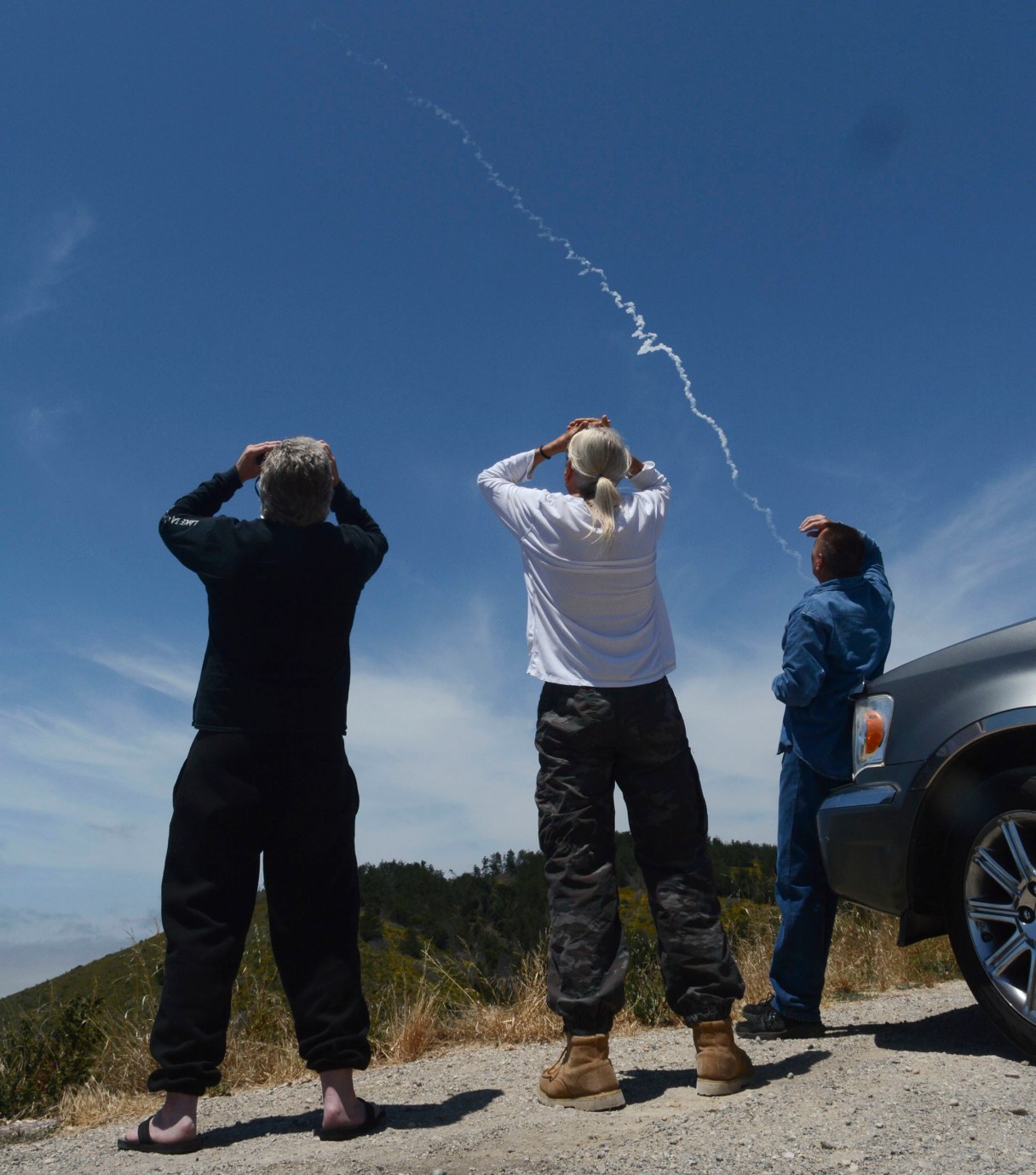
From Harris Grade Road north of Lompoc, Calif., spectators watch an interceptor missile launch from an underground silo at Vandenberg Air Force Base, and fly toward an intercontinental-range missile fired from a test range on Kwajalein Atoll in the Pacific. Hit or miss, the Pentagon's attempt on Tuesday, May 30, 2017, to shoot down a mock warhead over the Pacific Ocean marks an important milestone for an oft-criticized defense program that could be what stands between an incoming North Korean strike and the United States. (Len Wood /The Santa Maria Times via AP)
From Harris Grade Road north of Lompoc, Calif., spectators watch an interceptor missile launch from an underground silo at Vandenberg Air Force Base, and fly toward an intercontinental-range missile fired from a test range on Kwajalein Atoll in the Pacific. Hit or miss, the Pentagon's attempt on Tuesday, May 30, 2017, to shoot down a mock warhead over the Pacific Ocean marks an important milestone for an oft-criticized defense program that could be what stands between an incoming North Korean strike and the United States. (Len Wood /The Santa Maria Times via AP) From Harris Grade Road north of Lompoc, Calif., spectators watch an interceptor missile launch from an underground silo at Vandenberg Air Force Base, and fly toward an intercontinental-range missile fired from a test range on Kwajalein Atoll in the Pacific. Hit or miss, the Pentagon's attempt on Tuesday, May 30, 2017, to shoot down a mock warhead over the Pacific Ocean marks an important milestone for an oft-criticized defense program that could be what stands between an incoming North Korean strike and the United States. (Len Wood /The Santa Maria Times via AP)

WASHINGTON (AP) – The Latest on the U.S. military test involving an interceptor and a mock warhead (all times local):

12:20 p.m.

A U.S. interceptor has scored a direct hit and appears to have resulted in the “complete obliteration” of a mock warhead over the Pacific Ocean.

That’s the word from the Pentagon – which says the realistic test mirrored the missile threat from North Korea and Iran.

Jim Syring is the vice admiral who directs the Defense Department’s Missile Defense Agency. He tells reporters that the test included decoys and replicated a very specific scenario in the Pacific.