
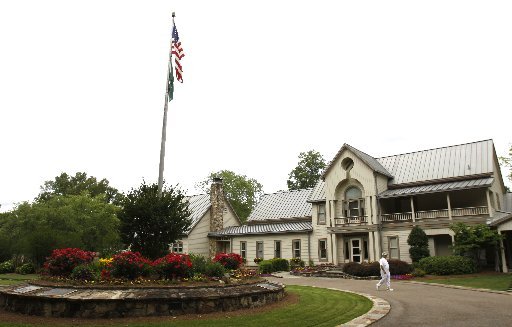
Follow this LINK to a hole by hole preview of The Honors Course
The Honors Course almost became the Omaha of college golf.
Greatly impressed with his experience at the Ooltewah venue for the 1996 NCAA championship tournament, former Oklahoma State golf coach Mike Holder penned a letter to the Honors visionary Jack Lupton.
Holder, who was chairman of the NCAA golf committee at the time — and still wields influence as the OSU athletic director — all but begged Lupton to make the Honors the permanent home for NCAA golf championships, like Omaha, Neb., is for baseball’s College World Series.
“You have an owner, one person who can make those decisions and that gives you the flexibility to do something,” Holder said last week. “The location, the quality of golf and the ability for the local community to embrace the event over time. I think Chattanooga is a great market, and similar to Augusta, but better.
“Rather than taking a chance at what you might find every year, it would be a sure thing coming to The Honors Course.”
Back in 1996, Lupton was enticed by Holder’s notes, according to course superintendent David Stone, who has been caring for the course since the 460-acre golf paradise was created.
“Mr. Holder wanted it here forever,” Stone said. “They wrote back and forth, but Jack just couldn’t quite do that to the membership every year. But he came close.”
Some of the current chit-chat among college golf coaches involves the potential of the NCAA setting a four-to-seven-year rotation of championship locations. Communications between Holder and Lupton, who died earlier this month, may have been the starting point of those conversations.
“I tried to talk Jack into hosting it every year,” Holder said. “I like The Honors Course because it is built to host championships.”
Washington coach Matt Thurmond is convinced NCAA golf needs to build a bigger fan base heading into the championship, which is one of the few spring sports titles not seen on an ESPN channel.
“I think it’s crucial and I think it’s necessary to have a rotation,” Thurmond said. “It’s really ridiculous how little exposure the tournament gets. One of the things you can do is have consistent sites, and there are a million other things they could do as well.
“But as long as there’s a nice spread of courses around the country so everybody can have a shot at it from a geographical standpoint, that’s a good idea. And anything that gets us more exposure and tradition is a good idea. Somebody has to put more effort into making this thing the big deal that it should be.”
There are dozens, if not a hundred, golf courses in America worthy of hosting an NCAA championship. And the NCAA golf committee is more open to welcome those invitations as opposed to setting a rotation.
“A small rotation would have some merits, but there are courses that wouldn’t want to get into a rotation,” said Darin Spease, chairman of the Division I men’s golf committee. “If we did lock into a rotation, it would take some great courses off the table.”
Arizona State coach Randy Lein flew home with the 1996 championship trophy. He and that team have standing invitations to play the Honors at their leisure because of their victory.
“If you had three, four or five courses at the same caliber of The Honors Course and the rotation was permanent, I’d be all for it,” Lein said. “I think it would make it easy for those courses and cities to market that decision.”
Including the Honors in future NCAA and USGA events remains in golf’s best interest.
USGA executive director David Fay said last week, “Every time we’d be fortunate enough, and honored enough, to receive an invitation to have a USGA tournament at The Honors Course, it would be given very serious attention.”
But Spease said a permanent rotation is not in the equation now because too many quality courses could be left out.
“What we’d like to do is take advantage of as many great venues as possible,” Spease said. “A rotation would have some merits, but there are courses that wouldn’t be interested in that. And we wouldn’t want to exclude them.
“If at some point in the future, the committee determines that it makes sense for a rotation, and they find four courses willing to hold it every four years, that’s not really a bad thing.”