
Thursday, November 12, 2026Nov 12

Endangered Sumatran rhino gives birth in Indonesia

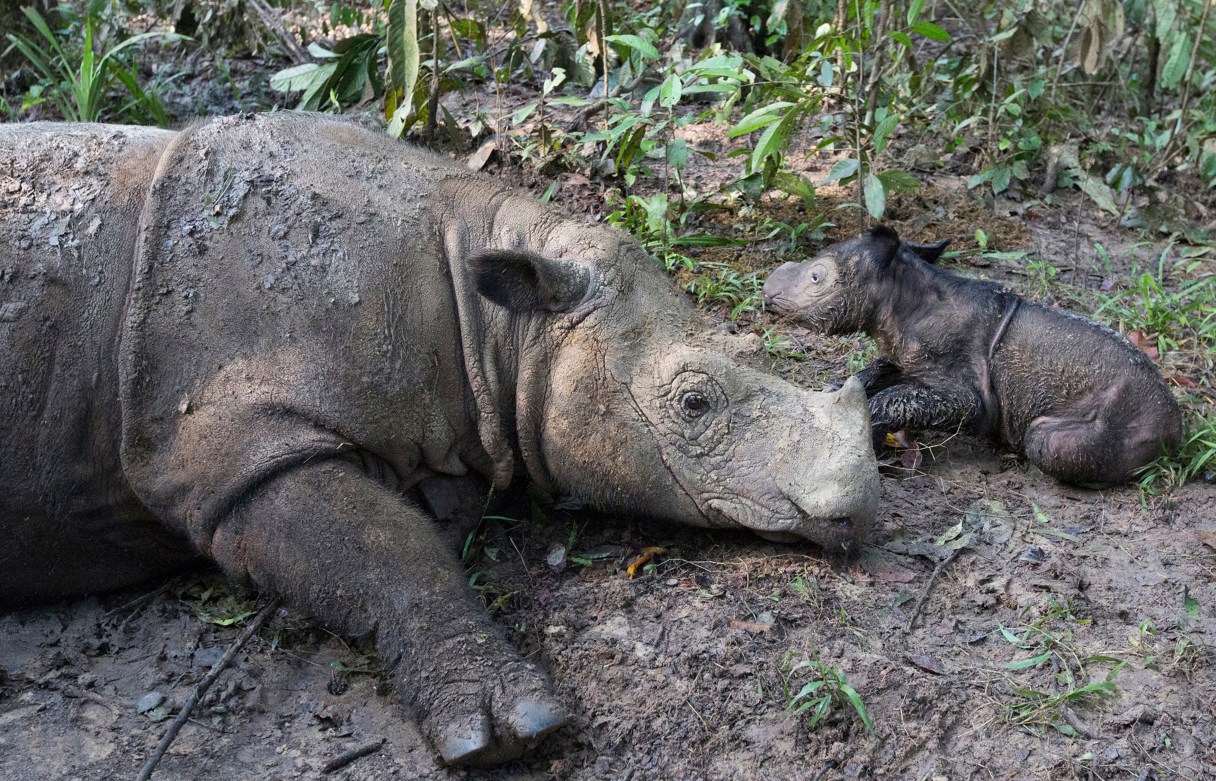
In this Thursday, May 12, 2016 photo released by International Rhino Foundation (IRF), Ratu, a 14-year-old Sumatran rhinoceros, sits next to its newborn calf at Sumatran Rhino Sanctuary in Way Kambas National Park, Indonesia. Ratu has given birth at the sanctuary in a success for efforts to save the critically endangered species. (Stephen Belcher/Canon/IRF/YABI via AP) MANDATORY CREDIT
In this Thursday, May 12, 2016 photo released by International Rhino Foundation (IRF), Ratu, a 14-year-old Sumatran rhinoceros, sits next to its newborn calf at Sumatran Rhino Sanctuary in Way Kambas National Park, Indonesia. Ratu has given birth at the sanctuary in a success for efforts to save the critically endangered species. (Stephen Belcher/Canon/IRF/YABI via AP) MANDATORY CREDIT In this Thursday, May 12, 2016 photo released by International Rhino Foundation (IRF), Ratu, a 14-year-old Sumatran rhinoceros, sits next to its newborn calf at Sumatran Rhino Sanctuary in Way Kambas National Park, Indonesia. Ratu has given birth at the sanctuary in a success for efforts to save the critically endangered species. (Stephen Belcher/Canon/IRF/YABI via AP) MANDATORY CREDIT

JAKARTA, Indonesia (AP) – A Sumatran rhinoceros has given birth at an Indonesian sanctuary in a success for efforts to save the critically endangered species.

The International Rhino Foundation said the female calf was born on Thursday, weighs about 45 pounds (20 kilograms) and looks healthy and active.

“We haven’t stopped smiling since the moment we were sure she was alive and healthy,” said IRF’s executive director Susie Ellis in a statement. “While one birth does not save the species, it’s one more Sumatran rhino on Earth.”

Only an estimated 100 Sumatran rhinos remain, mostly on the island of Sumatra, and several are in captivity. They are threatened by destruction of tropical forest habitat and poachers who kill the animals for their horns, which are prized for making ornaments and for use in traditional medicine in China and other parts of Asia.

The species was rediscovered in the Indonesian part of Borneo through trails and footprints in 2013.