
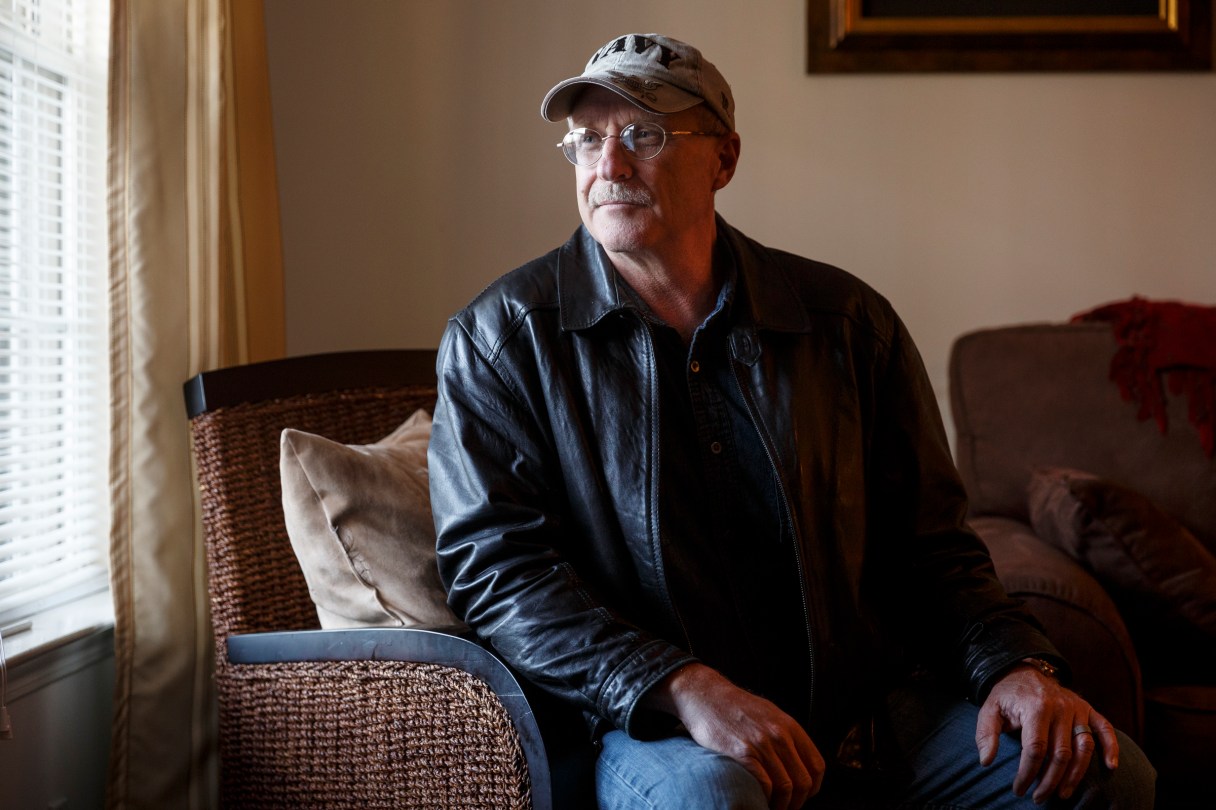
A 20-year-old Richard Preston laid down for some rest in the bowels of the USS Belknap as the ship plowed through the dark off the coast of Sicily.
It was about 9 p.m. on Nov. 22, 1975, and Preston had just gotten off duty in the ship’s radar room. He worked as an operations specialist for the Navy.
As a Massachusetts native, Preston had noted briefly it was the 12-year anniversary of the assassination of another Massachusetts man, President John F. Kennedy.
He soon collided with that fact in a cruelly fateful way.
Preston, 59, who now lives in Chattanooga, remembers a voice shouting over the ship’s loudspeaker.
“Captain to the bridge,” the speaker squawked.
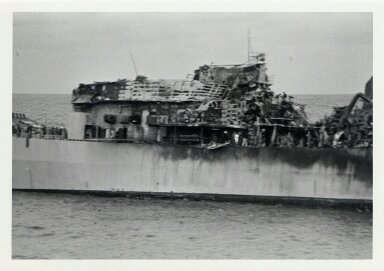
It was about three minutes before the Belknap and the USS John F. Kennedy, a 1,052-foot aircraft carrier, crashed into each other. That loudspeaker call was as close to a warning that the Beknap’s crew of 350 received.
“Shortly after that, it felt like we were being pushed down,” Preston said from his home this week. “All of the sudden there was smoke coming through the vents and you could hear muffled explosions.”
Fuel from the Kennedy spilled onto the Belknap and fire broke out. Ammunition began going off in the heat.
It was 40 years ago today, but the memories remain vivid for Preston, who has post-traumatic stress disorder and was burned on his back from the flames of that incident.
Eruptions continued all night and into the middle of the next day. Eight Navy members died in the mayhem – seven from the Belknap. Preston saw one of his comrades decapitated.
He kept it all to himself because he had no choice. It was during the Cold War and he said the boat was carrying more nuclear missiles than it was supposed to. Crew members were told not to discuss what happened with the media or with anyone. When Preston finally got a chance to wire his parents a few days later to tell them he was OK, about 90 percent of what he said was censored.
“The only thing they received was, ‘OK, be back soon’ or something along those lines,” Preston recalled.
A chapter in the 1989 Bulletin of of the Atomic Scientists deduced that, “If it reported the accidents properly and admitted that the ships had nuclear weapons aboard, the Navy would have had to deal with controversy, if not restrictions, relating to port calls where non-nuclear sentiments or policies prevail.”
Finally, about 30 years after the accident, the Navy declassified a 77-page report on what happened. It was no longer news by that time. But it is history, and a history that most know little about.
“I’ve talked to people my age who didn’t know this happened,” Preston said.
A neighbor rolled his trash can past Preston’s driveway on Thursday and offered a friendly hello.
Preston, standing next to his Jeep Wrangler that bears a license plate identifying him as a disabled Navy veteran, returned the gesture with a wave.
“He doesn’t know about what happened,” Preston said once the man was out of sight. “Most of my friends know I’m a disabled Navy veteran but they don’t know about the Belknap. It’s hard talking about it.”
If something close to the magnitude of the collision between the USS Belknap and the USS John F. Kennedy happened today, Preston said, it would be on the news nonstop.
“Before everybody who was involved in it dies, I think people should know that something like this happened,” he said, “and that it happened on the anniversary of the day JFK was shot, which is the real irony in all of this.”
Finally being free to tell the story, and wanting to get the word out -even though it is decades after the event – may help with Preston’s own healing, one expert said.
“I think that’s a good sign,” said Dr. Jonathan Becker, an associate professor with Vanderbilt University who also sometimes works with adults with PTSD in his own clinical practice. “Secrets can be problematic from the standpoint of getting over the trauma.”
Staff writer Terri Likens contributed to this story.
Contact staff writer David Cobb at dcobb@timesfreepress.com or 423-757-6249.