
Thursday, November 12, 2026Nov 12

ECB officials saw shock from British vote as contained

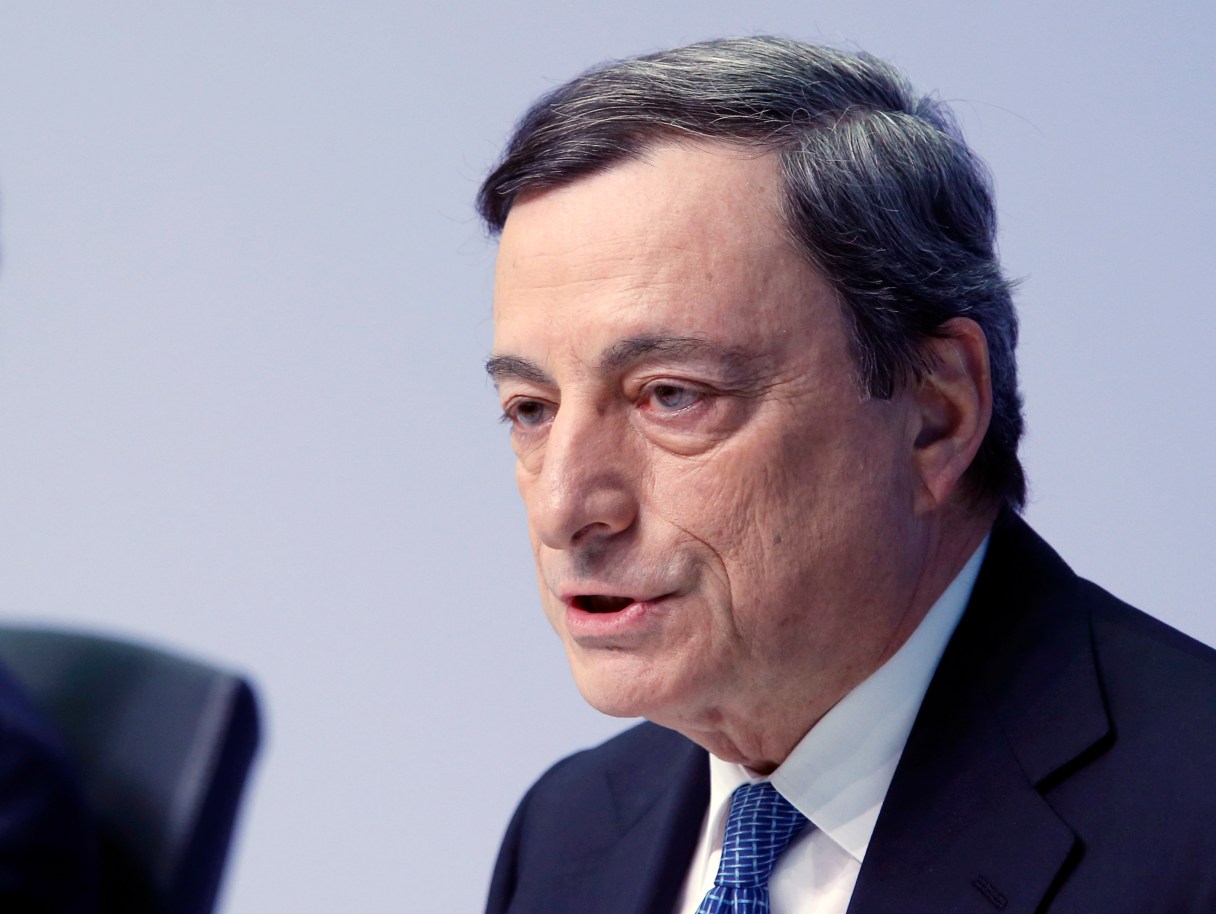
FILE - This is a Thursday, March 10, 2016  file photo of President of European Central Bank Mario Draghi as he speaks during a press conference following a meeting of the governing council in Frankfurt, Germany. Officials at the European Central Bank saw the initial impact from Britain’s vote to leave the EU as “geographically confined” to that country despite much uncertainty about whether it would hurt the global economy in the future. That is the view contained in the written account of the bank’s July 21 rate-setting meeting, released Thursday Aug. 18, 2016.  (AP Photo/Michael Probst, File)
FILE - This is a Thursday, March 10, 2016 file photo of President of European Central Bank Mario Draghi as he speaks during a press conference following a meeting of the governing council in Frankfurt, Germany. Officials at the European Central Bank saw the initial impact from Britain’s vote to leave the EU as “geographically confined” to that country despite much uncertainty about whether it would hurt the global economy in the future. That is the view contained in the written account of the bank’s July 21 rate-setting meeting, released Thursday Aug. 18, 2016. (AP Photo/Michael Probst, File) FILE - This is a Thursday, March 10, 2016 file photo of President of European Central Bank Mario Draghi as he speaks during a press conference following a meeting of the governing council in Frankfurt, Germany. Officials at the European Central Bank saw the initial impact from Britain’s vote to leave the EU as “geographically confined” to that country despite much uncertainty about whether it would hurt the global economy in the future. That is the view contained in the written account of the bank’s July 21 rate-setting meeting, released Thursday Aug. 18, 2016. (AP Photo/Michael Probst, File)

FRANKFURT, Germany (AP) – Officials at the European Central Bank saw the initial impact from Britain’s vote to leave the EU as confined to that country despite much uncertainty about whether it would hurt the global economy in the future.

That is the view contained in the written account of the eurozone central bank’s July 21 rate-setting meeting, released Thursday. The ECB had left unchanged its stimulus policies, which include 80 billion euros a month in bond purchases and a benchmark interest rate of zero.

The officials sought to balance the need to reassure markets that they would add more stimulus if needed against ongoing uncertainty about how much the British vote would actually hurt the economy. The bank said it would wait to get more data from its staff’s forecasts.

Members of the 15-member governing council wanted to make it clear they wouldn’t stand idly by in case of trouble, without on the other hand raising expectations for more stimulus and “fostering undue expectations about the future course of monetary policy.”

Financial markets had weathered the initial surprise from the vote to leave, the officials agreed. But they were concerned about the longer term impact on neighboring Europe, a major trade partner. Britain’s exit from the EU and its tariff-less single market would require a renegotiation of trade relations, something that would likely take years, leaving uncertainty for businesses.