
Tuesday, November 10, 2026Nov 10

Central Europe sees anti-immigration fervor, no migrants

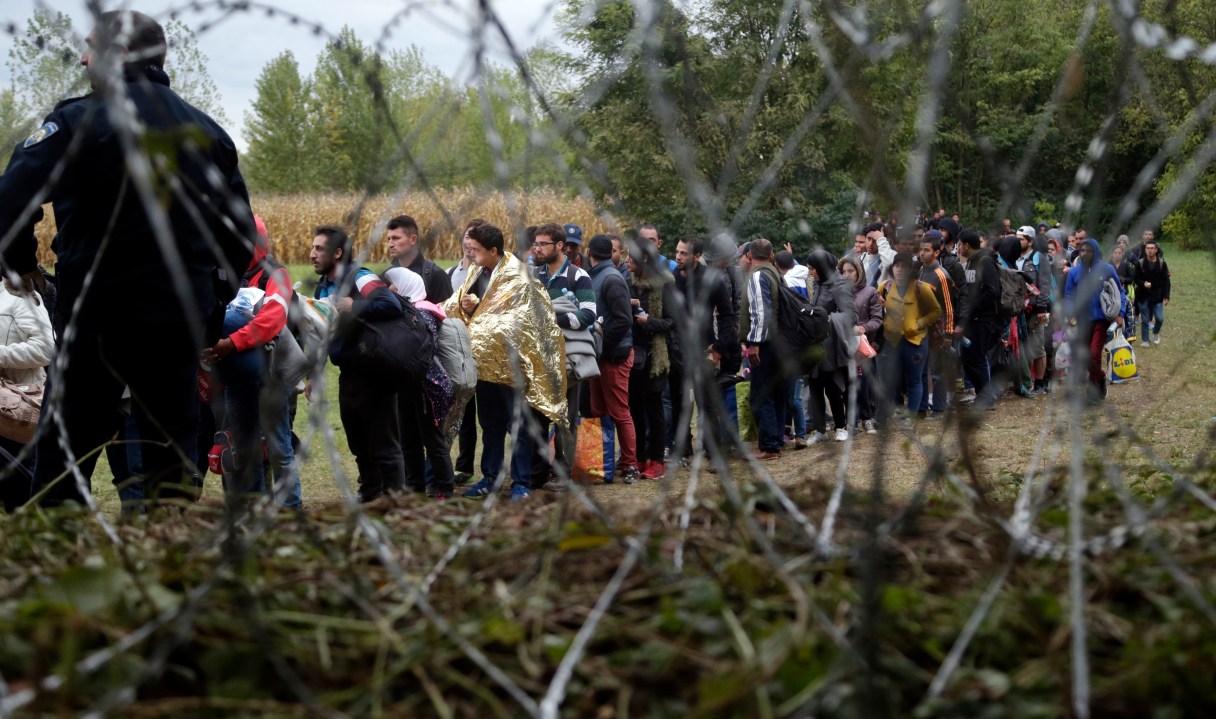
FILE - In this Saturday, Sept. 26, 2015 file photo, a group of migrants, seen through razor wire, crosses a border from Croatia near the village of Zakany, Hungary. Together, Hungary and the Czech Republic took in just around 1,000 asylum-seekers last year. Still, rallying cries against migration have dominated the debates ahead of upcoming ballots in the two Central European countries. Hungary is holding a government-sponsored referendum on Oct. 2 2016, seeking political support for the rejection of any future mandatory EU quotas to accept refugees. (AP Photo/Petr David Josek, file)
FILE - In this Saturday, Sept. 26, 2015 file photo, a group of migrants, seen through razor wire, crosses a border from Croatia near the village of Zakany, Hungary. Together, Hungary and the Czech Republic took in just around 1,000 asylum-seekers last year. Still, rallying cries against migration have dominated the debates ahead of upcoming ballots in the two Central European countries. Hungary is holding a government-sponsored referendum on Oct. 2 2016, seeking political support for the rejection of any future mandatory EU quotas to accept refugees. (AP Photo/Petr David Josek, file) FILE - In this Saturday, Sept. 26, 2015 file photo, a group of migrants, seen through razor wire, crosses a border from Croatia near the village of Zakany, Hungary. Together, Hungary and the Czech Republic took in just around 1,000 asylum-seekers last year. Still, rallying cries against migration have dominated the debates ahead of upcoming ballots in the two Central European countries. Hungary is holding a government-sponsored referendum on Oct. 2 2016, seeking political support for the rejection of any future mandatory EU quotas to accept refugees. (AP Photo/Petr David Josek, file)

BUDAPEST, Hungary (AP) – Together, Hungary and the Czech Republic took in just around 1,000 asylum-seekers last year. Still, rallying cries against migration have dominated the debates ahead of upcoming ballots in the two Central European countries.

Along with Poland and Slovakia, they have also become the most vocal critics of the EU’s plan to share refugees according to a quota system.

The influx of migrants into Europe has also upended the political order in many countries in Western Europe, which received more than 1 million asylum-seekers last year, yet analysts say it’s not surprising that opposition to newcomers is at its highest in the mainly homogenous societies in Central and Eastern Europe.

“Migration is the issue because politically it works and it’s not surprising that it works where there are no migrants,” says Csaba Toth, strategic director of the Republikon Institute think tank. “It may even be easier without migrants because if people met migrants too often it’s not certain that they would be able to hate them in the same manner.”

Hungary is holding a government-sponsored referendum on Oct. 2, seeking political support for the rejection of any future, mandatory EU quotas to accept refugees and Prime Minister Viktor Orban’s government has expressed no qualms in its reasons for rejecting the mainly Islamic newcomers: It wants to preserve Hungary’s Christian identity and its relatively homogenous culture and population.