
 View our 21 Veteran Salute page
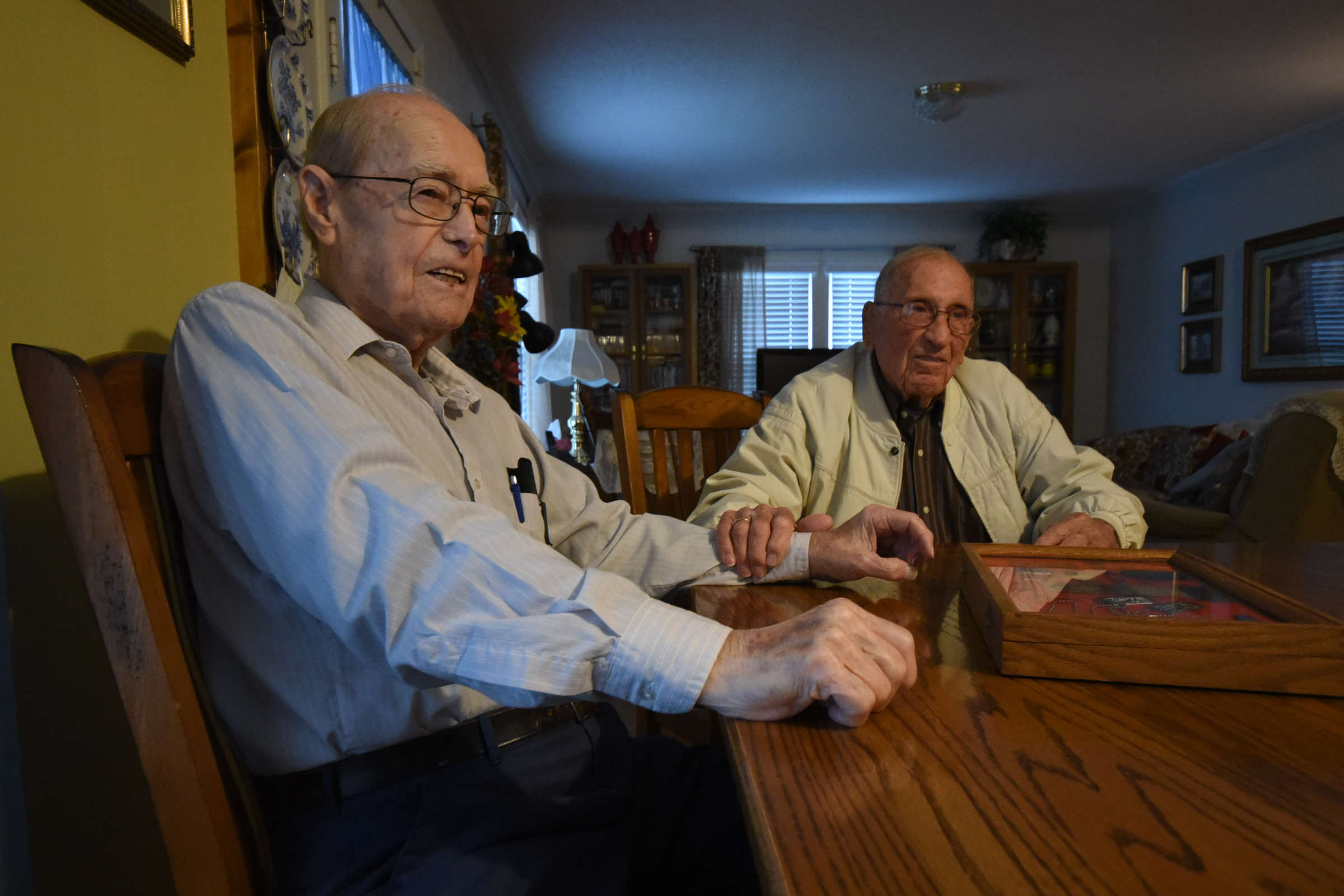 Russell Pickett, left, and James R. Yarbrough, both age 93, meet for the first time after serving on D-Day, at Omaha Beach during World War II.
James “Richard” Yarbrough, a 93-year-old retired salesman, was reading his Sunday newspaper earlier this week in Chickamauga, Georgia, when he was struck by a Page 1 photograph.
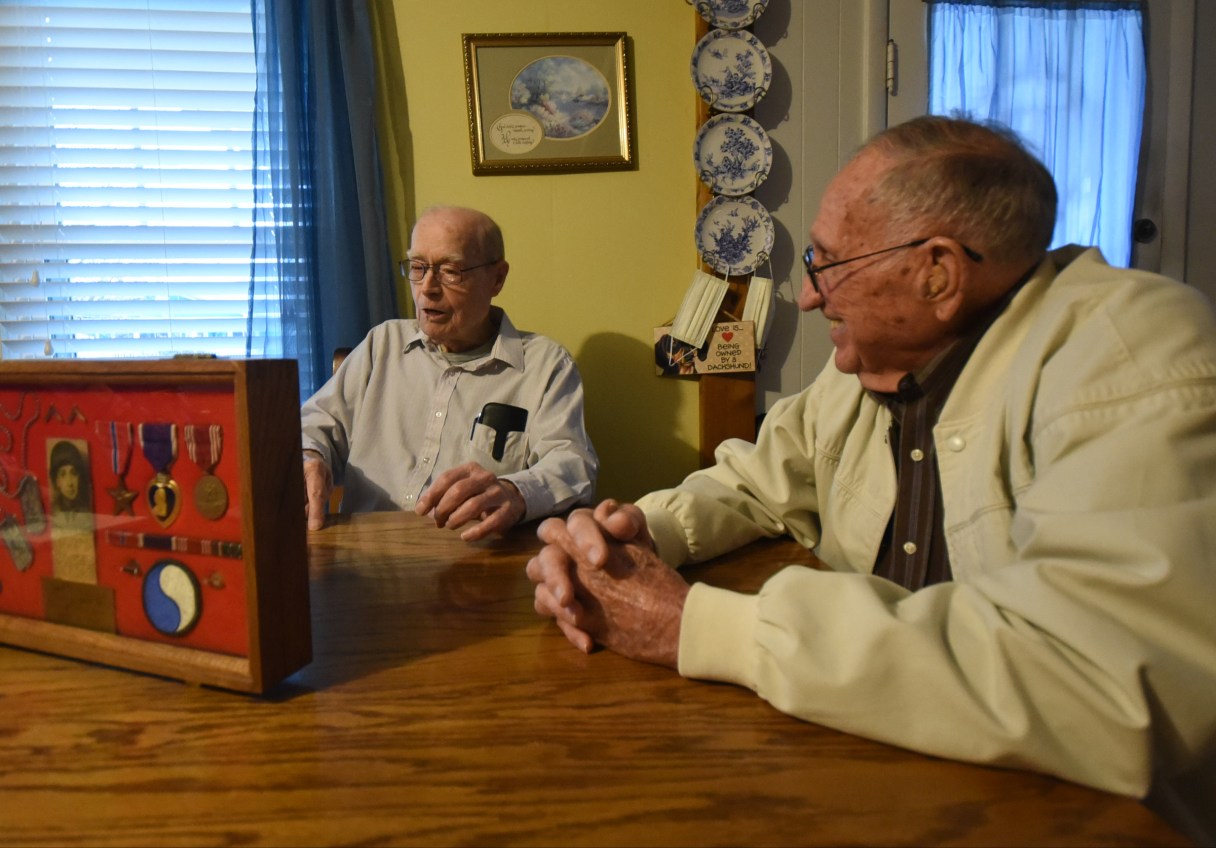
It was a portrait of World War II veteran Russell Pickett, a veteran of the Allied D-Day invasion in Normandy, France. In the photo, Pickett was holding some of his framed medals and war memorabilia, including an arm patch from the U.S. Army’s 29th Infantry Division.
The patch is a distinctive mingling of blue and gray fabric that has origins in the Civil War. Soldiers who have worn it never forget.
Yarbrough, who is also an Omaha Beach survivor, knew instantly that he was looking at a comrade in arms – one of the dwindling number of survivors of one of World War II’s most famous, and horrific, battles.
Estimates are that there are at most a few thousand D-Day survivors still living in the United States. More broadly, only about half a million of the 16 million Americans who served in the war are still alive. The youngest are in their early to mid-90s.