
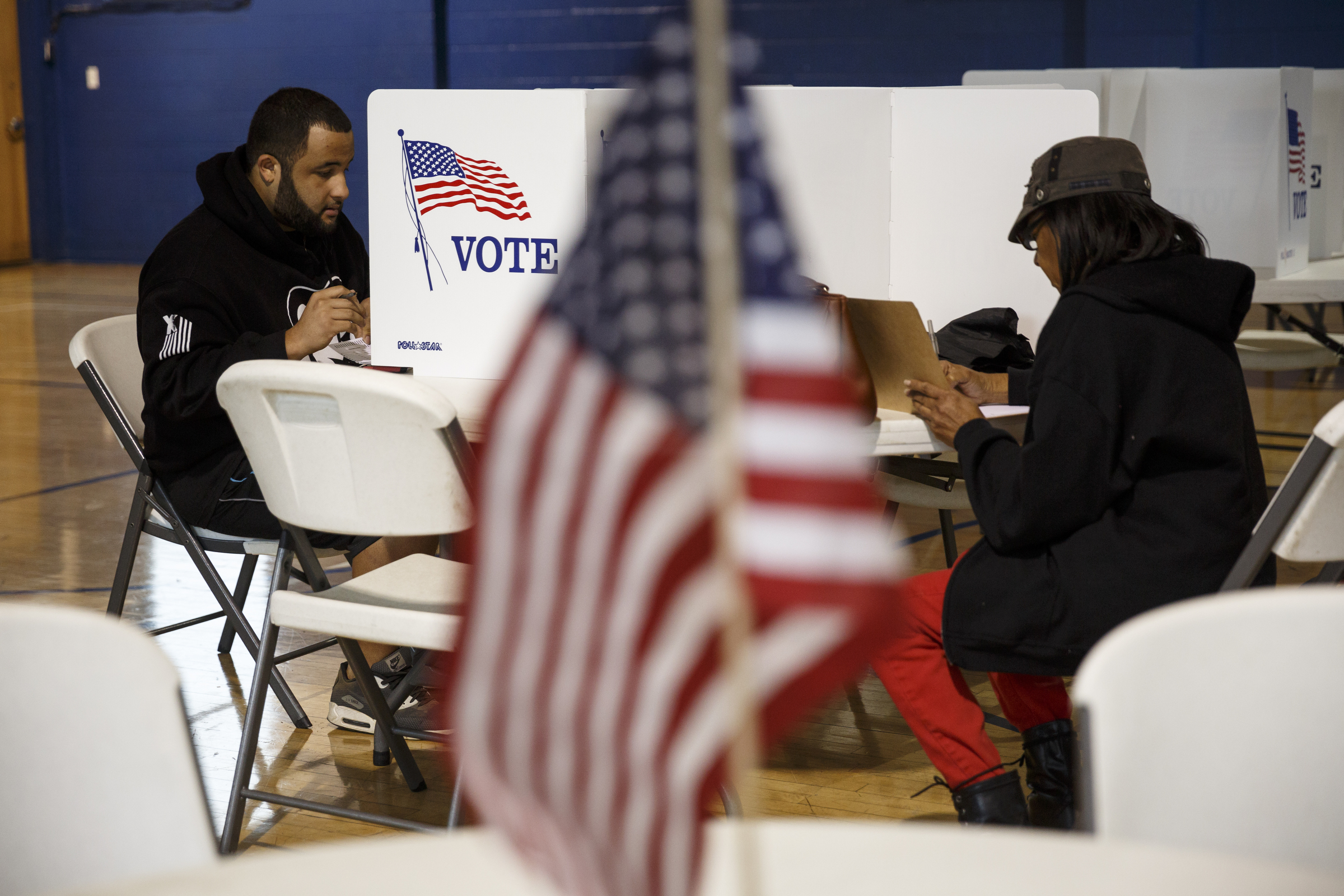
 Verdell Stewart, left, votes in the primary election at the Bethlehem Center on Tuesday. (Doug Strickland/Chattanooga Times Free Press via AP)
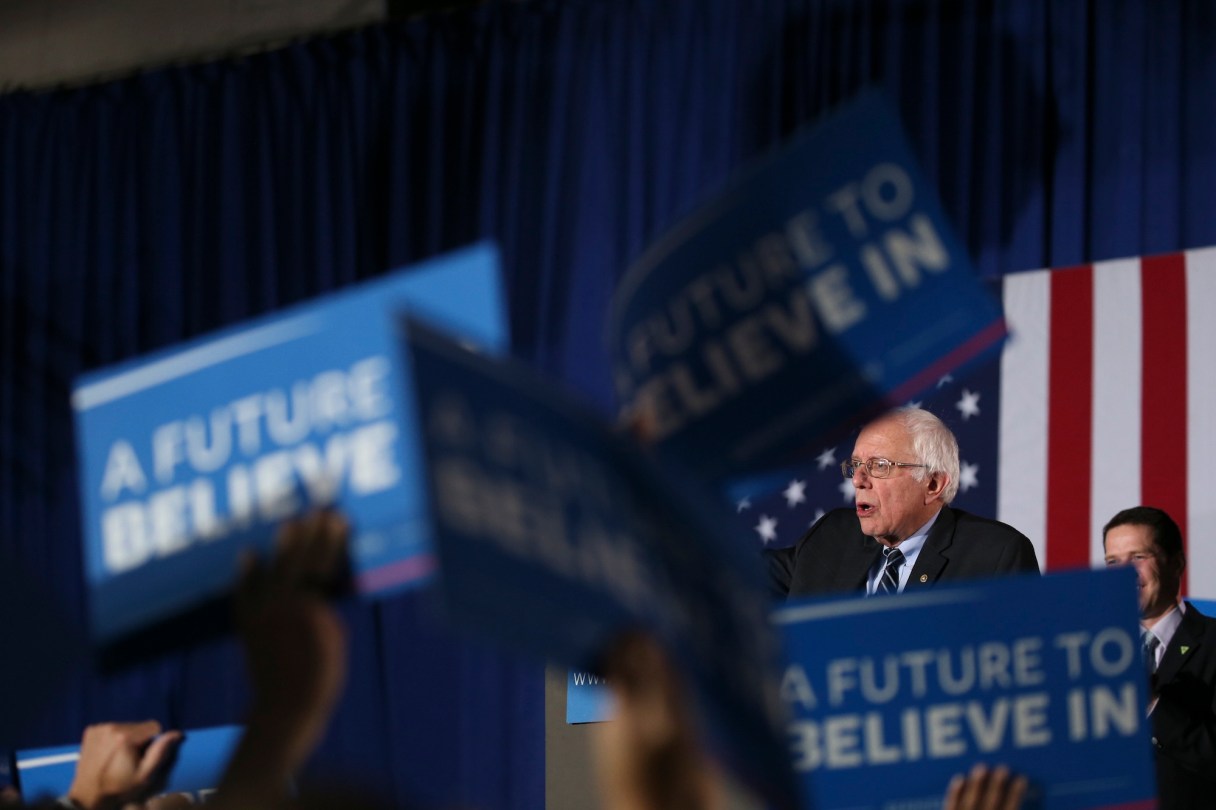
If the Democratic presidential primary shows us nothing else, it is that “political revolution” just might catch on.
One indicator is a look at the list of possible local candidates who have been picking up qualifying papers over the last couple of months at the Hamilton County Election Commission.
That list already includes at least nine new names of people who are contemplating a run in August and November for elected office in positions ranging from Board of Education to the U.S. House of Representatives. The qualifying deadline is about a month away.
There is a possible Democratic challenger for Republican Gerald McCormick, another Democratic challenger for long-time Democratic state Rep. JoAnne Favors. Still two more people – an independent and a Democrat – have picked up papers to challenge Republican state Rep. Marc Gravitt of East Ridge. And another two folks, also an independent and a Democrat, may challenge tea party-leaning U.S. Rep. Chuck Fleischmann, who represents the 3rd Congressional District. Three people may seek non-partisan seats on the school board.
Hamilton County Democratic Party Chairman Terry Lee says the season is still young and he expects still more Democrat and Sanders-like independent challengers.
“There’s change in the air,” Lee said last week.
Finally – and thankfully – voters of Hamilton County will not be faced with ballots holding names only under the Republican labels.
This is how voter anger toward politicians – especially statehouse and congressional politicians where the real failure to govern is happening – should be done: Challenge the gridlock on the ballot from the bottom up in local and state offices.
Suzy Khimm, a former senior editor for The New Republic, likens it to the “think global, act local” meme. She wrote about it last week in an Op-Ed for The New York Times titled “Can the Sanders Movement go local?”
She said Bernie Sanders’ staffers tweeted last August: “This campaign is not about electing Bernie Sanders for president. It is about creating a grass-roots political movement in this country.”
She thinks the movement has sparked and Sanders is not alone in cheerleading the new anti-apathy among Democrats and progressives. But the only real proof will be in the number of votes cast – not the names of protest groups.
“The left has struggled over the last eight years to achieve broad electoral success outside the White House. Many of the voters who propelled Barack Obama to victory twice didn’t show up for midterm elections, helping Republicans recapture both houses of Congress by 2014 and win control of 31 governorships and nearly 70 percent of state legislative chambers,” Khimm writes. “Meanwhile, progressives have largely channeled their energy into causes, giving rise to movements like the Fight for $15 to raise the minimum wage, Occupy Wall Street and Black Lives Matter.”
In early primary voting, Democrat turnout still remains down in most places.
No doubt that may be traced to the different road Democrats and progressives have taken with their so-called “establishment” anger.
Khimm postulates that during the heyday of Occupy, many activists rejected electoral politics, unlike their tea party counterparts, who leapt into races at every level of government, and scored huge victories for conservatives.
If Hamilton County’s qualifying surge is any indication, perhaps left-leaners are coming back to politics.
“We’ve been doing this backwards,” Khimm quotes Joe Trippi, a Democratic consultant who ran Howard Dean’s 2004 insurgent presidential campaign. “The mistake is thinking that we get behind a progressive candidate for president, and that will solve all our problems.”
That’s encouraging. At least it’s encouraging as long as Democrats and progressives don’t repeat the recent mistakes of Republicans, who now are reaping what they sowed with their mishandling of the “religious right” groups and the conservatism that became the tea party.