
Friday, November 13, 2026Nov 13

Atop military heap, spotlight feels bright, power seems dim

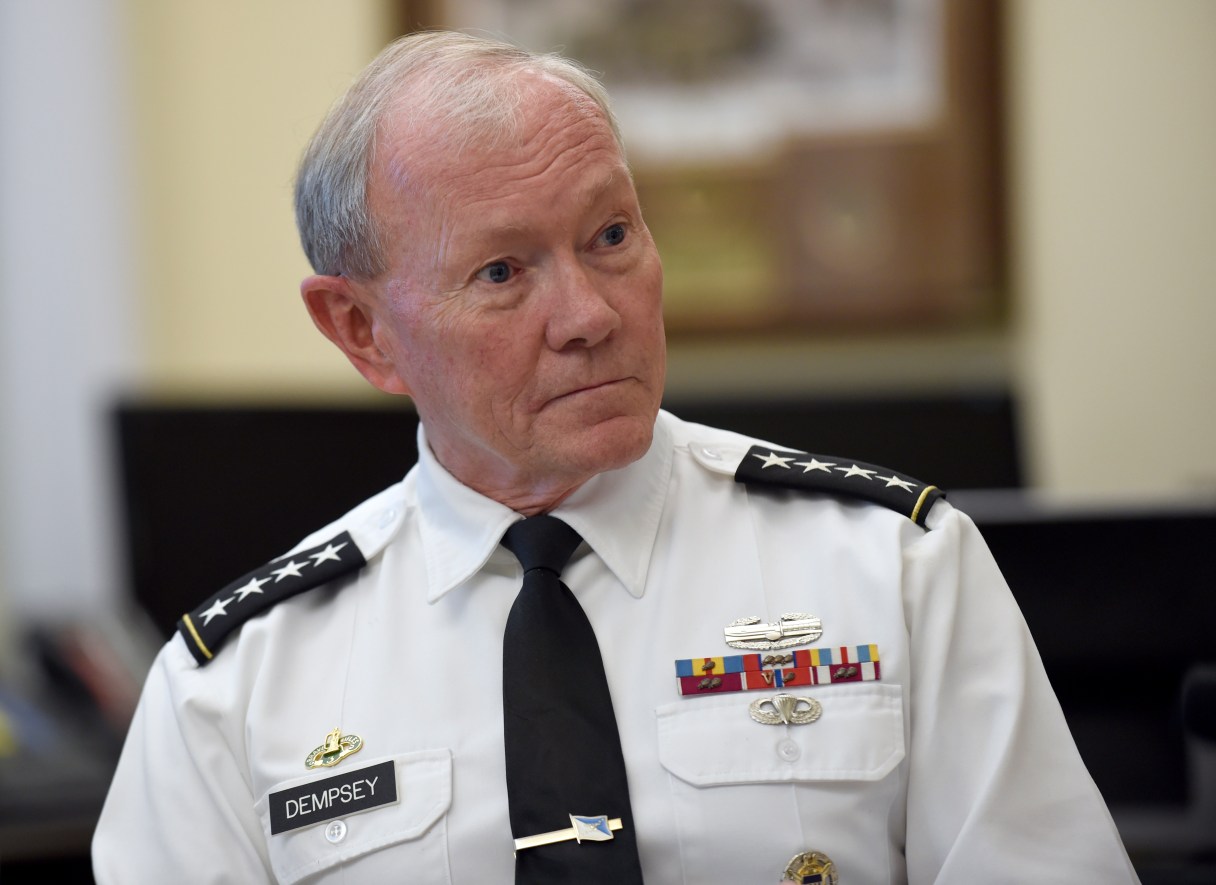
Joint Chiefs Chairman Gen. Martin Dempsey speaks during an interview with The Associated Press at the Pentagon in Washington, Wednesday, June 24, 2015. The man often called America’s top military officer, the most powerful person in uniform, actually commands nothing. No tanks, no planes, no ships, no troops. His voice carries great weight, but he gives no combat orders. As chairman Dempsey is the public face of the military, but he is not in the formal chain of command linking the president to his commanders in the field. Dempsey, who is completing four years in the job, has said it reminds him of entering the Army as a lowly second lieutenant.   (AP Photo/Susan Walsh)
Joint Chiefs Chairman Gen. Martin Dempsey speaks during an interview with The Associated Press at the Pentagon in Washington, Wednesday, June 24, 2015. The man often called America’s top military officer, the most powerful person in uniform, actually commands nothing. No tanks, no planes, no ships, no troops. His voice carries great weight, but he gives no combat orders. As chairman Dempsey is the public face of the military, but he is not in the formal chain of command linking the president to his commanders in the field. Dempsey, who is completing four years in the job, has said it reminds him of entering the Army as a lowly second lieutenant. (AP Photo/Susan Walsh)

WASHINGTON (AP) – The man often called America’s top military officer, the most powerful person in uniform, actually commands nothing. No tanks, no planes, no ships, no troops.

His voice carries great weight, but he gives no combat orders.

He is chairman of the Joint Chiefs of Staff – adviser to presidents, advocate for troops, strategic thinker, and occasionally a political punching bag. He stands atop the military heap, and the role has grown in influence and public prominence, yet it remains arguably one of the least understood. In the view of some who have held the job, this disconnect has made the chairman more vulnerable to political swipes from all sides.

With the Joint Chiefs of Staff officially established after World War II, 18 men have held the job since 1949. Nine were Army generals, four were Navy admirals, four were from the Air Force and one was a Marine. (No woman is likely to fill the job anytime soon in a male-dominated military.)

Pending an expected Senate vote to confirm him this month, Gen. Joseph Dunford will be the next chairman. The commandant of the Marine Corps sailed through his confirmation hearing Thursday and is expected to take over Oct. 1 for Gen. Martin E. Dempsey, who will retire after a 41-year Army career.