
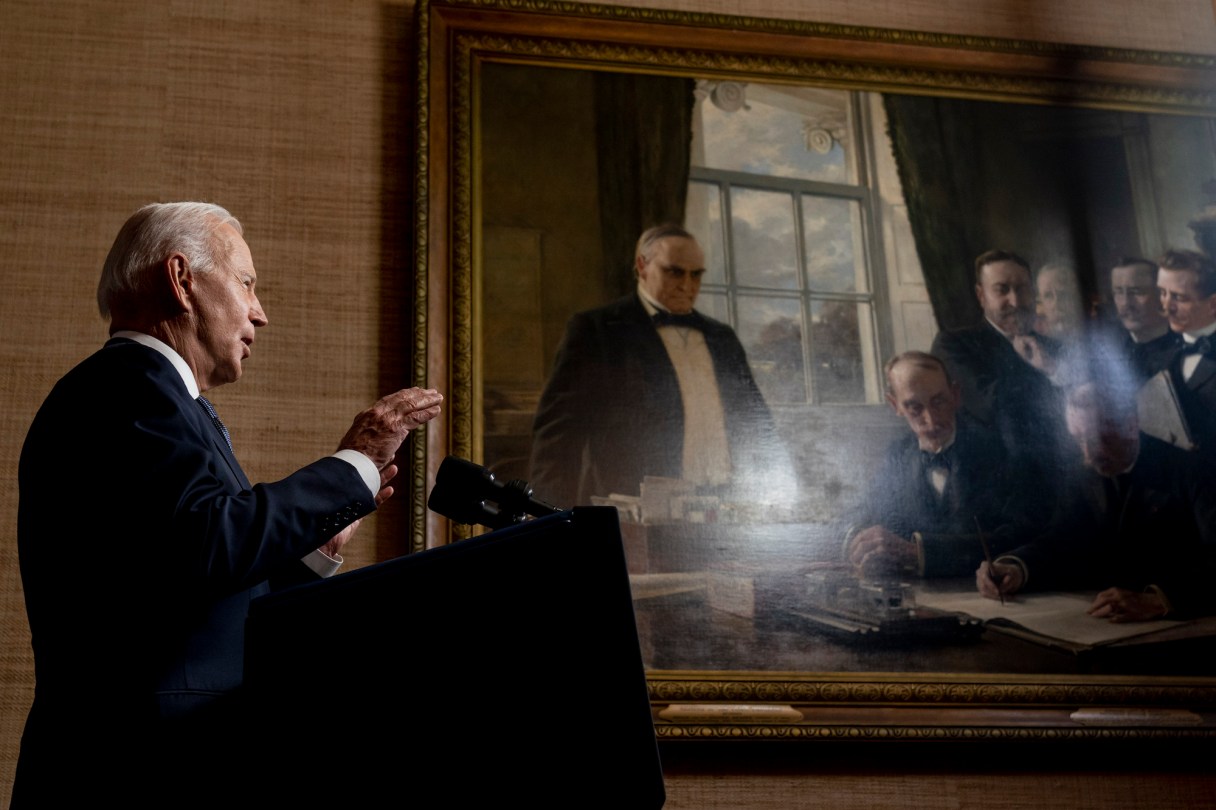
President Joe Biden’s expected announcement Wednesday that he will begin removing all U.S. troops from Afghanistan by the end of the month and complete the withdrawal by Sept. 11, the 20th anniversary of the terror attacks that provoked the war, will finally bring to a close direct American military involvement there.
But as the administration has said, it will not end the government’s role in trying to broker a lasting peace and regional stability. “What we won’t do is use our troops as a bargaining chip in that process,” a government official told the Washington Post, which first reported the development.
The situation remains dicey. The Trump administration signed an agreement last year to remove the last of U.S. troops by May 1 (which also would precipitate withdrawals by NATO allies), but that date was thrown into doubt after security officials warned that a precipitous departure could add to the instability and increase the chances of the country descending back into civil war.
It’s unclear whether that risk diminishes if the U.S. waits until the end of summer to be gone, or what the Taliban might do in the interim (it has resisted attacking U.S. troops since the agreement). But the timing of our departure has been problematic ever since President George W. Bush launched the U.S. invasion of Afghanistan in the aftermath of the 9/11 terror attacks two decades ago. His and successive administrations have long struggled to craft an exit plan from a deployment that once peaked at about 100,000 troops.
What is clear is that it is in the best interests of Afghan President Ashraf Ghani, the Taliban and the U.S. to reach a lasting peace accord before the withdrawal of U.S. and allied troops. And at this point in that seemingly endless engagement, the departure of U.S. troops might compel the compromises necessary to achieve peace.