
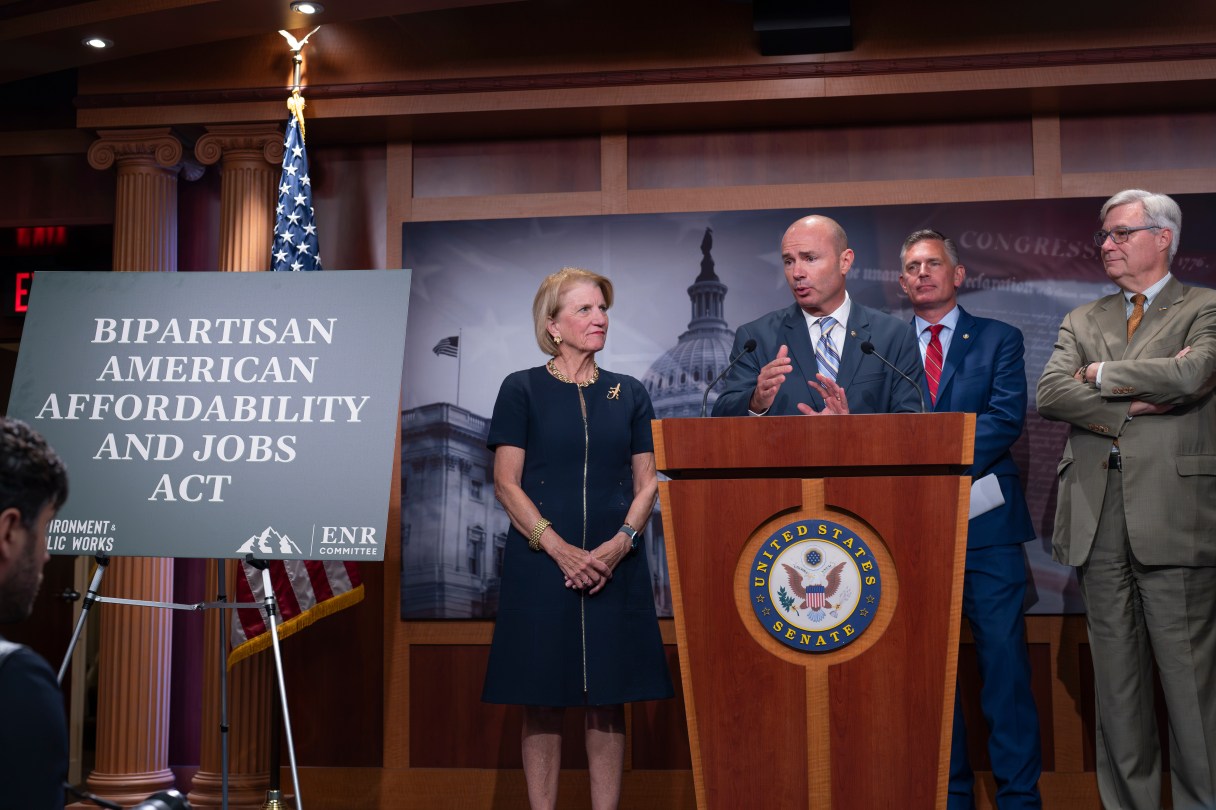
You might not know it from all the post-election recriminations, but Congress is on the cusp of a major bipartisan victory. Getting it across the line will require a bit of prudence, resolve and common sense.
At issue is a long-negotiated bill known as the Bipartisan American Affordability and Jobs Act. Its goal is to ease permitting for federally linked construction projects. That process can run to hundreds of pages, cost millions of dollars and impose years’ worth of delays. The bill would streamline the environmental review process; limit obstructive litigation; curtail capricious executive-branch actions, like the ones the president has recently threatened; encourage green energy projects; expand transmission capacity; and offer far more certainty for companies and investors. Senators voted to advance the measure Monday.
So far, the plan has the support of industry, clean energy producers, many climate groups, business leaders, numerous unions, much of the Senate and the White House. What’s the holdup? Some Democrats, buoyant after landslide victories in the midterms, have argued that they should now hold out for a better deal (for instance, one that includes more environmental protections or restrictions on fossil fuel projects). They shouldn’t.
For climate reasons alone, the bill deserves support. Multiple publicly available analyses have found that it would lead to significantly lower emissions. A study by the Rhodium Group found that it could add up to 249 gigawatts of new clean energy capacity by 2040, while Resources for the Future projects a 30% increase in transmission capacity. Total power-sector carbon emissions might be reduced by as much as 24% relative to 2025.
Other potential benefits abound. One trade group found that the new bill might save manufacturers $4.2 billion a year, or more than $42,000 per business. Another analysis estimated it could create more than 100,000 industrial jobs along with “massive amounts of new solar, wind and storage capacity.” Thanks to lower fuel and generation costs, the measure might slash power-sector costs by $350 billion through 2050.