
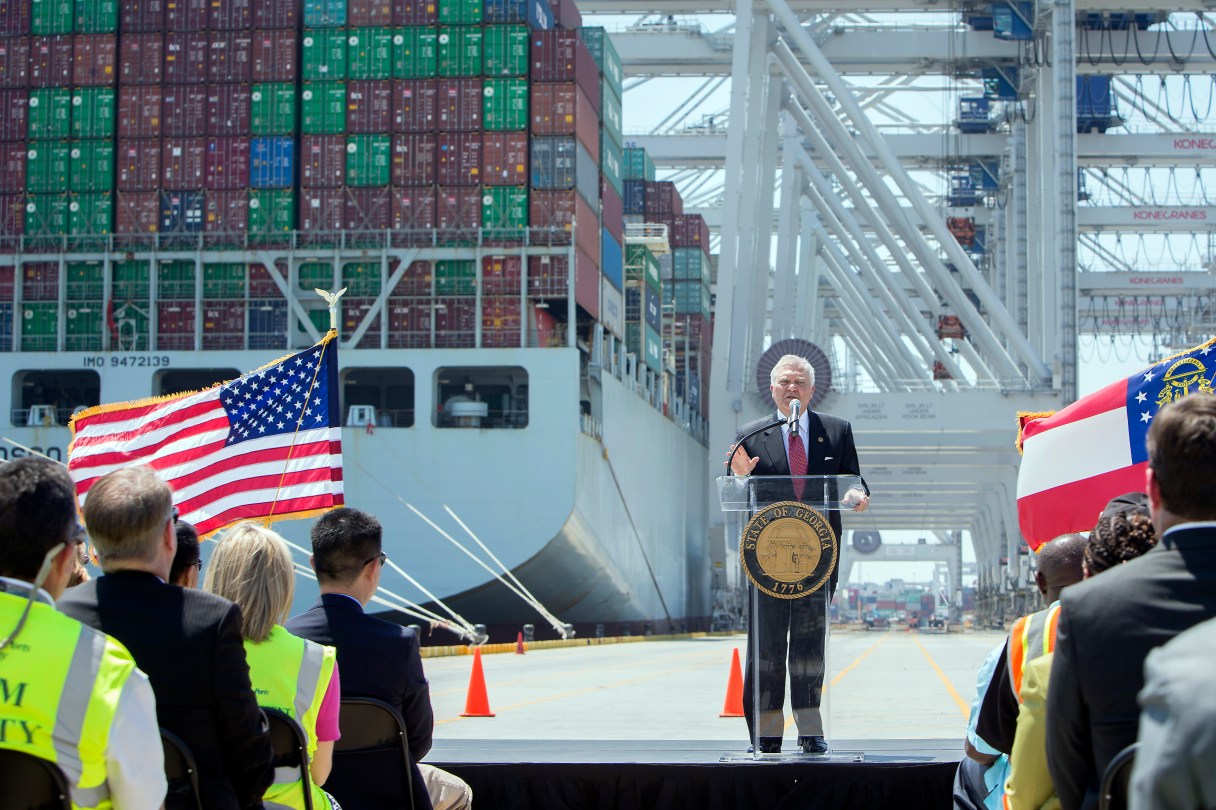
SAVANNAH, Ga. (AP) – With the largest cargo ship ever to visit the U.S. East Coast docked behind him, Gov. Nathan Deal said Friday he’s willing to spend an additional $20 million from Georgia taxpayers to make room for more giant ships to reach the Port of Savannah.
Deal visited Savannah as dockworkers were unloading the COSCO Development, a massive vessel capable of carrying 13,000 cargo containers measuring 20-feet-long apiece. Like other East Coast ports, Savannah is racing to deepen its 39-mile (63-kilometer) shipping channel so similar big ships will fit at lower tides even when fully loaded.
The Army Corps of Engineers recently raised the project’s estimated cost 38 percent to a whopping $973 million. Mackie McIntosh, the Corps’ chief of civil works in Savannah, said last month Georgia taxpayers – who have already put $260 million into the harbor deepening – will be expected to contribute about $20 million more.
“I support whatever’s going to be necessary for us to complete this project in a timely fashion,” Deal told reporters at the Savannah port. “And if that’s what it takes, I think the citizens and the voters and the elected representatives in the General Assembly will be willing to do that extra part.”
Deal has long referred to the Savannah harbor expansion as his top economic development priority. Dredging finally began in 2015 and is expected to continue for another five years. Supporters of the project want to avoid delays, especially now that the bigger ships aren’t waiting.