
Saturday, November 14, 2026Nov 14

2 visions emerge for getting self-driving cars on road

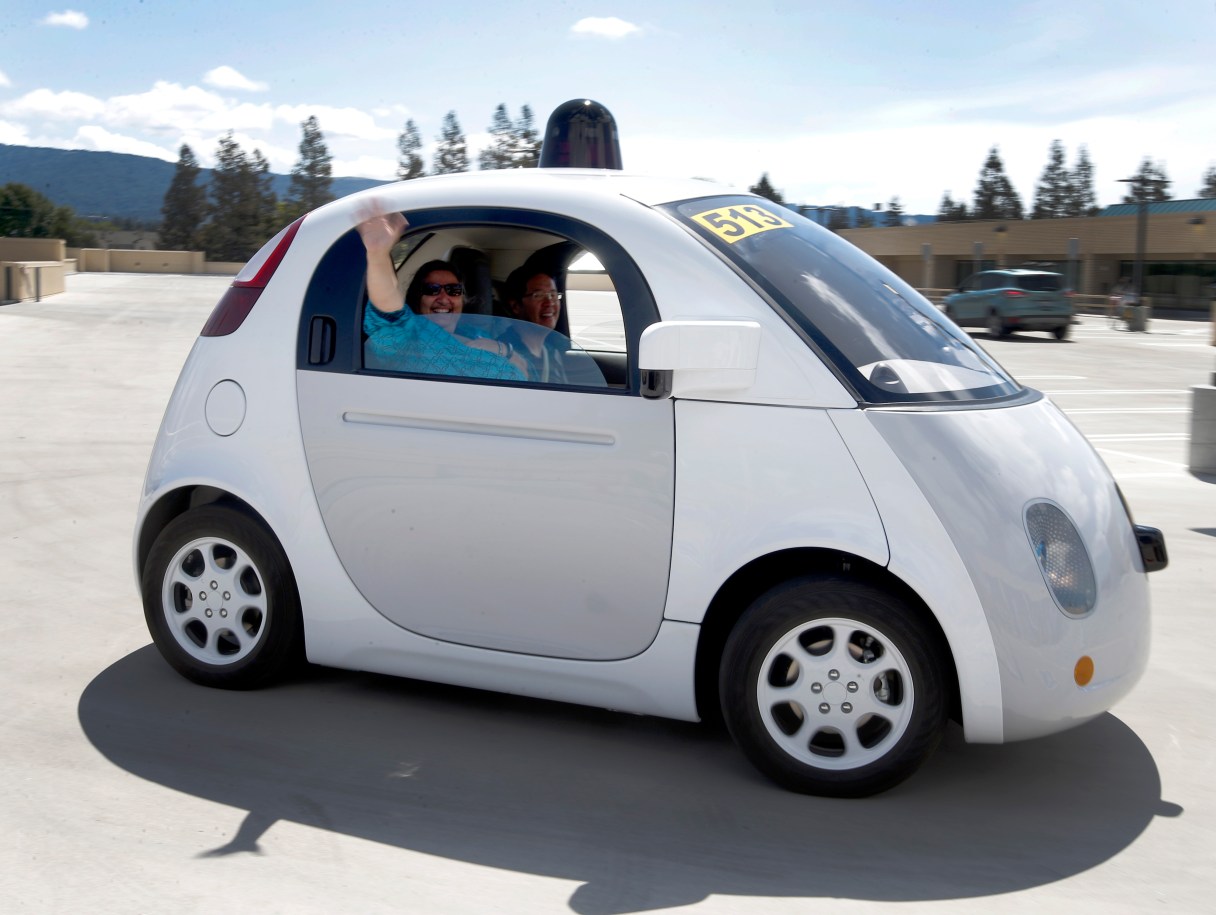
In this May 13, 2015 photo, Teresa Favuzzi, of Sacramento, waves as she gets a ride in the new Google self-driving prototype car during a demonstration at Google's campus in Mountain View, Calif. The plan of traditional automakers is to gradually automate more functions of driving until, perhaps by 2025, some cars will be fully capable of driving themselves. But Google, Alibaba, Baidu and other tech companies are aggressively working on their own self-driving vehicles, and could leapfrog the car industry in bringing them to market. (AP Photo/Tony Avelar)

DETROIT (AP) – Two competing visions could determine how you first experience a driverless car.

Traditional automakers like Mercedes and Toyota already make vehicles equipped with systems that keep cars within their lanes, apply the brakes or park by themselves. Their plan is to gradually automate more functions of driving until, perhaps by 2025, some cars will be fully capable of driving themselves.

But Google, Alibaba, Baidu and other tech companies are aggressively working on their own self-driving vehicles, and could leapfrog the car industry in bringing them to market. Google, for instance, promises to deliver a self-driving car in five years.

Some experts predict that car companies will continue to make the cars consumers buy and park in their driveway, and eventually some will be driverless. When the tech companies roll out driverless cars, they likely will be self-driving taxis for urban areas.

But the outcome is far from certain. Tech companies could go into the business of making cars for consumers, or automakers could choose to develop and operate their own fleets of self-driving taxis.