
Thursday, November 12, 2026Nov 12

Same-sex marriage fight turns to clerk who refuse licenses

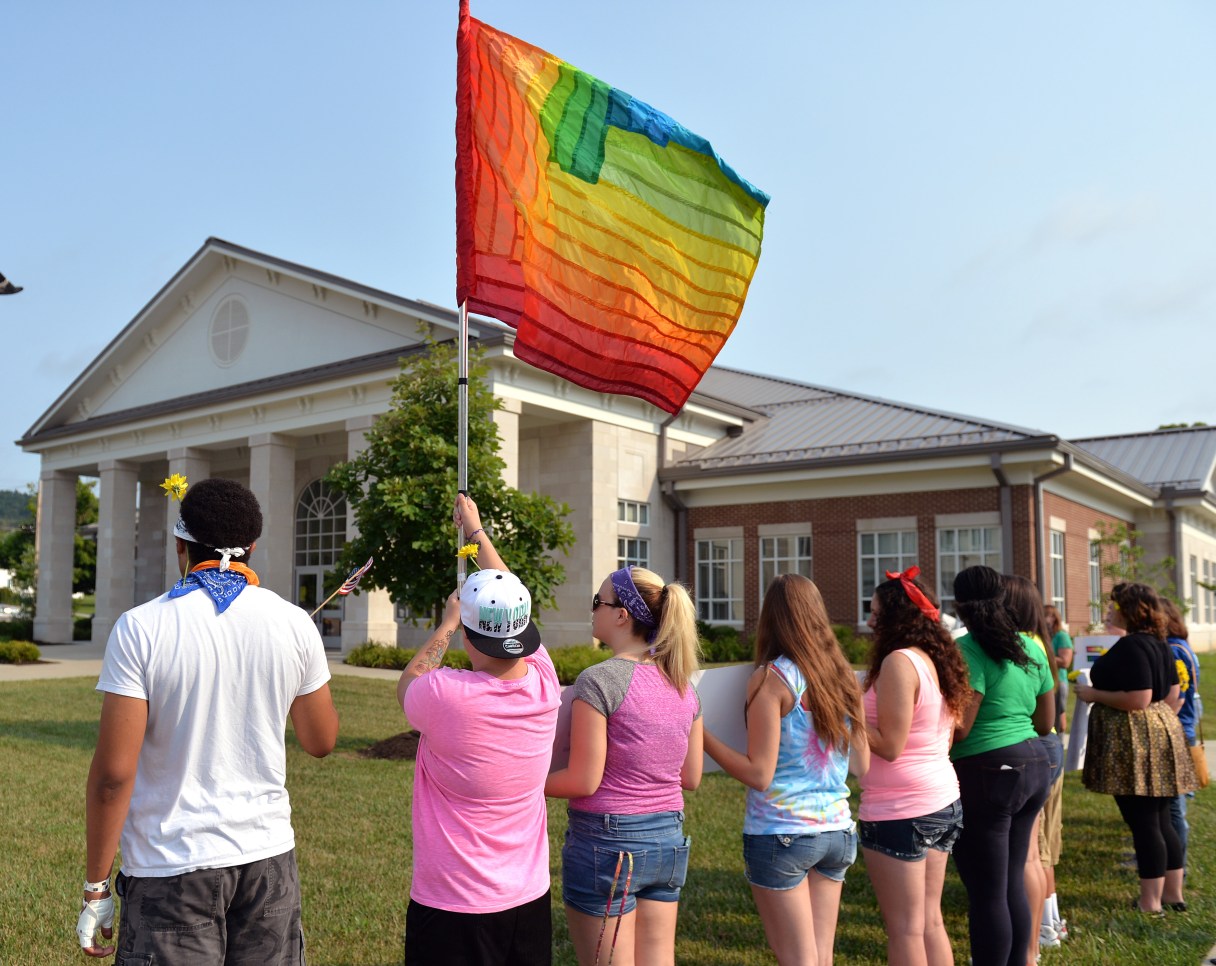
Protesters waive a rainbow flag on the front lawn of the Rowan County Judicial Center, Tuesday, June 30, 2015, in Morehead, Ky. The protest was being held against Rowan County Clerk Kim Davis, who, due to the ruling of the Supreme Court of the United States and her own religious beliefs, has refused to issue any marriage licenses in the county. (AP Photo/Timothy D. Easley)
Protesters waive a rainbow flag on the front lawn of the Rowan County Judicial Center, Tuesday, June 30, 2015, in Morehead, Ky. The protest was being held against Rowan County Clerk Kim Davis, who, due to the ruling of the Supreme Court of the United States and her own religious beliefs, has refused to issue any marriage licenses in the county. (AP Photo/Timothy D. Easley) Protesters waive a rainbow flag on the front lawn of the Rowan County Judicial Center, Tuesday, June 30, 2015, in Morehead, Ky. The protest was being held against Rowan County Clerk Kim Davis, who, due to the ruling of the Supreme Court of the United States and her own religious beliefs, has refused to issue any marriage licenses in the county. (AP Photo/Timothy D. Easley)

MOREHEAD, Ky. (AP) – Rowan County Clerk Kim Davis shut her blinds when she arrived at work Tuesday, blocking the view of several dozen rainbow-clad protesters outside her office who chanted “do your job” and carried signs that read “You Don’t Own Marriage.”

Then, at about 8:30 a.m., the newly elected clerk in Morehead, Kentucky, turned away a local lesbian couple who walked in and asked for a marriage license.

Davis is among a scattered assortment of public officials across the Bible Belt so repulsed by the thought of enabling a same-sex marriage that they are defying the U.S. Supreme Court and refusing to issue a license to anyone, gay or straight.

Judges and clerks in Alabama and Texas have done the same, citing state laws that say they “may” issue marriage licenses. If they “may,” then they “may not,” some argue.

The ruling legalizing gay marriage nationwide left room for personal religious objections, but these officials are asserting a broader right, claiming that they won’t be discriminating if they take their government offices out of the marriage business altogether.