
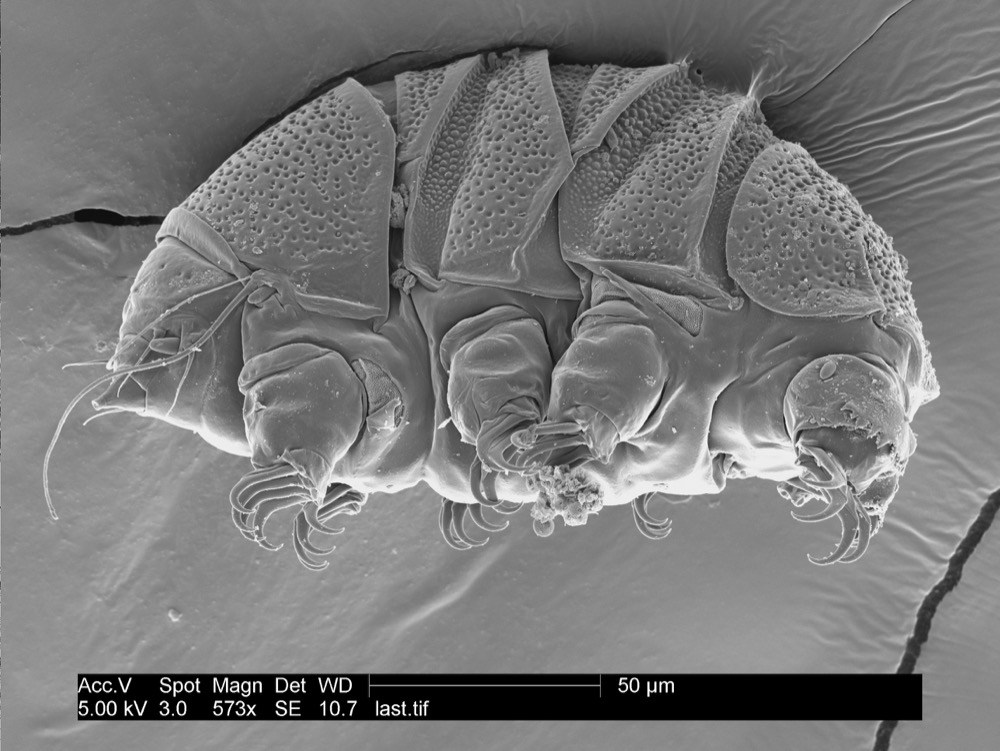
 This undated electron microscope image provided by William Miller of Baker University in March 2019 shows a tardigrade of the class Heterotardigrada, also known as a “water bear.” The small animals, about the size of a period, are able to survive extreme heat, cold, radiation and even the vacuum of space. (William Miller via AP)
WASHINGTON (AP) – Earth’s ultimate survivors can weather extreme heat, cold, radiation and even the vacuum of space. Now the U.S. military hopes these tiny critters called tardigrades can teach us about true toughness.
These animals are pipsqueaks, only about the size of a period. Under a microscope they look like some combination of chubby bear and single-eyed alien. And they are the closest life gets to indestructible.
No water? No worries. Tardigrades survive. Antarctic cold, 300-degree heat (150 degrees Celsius), a lack of oxygen, even punishing radiation doesn’t stop these animals. They are so resilient in the face of so many dangers that scientists think their unique biology may hold clues to how we can make crops more resistant to drought, better preserve blood and medicines, and even make more effective sunscreen.
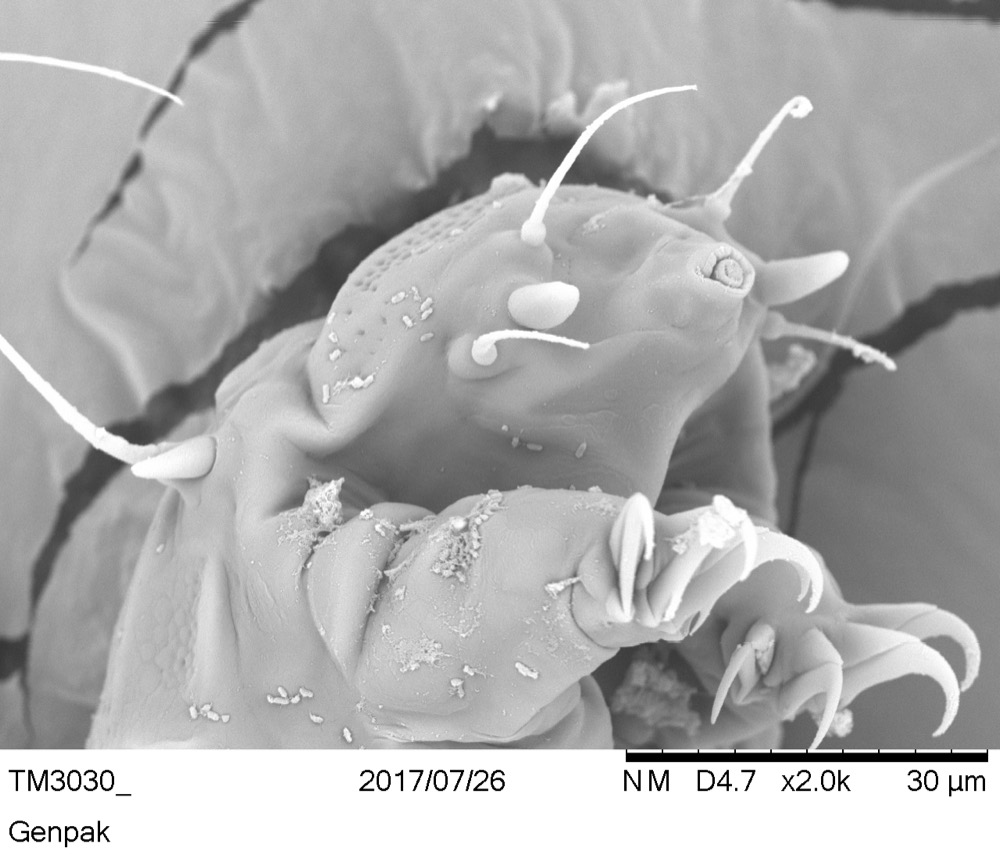
 This undated microscope photo provided by Thomas Boothby in March 2019 shows a tardigrade, also known as a “water bear.” The small animals, about the size of a period, are able to survive extreme heat, cold, radiation and even the vacuum of space. (Thomas Boothby via AP)
When the going gets tough for tardigrades, they curl up, dry out and wait. Then, when the environment gets better and they get water, they spring back to life.
Scientists say they can stay dormant for decades before reanimating.