
Thursday, October 29, 2026Oct 29

This story is free to read.

Spa shootings could be first test of Georgia hate crimes law

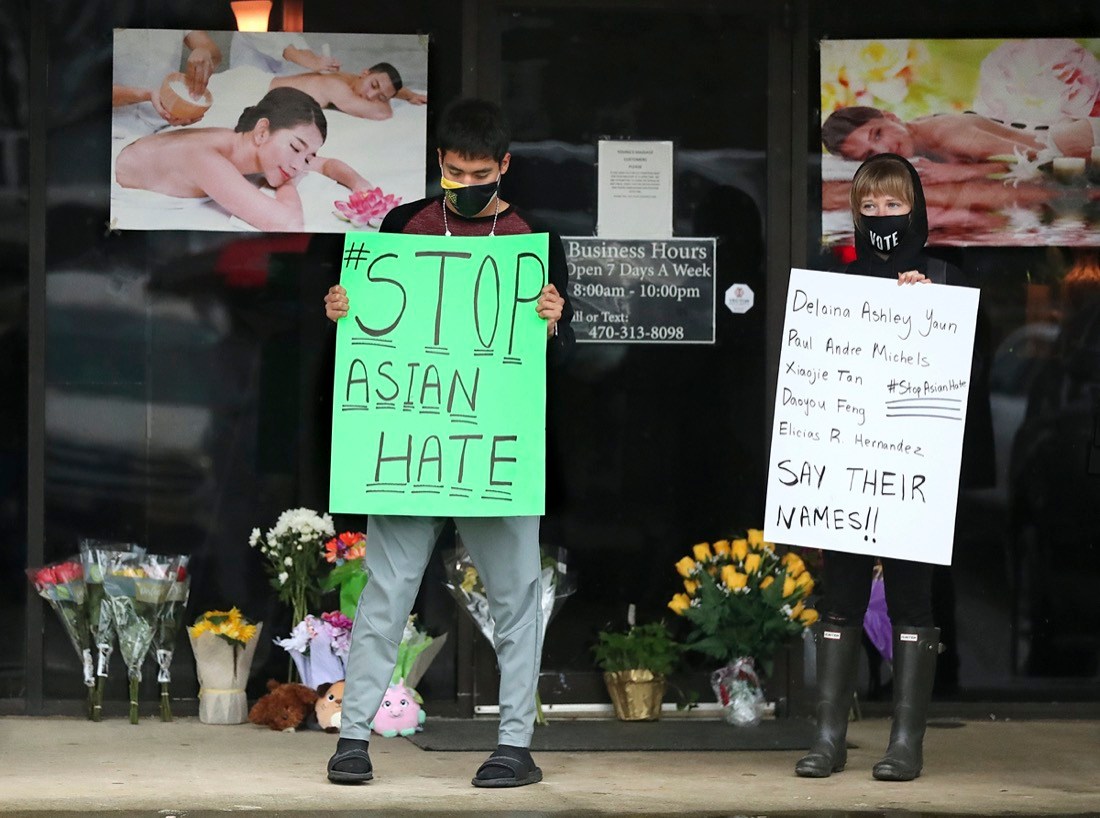
FILE - In this March 17, 2021, file photo, after dropping off flowers Jesus Estrella, left, and Shelby stand in support of the Asian and Hispanic community outside Young's Asian Massage in Acworth, Ga. The murder case against Robert Aaron Long, a white man accused of shooting and killing six women of Asian descent and two other people at Atlanta-area massage businesses, could become the first big test for Georgia's new hate crimes law. (Curtis Compton /Atlanta Journal-Constitution via AP, File)
FILE - In this March 17, 2021, file photo, after dropping off flowers Jesus Estrella, left, and Shelby stand in support of the Asian and Hispanic community outside Young's Asian Massage in Acworth, Ga. The murder case against Robert Aaron Long, a white man accused of shooting and killing six women of Asian descent and two other people at Atlanta-area massage businesses, could become the first big test for Georgia's new hate crimes law. (Curtis Compton /Atlanta Journal-Constitution via AP, File) FILE - In this March 17, 2021, file photo, after dropping off flowers Jesus Estrella, left, and Shelby stand in support of the Asian and Hispanic community outside Young's Asian Massage in Acworth, Ga. The murder case against Robert Aaron Long, a white man accused of shooting and killing six women of Asian descent and two other people at Atlanta-area massage businesses, could become the first big test for Georgia's new hate crimes law. (Curtis Compton /Atlanta Journal-Constitution via AP, File)

ATLANTA (AP) – The murder case against a white man charged with shooting and killing six women of Asian descent and two other people at Atlanta-area massage businesses this week could become the first big test for Georgia’s new hate crimes law.

Robert Aaron Long, 21, told police that the attacks Tuesday at two spas in Atlanta and another massage business near suburban Woodstock were not racially motivated and claimed to have a sex addiction. Authorities said he apparently lashed out at what he saw as sources of temptation but were still investigating his motive.

Because most of the victims were women of Asian descent, there’s skepticism of that explanation and public clamoring for hate crime charges, especially among the Asian American community, which has faced rising numbers of attacks since the coronavirus pandemic took hold.

But, like many states, the Georgia law enacted last summer does not provide for a standalone hate crime, instead allowing an additional penalty when a person is convicted of another crime.

“It’s not something you get arrested for. It’s a sentence enhancer,” said Pete Skandalakis, a former prosecutor and executive director of the Prosecuting Attorneys’ Council of Georgia.