
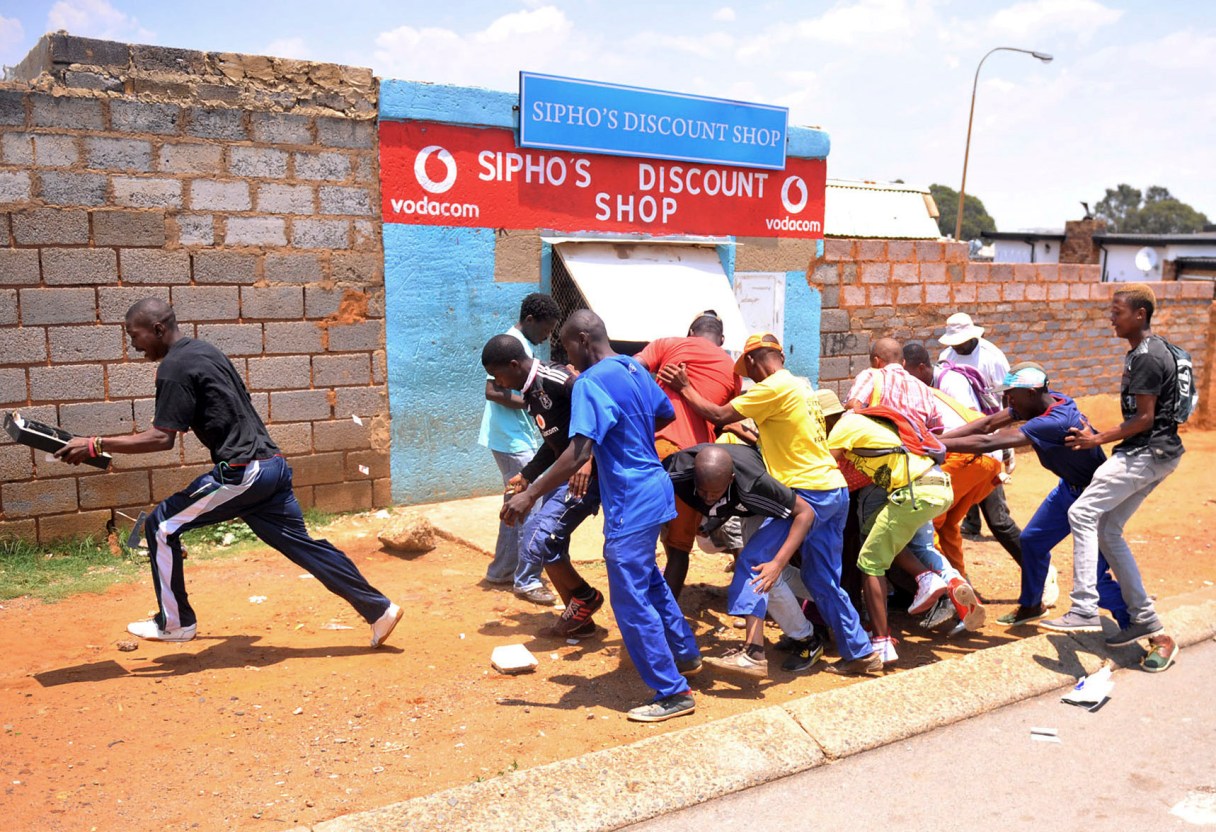
JOHANNESBURG (AP) – South African authorities have re-established order – for now – in Soweto and other Johannesburg townships, after a week of looting of foreign-owned shops and violence in which four people were killed.
The 19-year-old mother of an infant who died after being trampled by a mob during the looting said she was accidentally caught in the street chaos. Some witnesses, however, said the mother was herself pillaging when she was knocked down with her baby strapped to her chest.
The dispute about the baby boy, Nqobile Majozi, echoes conflicting stories about what motivated some of the worst unrest in Soweto and nearby areas since protests swept the same districts before white racist rule ended in 1994. The casualty toll was higher during mass rallies and bloody, apartheid-era crackdowns, but the new upheaval raises concerns about anti-immigrant sentiment, the frustration of the poor and the government’s handling of social tensions.
In a separate incident, a truck carrying livestock overturned on a highway in the Johannesburg area last week, and people carrying knives and buckets descended on the injured cattle and slaughtered nearly three-dozen for their meat, according to Eyewitness News, a South African media outlet. The driver alleged that people on a bridge threw objects at his vehicle, causing it to crash.
Such episodes reflect the predicament of South Africa, a regional hub with gleaming infrastructure projects where many people nevertheless feel marginalized by high unemployment, a lack of opportunity and a gap between rich and poor that is starkly visible in leafy, spacious suburbs, on the one hand, and the shacks and so-called “matchbox” homes of the townships where blacks were confined under apartheid.