
Monday, November 9, 2026Nov 9

Global efforts against ivory traffickers still falling short

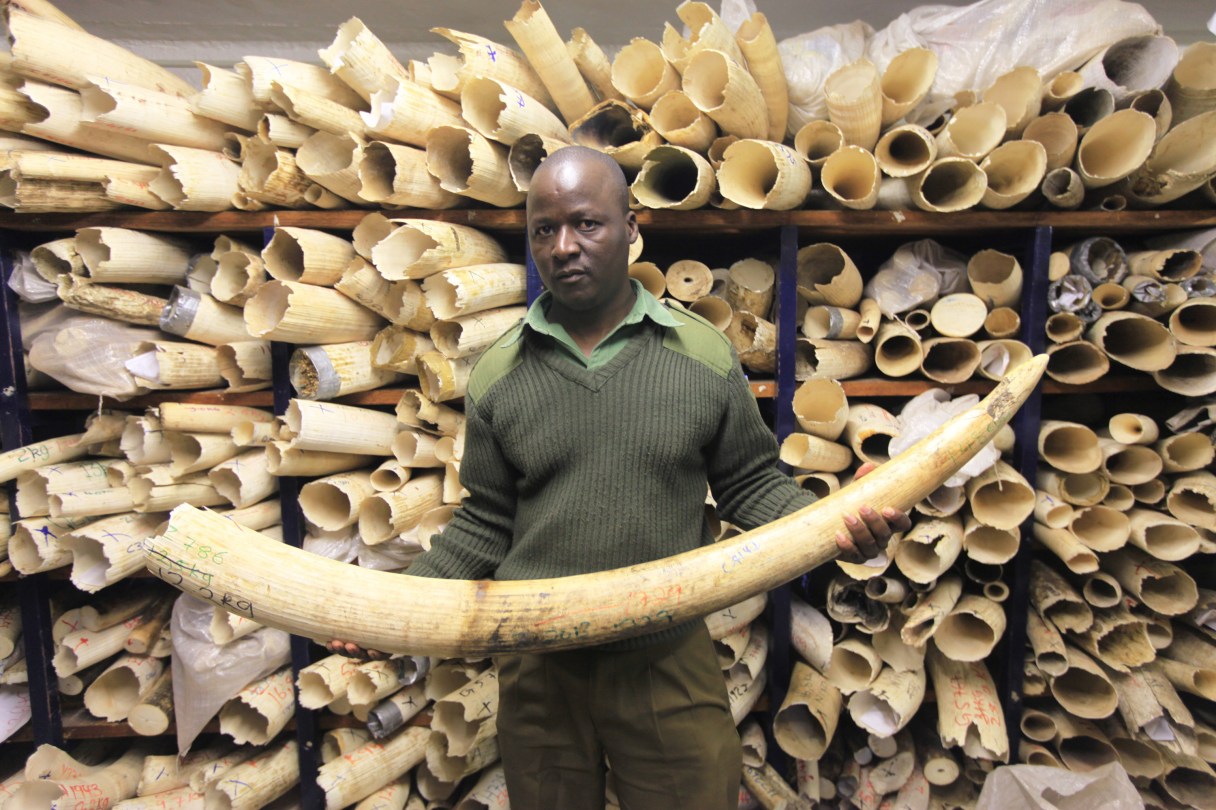
In this Thursday, June, 2, 2016 file photo, a Zimbabwe National Parks official holds an elephant task during a tour of the country's ivory stockpile at the Zimbabwe National Parks Headquarters in Harare. Africa is divided over how to conserve elephants whose population has plummeted in the last decade.Namibia, Zimbabwe and South Africa favour selling ivory stockpiles but are opposed by about 30 African countries that want to tighten an international ban on the ivory trade. (AP Photo/Tsvangirayi Mukwazhi, file)
In this Thursday, June, 2, 2016 file photo, a Zimbabwe National Parks official holds an elephant task during a tour of the country's ivory stockpile at the Zimbabwe National Parks Headquarters in Harare. Africa is divided over how to conserve elephants whose population has plummeted in the last decade.Namibia, Zimbabwe and South Africa favour selling ivory stockpiles but are opposed by about 30 African countries that want to tighten an international ban on the ivory trade. (AP Photo/Tsvangirayi Mukwazhi, file) In this Thursday, June, 2, 2016 file photo, a Zimbabwe National Parks official holds an elephant task during a tour of the country's ivory stockpile at the Zimbabwe National Parks Headquarters in Harare. Africa is divided over how to conserve elephants whose population has plummeted in the last decade.Namibia, Zimbabwe and South Africa favour selling ivory stockpiles but are opposed by about 30 African countries that want to tighten an international ban on the ivory trade. (AP Photo/Tsvangirayi Mukwazhi, file)

JOHANNESBURG (AP) – Poaching syndicates shipped large amounts of African elephant ivory last year despite global calls to dismantle the trafficking networks that often collude with corrupt officials, conservationists said as an international wildlife conference opened Saturday in South Africa.

The illegal ivory trade “has remained fairly constant at unacceptably high levels” since 2010, and in 2015 there was a “continuing upward trend” in the seizure of larger shipments of more than 100 kilograms (220 pounds), according to a document released by organizers. The transfer of big amounts of ivory indicates the key role of organized crime in poaching, the document said.

The plight of elephants dominated the discussion on the first day of the 12-day Convention on International Trade in Endangered Species of Wild Fauna and Flora, or CITES, conference. Rhinos, sharks, pangolins, helmeted hornbills and other threatened species are also on the agenda at the meeting, which regulates trade in wild animals and plants with the aim of ensuring their survival.

Last held in Bangkok in 2013, this year’s CITES conference ends Oct. 5. The U.N. group has 183 member countries and can recommend suspending trade in wildlife with countries that don’t enforce its guidelines.

Wildlife trafficking is estimated to generate billions of dollars a year globally. Interpol is among the delegations at the conference and will discuss crime, corruption and the illegal financial flows of poaching.