
Friday, November 6, 2026Nov 6

This story is free to read.

Galaxy count may now top 2 trillion across universe

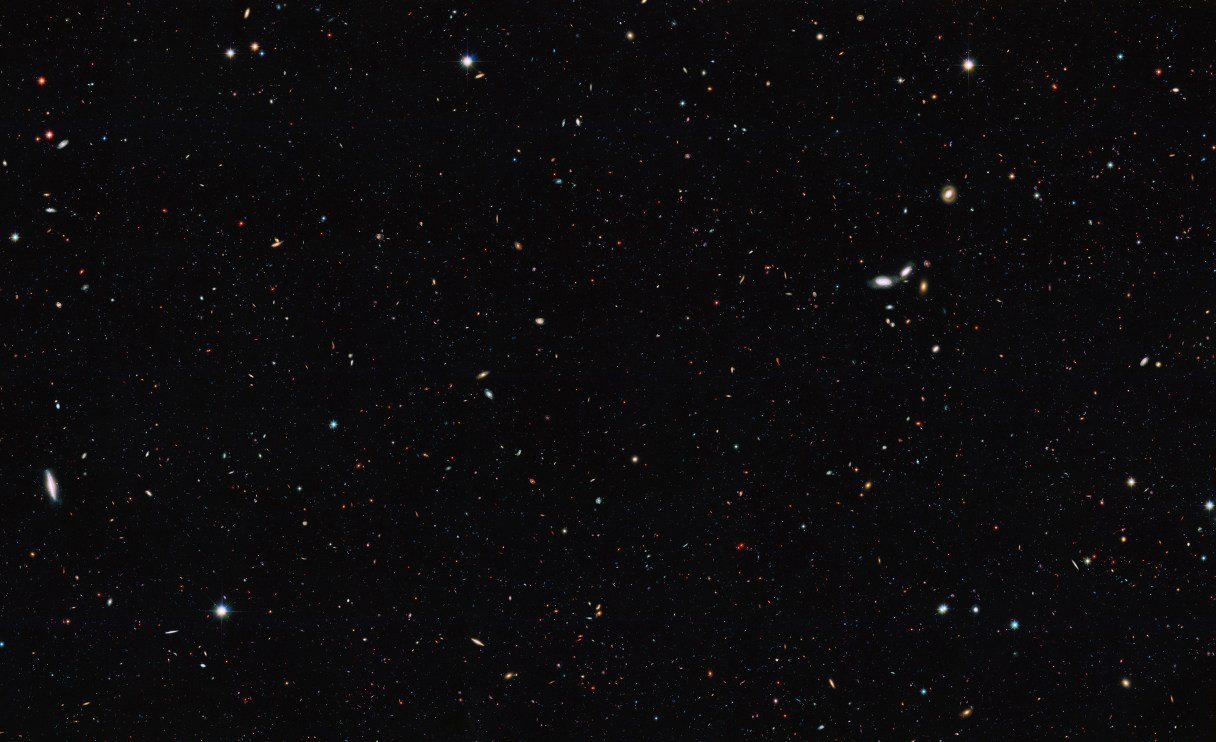
This image made available by NASA, ESA/Hubble on Thursday, Oct. 13, 2016 shows a portion of the southern field of the Great Observatories Origins Deep Survey to recalculate the total number of galaxies in the observable universe. In a report published on Thursday, an international team of astronomers, led by Christopher Conselice, Professor of Astrophysics at the University of Nottingham, have found that the universe contains at least two trillion galaxies, twenty times more than previously thought. (NASA, ESA/Hubble via AP)
This image made available by NASA, ESA/Hubble on Thursday, Oct. 13, 2016 shows a portion of the southern field of the Great Observatories Origins Deep Survey to recalculate the total number of galaxies in the observable universe. In a report published on Thursday, an international team of astronomers, led by Christopher Conselice, Professor of Astrophysics at the University of Nottingham, have found that the universe contains at least two trillion galaxies, twenty times more than previously thought. (NASA, ESA/Hubble via AP) This image made available by NASA, ESA/Hubble on Thursday, Oct. 13, 2016 shows a portion of the southern field of the Great Observatories Origins Deep Survey to recalculate the total number of galaxies in the observable universe. In a report published on Thursday, an international team of astronomers, led by Christopher Conselice, Professor of Astrophysics at the University of Nottingham, have found that the universe contains at least two trillion galaxies, twenty times more than previously thought. (NASA, ESA/Hubble via AP)

CAPE CANAVERAL, Fla. (AP) – Thought the universe was crowded with 100 billion to 200 billion galaxies? Try 1 trillion or even 2 trillion galaxies and more.

That’s the latest census, reported Thursday.

An astrophysics professor at the University of Nottingham in England led the international team that came up with the mind-boggling estimate of 2 trillion galaxies in the universe.

Professor Christopher Conselice (CON-sell-lease) says that represents a minimum tenfold increase. The scientists based their galaxy head count on deep-space surveys by the Hubble Space Telescope and ground observatories. They turned the images into 3-D and used new mathematical models for the update.