
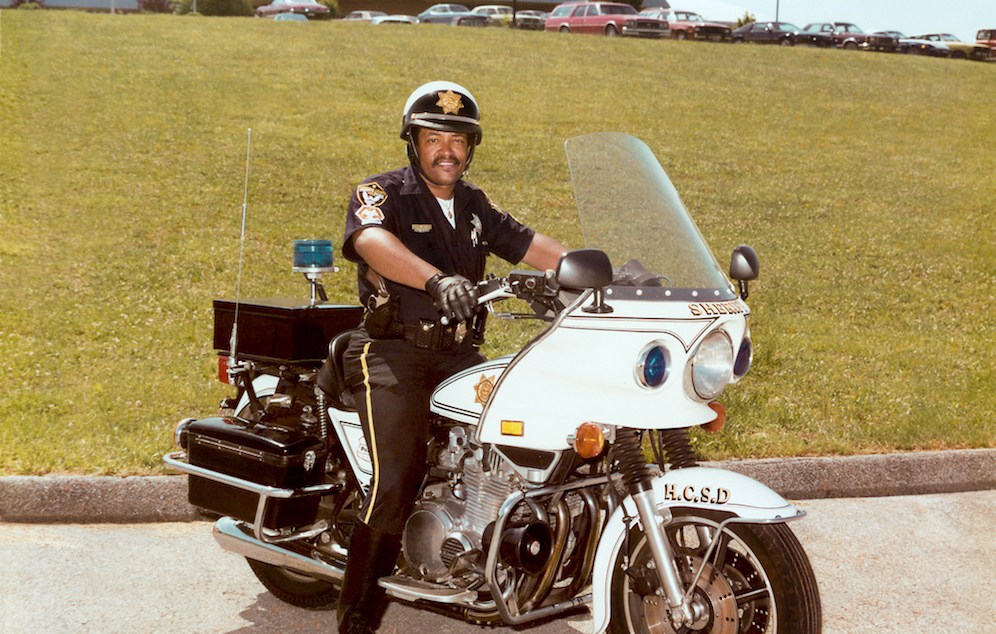
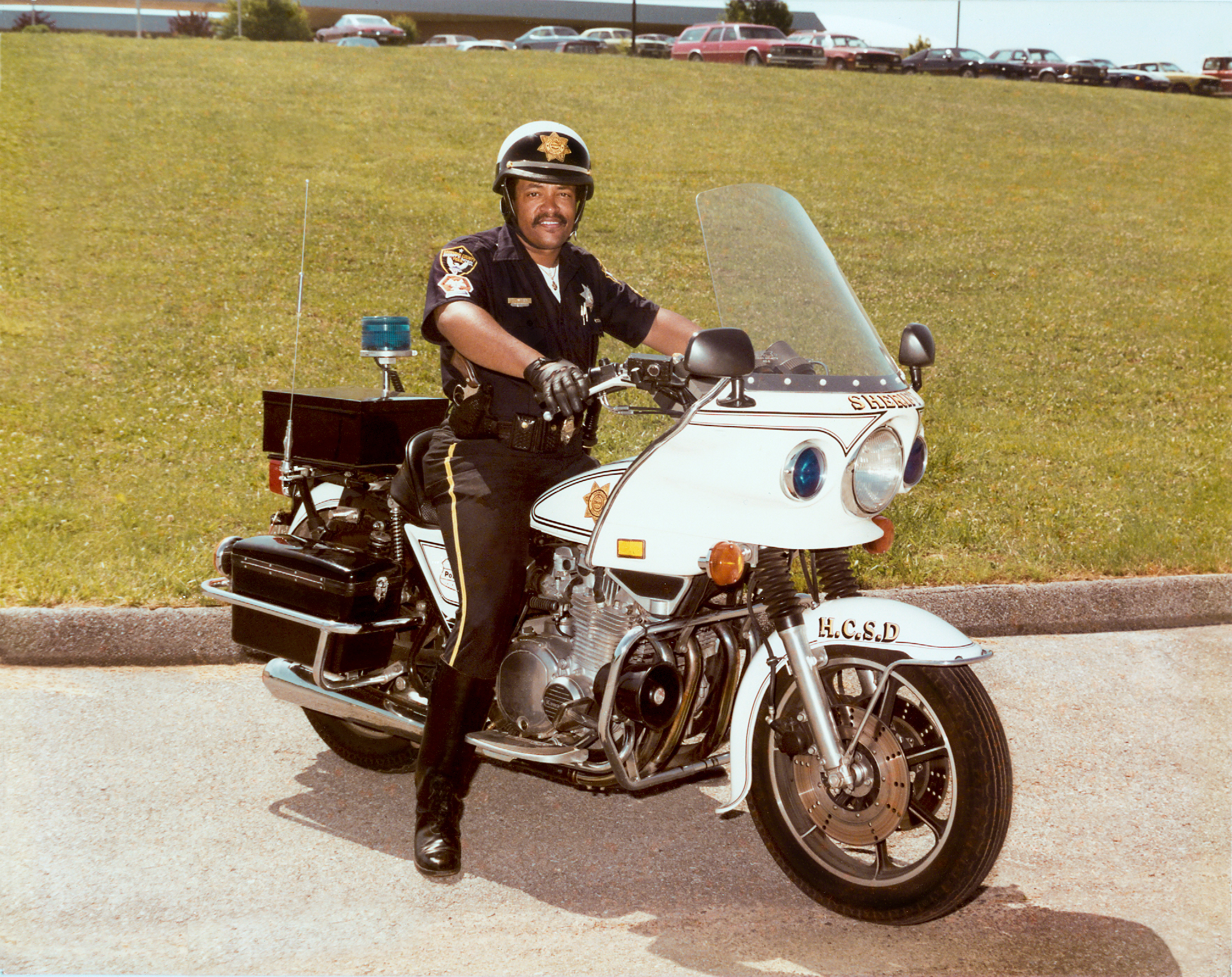
 Contributed Photo by Hamilton County Sheriff’s Office / Retired Chief Deputy Charles Lowery Jr. was the first African American to be a part of the motorcycle traffic investigative unit.
Charles Lowery Jr. was the first African American with a college degree to be an officer with the Hamilton County Sheriff’s Office when he joined in 1976.
After graduating with a bachelor’s degree in criminal justice from Eastern Kentucky University in 1975, Lowery pursued a career in law enforcement because he loved it.
“God blessed me, even through the heartache, even through the pain,” Lowery, now retired, said in an interview with the Times Free Press. “Through the prejudice, through the good times, through the encouraging times, through the officers that have put their arms around me and said, ‘Everything’s gonna be all right,’ I’ve been blessed.”
Lowery’s initial plans were to work for the Chattanooga Police Department, but slots were full by the time he graduated, so he submitted an application to the sheriff’s office, then known as the Hamilton County Police Department, with hopes to transfer to the Chattanooga police.
The opportunity to transfer never emerged, and Lowery remained with the sheriff’s office until he retired in June 2018.
(READ MORE: Camp Jordan Parkway in East Ridge could hold emergency medical facility)
In his 41 years with the sheriff’s office, Lowery pioneered the school resource officer division. He was the first Black man to work in the motorcycle traffic investigative unit, and he was the first African American man to be an accident reconstructionist. He also put himself through emergency medical technician training.
At the beginning of his career, Lowery faced prejudice and racism within and outside the sheriff’s office. According to him, one of the things that upset fellow officers was that he was a young, educated Black man.
“I’m expecting people to work with me and teach me the streets, and what I have learned bookwise, I could teach them,” Lowery said.
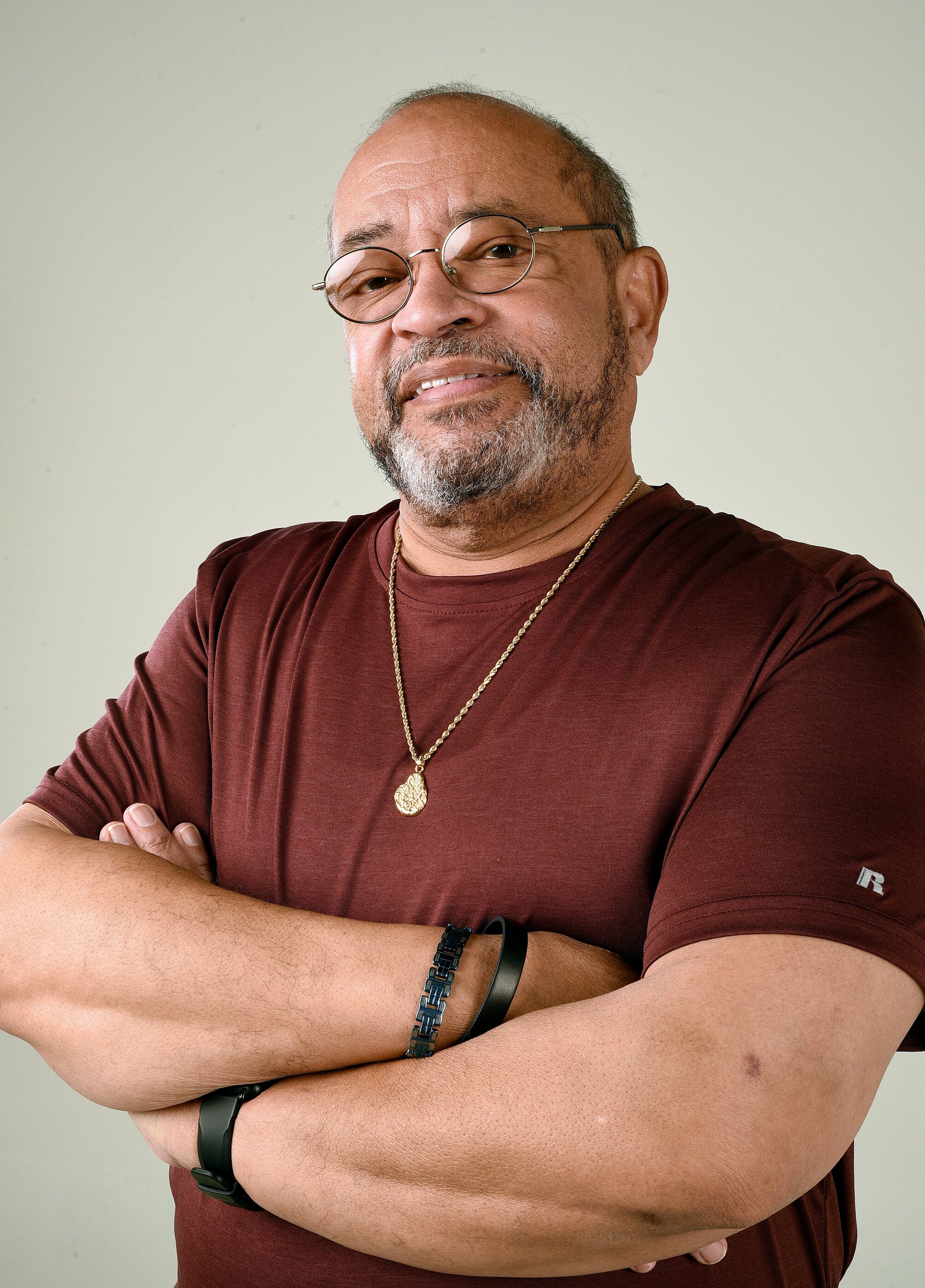 Staff Photo by Matt Hamilton / Retired Chief Deputy Charles Lowery Jr. at the Times Free Press on Tuesday, Feb. 15, 2022.
Instead, he said, the reaction he got was more like, “He’s not from Tennessee, he’s from Kentucky, he’s educated, so that means that he’s going to be promoted and progress quicker than me, and I’ve been here for 15 years as a ‘good boy.’ I was not expecting that at all, but I accepted it and was able to deal with the mentality and still be myself.”
(READ MORE: Too few new educators are graduating to reverse Tennessee teacher shortage, report says)
One of the first places Lowery was assigned as a patrol officer was Mowbray Mountain, which was rumored to have a sign that warned about being Black in that area after dark. Although he never personally saw the sign, he wasn’t going to take the risk. Lowery would patrol from 3 p.m. until 5: 30 p.m., then go home and return if any calls came in.
“I received threats, I received all kinds of threats. Even being a cop, I received threats,” Lowery said.
He eventually had the guidance of positive mentors to help him through the challenges. One particular incident that stands out to Lowery was the attitude of a higher-ranking officer while he was in the patrol unit.
“There was a lieutenant that used to call me ‘that educated n—–.’ While he never called me that to my face, a lot of the other officers would tell me that he would,” Lowery said.
“I carried a dictionary and a thesaurus in my patrol car, and I got a call about someone’s horse getting out into the neighborhood,” Lowery said. “So, while I was filling out the report, I used big words. When I submitted my report, he couldn’t reject it because that would have meant that he had to admit that he didn’t understand what I had written.”
After that report, Lowery said none of his colleagues mentioned the lieutenant’s derogatory comments again.
 Staff Photo by Matt Hamilton / Retired Chief Deputy Charles Lowery Jr. at the Times Free Press on Tuesday, Feb. 15, 2022.
Despite the prejudices, Lowery wasn’t deterred from doing what he loved or from standing up for himself or others. Lowery was the second Black man to be promoted to chief deputy in the office’s 200-year history by the time he retired.
When asked about controversies over brutality involving officers within the sheriff’s office, Lowery said deputies should think about their actions.
“I would tell him grow up [and] recognize what you’re doing,” Lowery said. “Walking around with a badge and the ability to arrest, that’s not what being a cop is about. Yes, it’s part of the job, [but] that’s not what being a cop is about. Being a cop is about being there for people to help to make things better.”
Lowery hopes his career helps members of the Black community in Chattanooga see that a person of color has achieved so many things despite all that he faced.
“No matter what you’re faced with, it may not come overnight, there might be some setbacks,” Lowery said, “but don’t give up on your goals.”
Contact La Shawn Pagán at lpagan@timesfreepress.com or 423-757-6476. Follow her on Twitter @LaShawnPagan.