
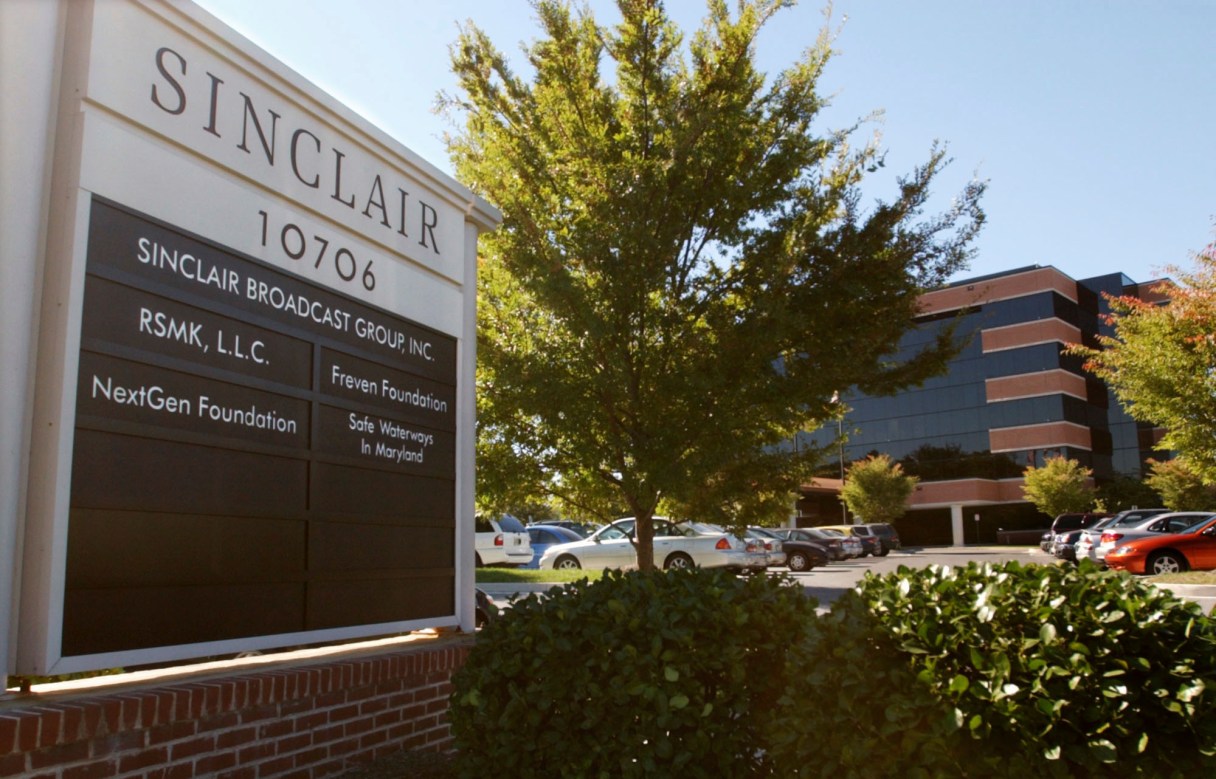
The general manager of WTVC News Channel 9 won’t say how his team feels about the company’s recent push for more political fundraising.
Team members of Sinclair Broadcast Group received a letter Jan. 31 from David Amy, vice chairman of Sinclair and chairman of its PAC, encouraging them to give money to politicians. More specifically, Amy solicited money for Sinclair PAC, which would in turn donate to campaigns.
The letter leaked. Some journalism watchdog groups criticized the effort. If nothing else, they argued, the letter creates the appearance of a conflict of interest.
Sinclair owns local TV stations across the country and is working on a purchase of Tribune Media that would put it in the homes of about 72 percent of Americans. Locally, the company owns WTVC-TV, the ABC affiliate.
When asked Wednesday what station leadership here has said about the letter, General Manager Mike Costa said, “I’m not going to comment on any of that. It’s a company thing. And we don’t talk about internal communications.”
Costa also declined to say whether he has given to the Sinclair PAC, but Federal Election Commission filings show he has not, unlike the general managers of some other Sinclair stations.
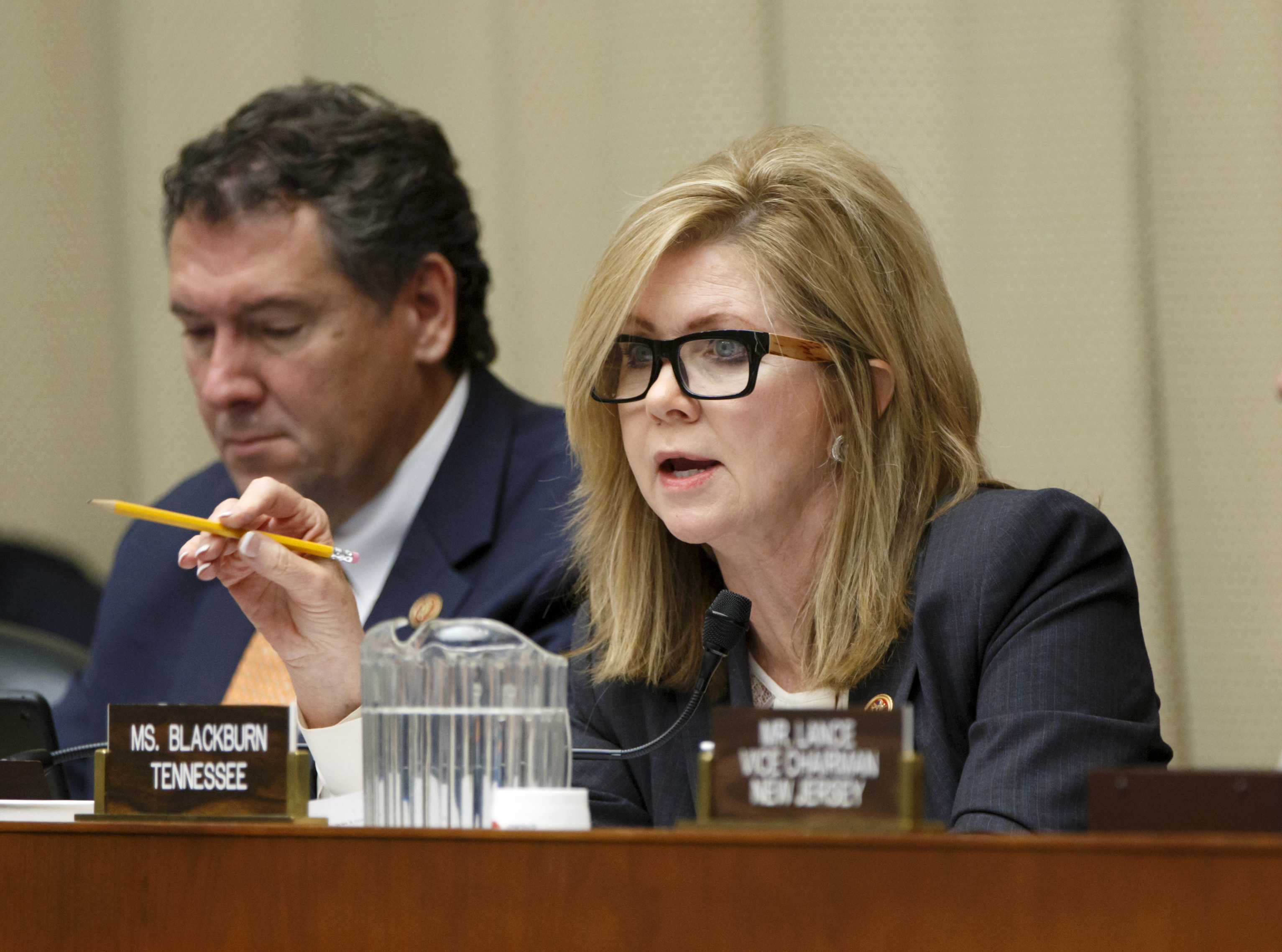 Rep. Marsha Blackburn, R-Tenn. poses questions during a 2014 hearing on Capitol Hill in Washington. (AP file photo/J. Scott Applewhite)
In an article Tuesday, Sinclair Vice President for News Scott Livingston defended the fundraising push to the Poynter Institute of Media Studies, a nonprofit journalism school in St. Petersburg, Fla. He said the “rank and file” of a station should “not be involved in politics at all,” but that doesn’t include news directors.
“I don’t believe this compromises our journalistic integrity,” he said. “Our local stations don’t cover the ins and outs of the broadcast regulatory reform.”
Al Tompkins, Poynter’s senior faculty for broadcasting and online, argued “the ins and outs of the broadcast regulatory reform” are tangled with the politicians local broadcasters will cover. He pointed to U.S. Rep. Martha Blackburn, who is running for senator in Tennessee. In 2017, FEC filings show, Sinclair PAC gave her $4,500, more than any other politician.
Blackburn is chairwoman of the House Communications and Technology subcommittee that oversees the Federal Communications Commission. The FCC, meanwhile, began loosening regulations last year that allow a company such as Sinclair to expand its footprint. Specifically, the agency is more open to letting a single company own multiple major stations in a single market.
In his letter to the Sinclair team members last month, Amy said FCC director Ajit Pai’s push for deregulation is “necessary to ensure the future of the industry.”
Sinclair is far from the only media company to form a PAC and lobby members of Congress. Disney, Viacom, News Corp. and Comcast have all done the same thing. So have trade groups such as the National Association for Broadcasters.
But Tompkins argues that the political fundraising efforts generally halt at the door where journalists do their work.
Compared to other fundraising machines in the country, the Sinclair PAC is modest. In 2017, FEC filings show, it raised $20,000 and spent $35,500. (Some funding was left over the previous year.) Of that spending, $6,000 went toward four Democrats. Another $29,500 went to 14 Republicans.
In 2016, the company raised $34,850 and spent $21,5000. Most of the fundraising comes from executives in the company’s corporate office. But 14 donations came from general managers of local stations scattered throughout the country, as well as donations from Sinclair Director of News Content Bill Anderson and Livingston, the vice president of news.
Contact staff writer Tyler Jett at 423-757-6476 or tjett@timesfreepress.com. Follow him on Twitter @LetsJett.