
Thursday, November 12, 2026Nov 12

What to expect as US considers COVID shots for younger kids

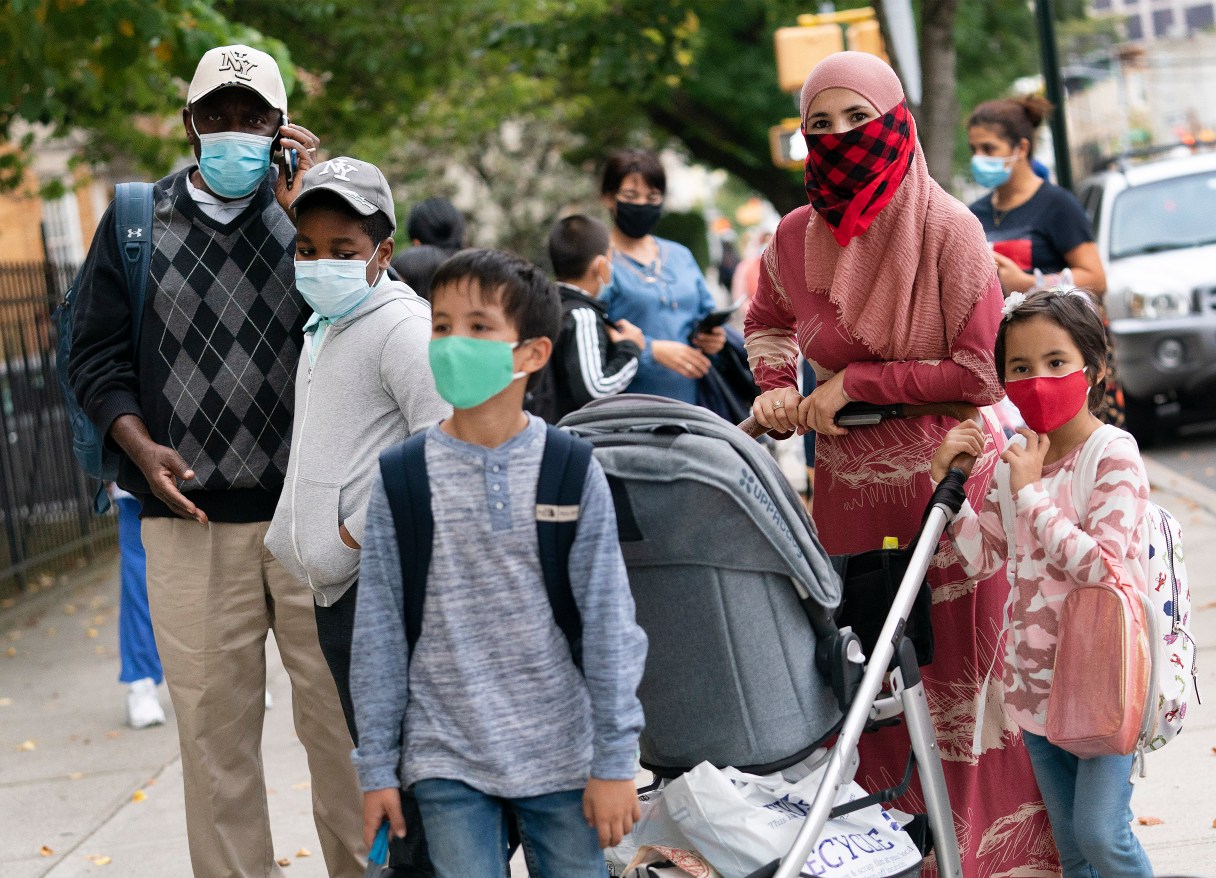
FILE - Parents accompany their children outside PS 179 elementary school in the Kensington neighborhood in the Brooklyn borough of New York, in this Tuesday, Sept. 29, 2020, file photo. Pfizer asked the U.S. government Thursday, Oct. 7, 2021, to allow use of its COVID-19 vaccine in children ages 5 to 11 — and if regulators agree, shots could begin within a matter of weeks. (AP Photo/Mark Lennihan, File)
FILE - Parents accompany their children outside PS 179 elementary school in the Kensington neighborhood in the Brooklyn borough of New York, in this Tuesday, Sept. 29, 2020, file photo. Pfizer asked the U.S. government Thursday, Oct. 7, 2021, to allow use of its COVID-19 vaccine in children ages 5 to 11 — and if regulators agree, shots could begin within a matter of weeks. (AP Photo/Mark Lennihan, File) FILE - Parents accompany their children outside PS 179 elementary school in the Kensington neighborhood in the Brooklyn borough of New York, in this Tuesday, Sept. 29, 2020, file photo. Pfizer asked the U.S. government Thursday, Oct. 7, 2021, to allow use of its COVID-19 vaccine in children ages 5 to 11 — and if regulators agree, shots could begin within a matter of weeks. (AP Photo/Mark Lennihan, File)

The Food and Drug Administration is considering whether to allow COVID-19 vaccinations in children ages 5 to 11 – using kid-sized doses.

Until now, only people 12 and older could be vaccinated in the U.S., with shots made by Pfizer and its partner BioNTech. That’s been a huge frustration for many pediatricians and parents, especially as the extra-contagious delta variant has raged through poorly vaccinated communities – and the schools in them.

On Thursday, the companies formally applied for emergency use of a lower dose for 5- to 11-year-olds. Here’s what to expect:

Q: Why do younger kids need a vaccine?

A: The virus generally causes more serious disease in older adults than in children. But it can sometimes be severe in youngsters, too. According to the American Academy of Pediatrics, COVID-19 has killed at least 520 children in the U.S.