
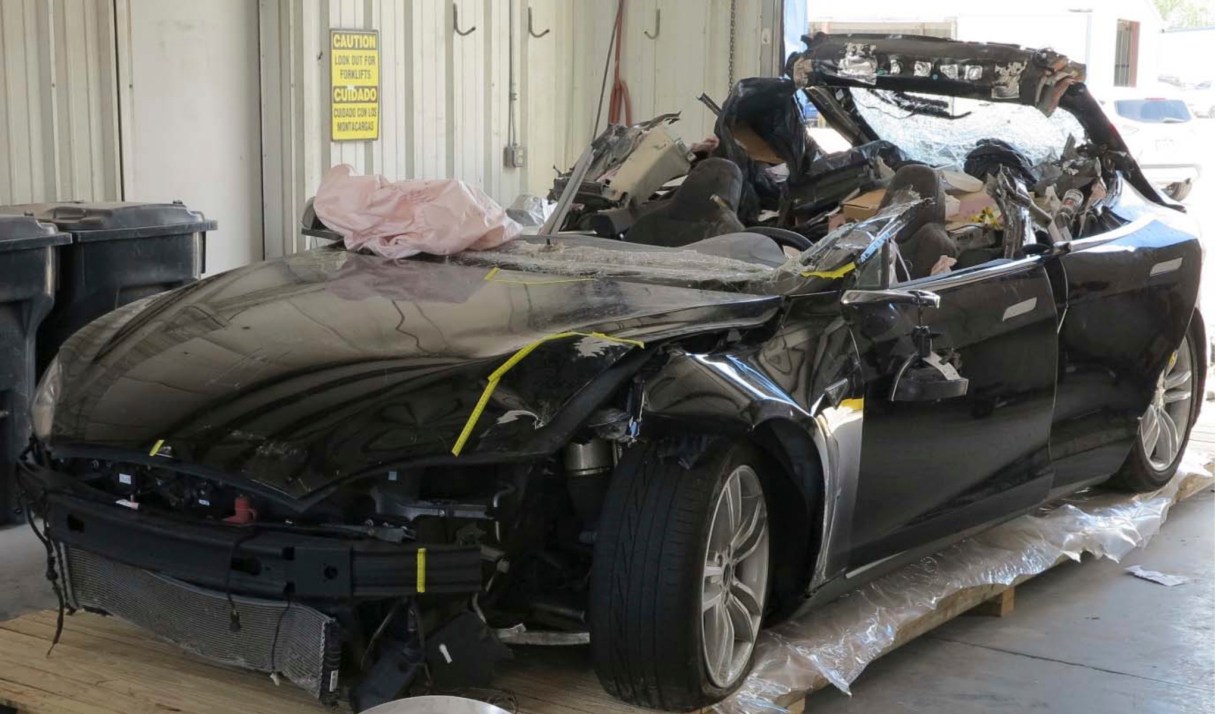
WASHINGTON (AP) – Investigators are meeting to determine the likely cause of a crash last year that killed a man using the semiautonomous driving systems of his Tesla Model S sedan. The case has raised questions about the ability of automakers to keep the attention of drivers engaged as new technology allows them to cede greater control to their vehicles.
The National Transportation Safety Board is taking up the crash Tuesday, the same day that Transportation Secretary Elaine Chao is to unveil safety guidelines for automakers seeking to market self-driving cars. The board doesn’t have regulatory powers, but its recommendations often carry weight with regulators.
Tech company owner Joshua Brown, 40, of Canton, Ohio, was using the sedan’s cruise control and lane-keeping features, part of Tesla’s Autopilot system, when he was killed in the May 7, 2016, crash. The sedan struck the underside of a semitrailer that was turning onto a divided highway in Williston, Florida, near Gainesville. The sedan’s roof was sheared off before the vehicle emerged on the other side of the trailer.
It’s the first known fatal crash of a highway vehicle operating under automated control systems, according to the NTSB. Some problems have already been publicly identified. The cameras on Brown’s sedan failed to distinguish the white side of the semitrailer from the bright sky, Tesla said at the time. However, Tesla warns drivers to keep their hands on the wheel and to pay attention even when the automated systems are in use. The company has since made upgrades to its Autopilot system.
Documents previously released by the NTSB say the Autopilot system didn’t detect hands on the vehicle’s steering for 37 of the 37.5 minutes the system was in use prior to the crash. During that time, the vehicle issued seven visual and six audible warnings to the driver to hold the steering wheel.