
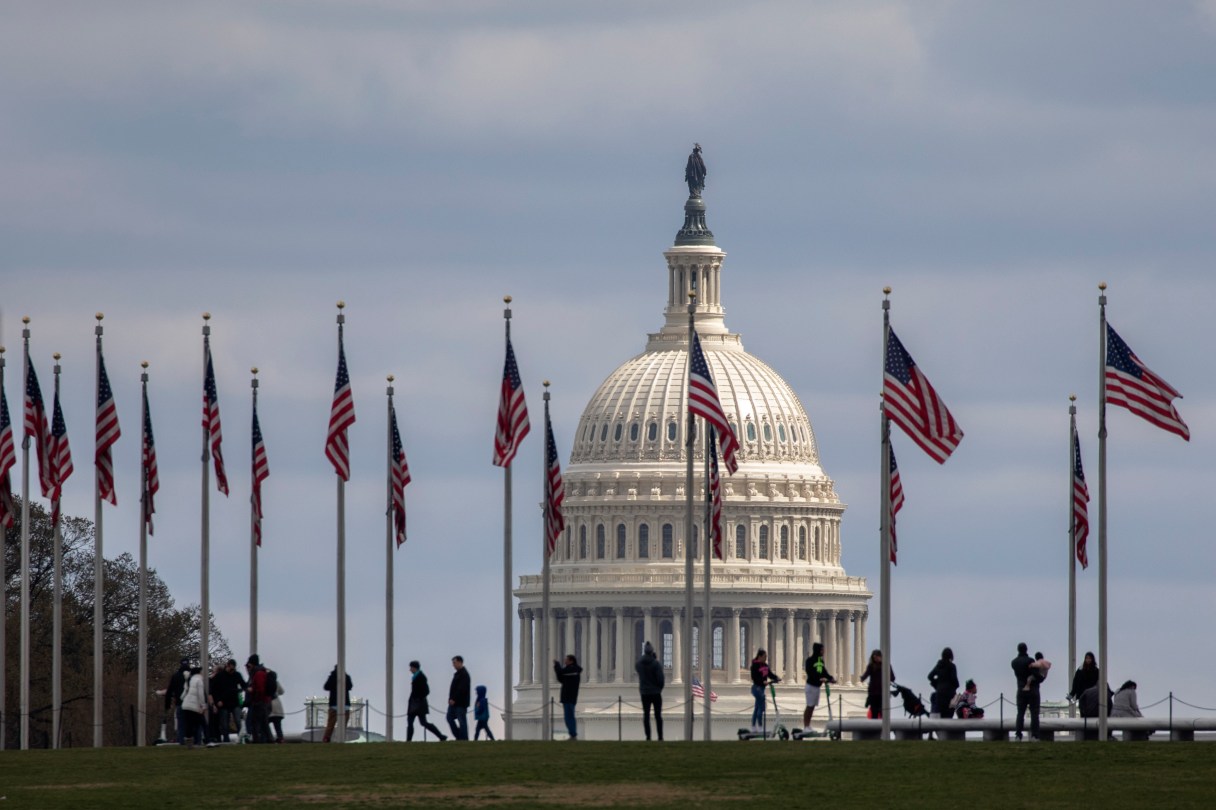
WASHINGTON (AP) – The fast-moving coronavirus upending every facet of American life is testing whether Washington, a capital city fractured by years of bitter partisanship and inaction, can still do big things.
Not since the Great Recession of 2008, and before that the Sept. 11 attacks of 2001, has the federal government attempted to mount such an ambitious response to an emergency, and so quickly. The country’s once-revered, now often maligned institutions – from the White House to Congress to the Federal Reserve – are being summoned into action to shoulder the lift.
It starts with a massive $1 trillion rescue package that includes sending $1,000 checks to Americans, with a goal of pushing it through Congress and onto President Donald Trump’s desk in a matter of days.
What Washington’s leaders do, or fail to do, will shape the road ahead for millions of anxious Americans who are suddenly facing a deeply uncertain future.
“The consequences of inaction are tremendous,” said Sara Binder, a professor at George Washington University and scholar the Brookings Institution. “For both parties.”