
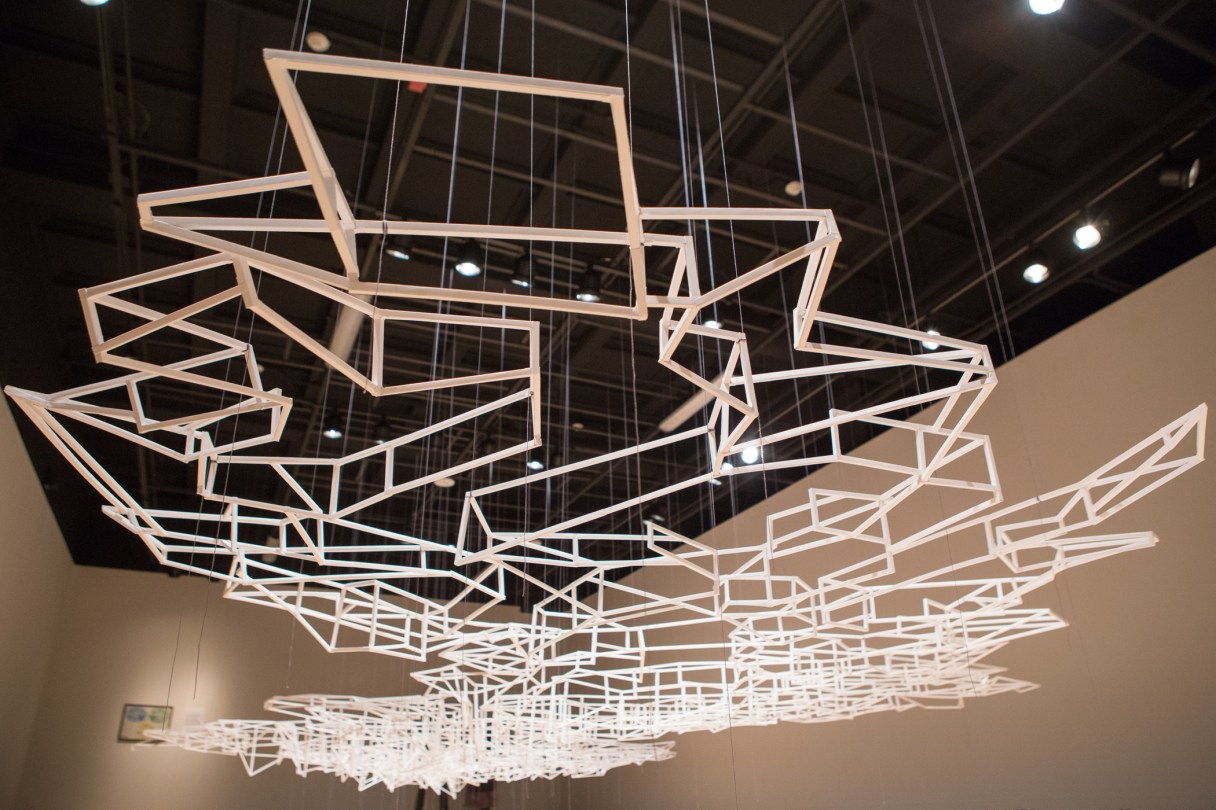
 Detail of “Superfund Areas 1-5” models the stretch of the Kalamazoo River currently under remediation by the Environmental Protection Agency. When the mill closed in 2000, it left behind years and years of contamination and turned a section of the river into a Superfund site.
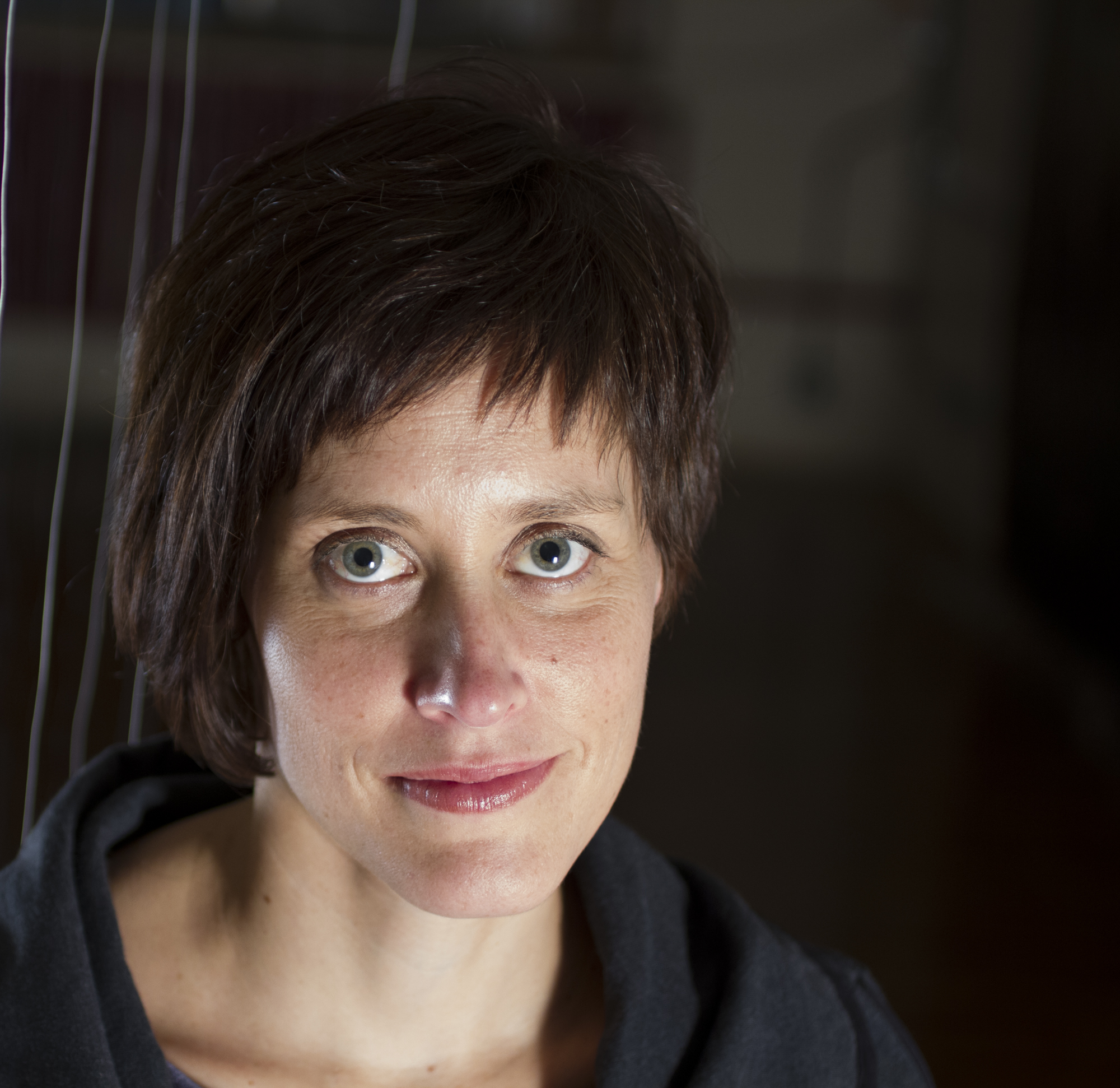 Artist Sarah Lindley
Elements used to organize EPA cleanup sites make up the art exhibit opening Wednesday, Aug. 31, at the University Art Gallery in Sewanee, Tenn.
Sarah Lindley’s “Operable Units” explores the connections between industry, communities and the environment along the Kalamazoo River in Michigan. Though the project was created in response to the challenges faced by a specific place, organizers say it explores compelling questions important to all places about industry and the environment.
The installation juxtaposes two fragile constructs: the suspended structure “Exposure Pathways,” which is fabricated from an abandoned ream of paper found in the former Plainwell Paper Mill, and “Superfund Areas 1-5,” built of brittle clay saturated by stains and oxides.
“Exposure Pathways” references the layout of the affected area, the Kalamazoo watershed, while “Superfund Areas 1-5” models the stretch of the Kalamazoo River currently under remediation by the Environmental Protection Agency.
Lindley resides in Plainwell, Mich., less than a mile from the former Plainwell Paper Mill and the Kalamazoo River Superfund site. She has taught sculpture and ceramics at Kalamazoo College since 2001.