
Tuesday, November 10, 2026Nov 10

US measles count nears 1,000, surpassing 25-year-old record

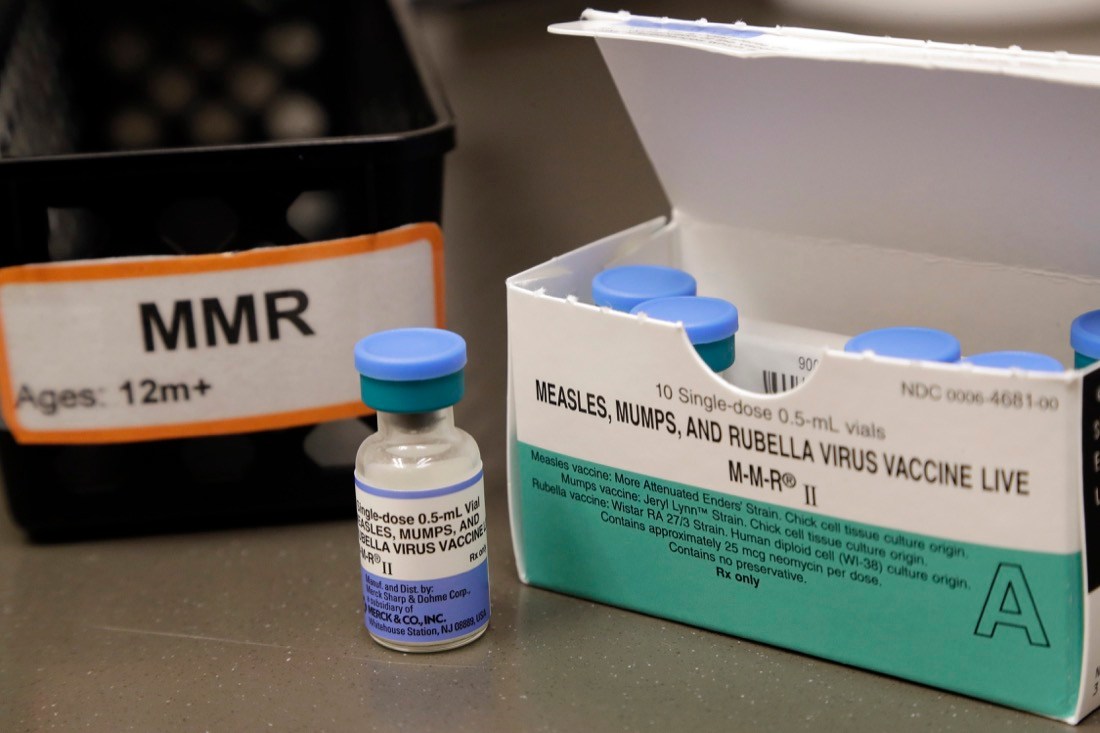
This May 15, 2019 file photo shows a vial of a measles, mumps and rubella vaccine at a clinic in Vashon Island, Wash. On Thursday, May 30, 2019, U.S. health officials reported this year s U.S. measles epidemic surpassed a 25-year-old record, and experts say it s not clear when the wave of illnesses will stop. There were 971 cases so far this year, eclipsing the 963 measles illnesses reported for all of 1994. (AP Photo/Elaine Thompson, File)
This May 15, 2019 file photo shows a vial of a measles, mumps and rubella vaccine at a clinic in Vashon Island, Wash. On Thursday, May 30, 2019, U.S. health officials reported this year s U.S. measles epidemic surpassed a 25-year-old record, and experts say it s not clear when the wave of illnesses will stop. There were 971 cases so far this year, eclipsing the 963 measles illnesses reported for all of 1994. (AP Photo/Elaine Thompson, File) This May 15, 2019 file photo shows a vial of a measles, mumps and rubella vaccine at a clinic in Vashon Island, Wash. On Thursday, May 30, 2019, U.S. health officials reported this year s U.S. measles epidemic surpassed a 25-year-old record, and experts say it s not clear when the wave of illnesses will stop. There were 971 cases so far this year, eclipsing the 963 measles illnesses reported for all of 1994. (AP Photo/Elaine Thompson, File)

NEW YORK (AP) – U.S. health officials on Thursday reported 971 measles cases so far this year, the highest tally in 27 years, and experts say it’s not clear when the wave of illnesses will stop.

Measles, once common in the U.S., became rare after vaccination campaigns that started in the 1960s. A decade ago, there were fewer than 100 cases a year.

The new numbers from the Centers for Disease control and Prevention pushed the U.S. tally higher than the 963 illnesses reported for all of 1994. The nation last saw this many cases in 1992, when more than 2,200 were reported.

Overall vaccination rates have remained fairly high, but outbreaks have been happening in communities where parents have refused recommended shots, U.S. health officials say.

“What’s causing these outbreaks is lack of vaccination,” said Dr. Mark Roberts, chair of health policy and management at the University of Pittsburgh Graduate School of Public Health.