




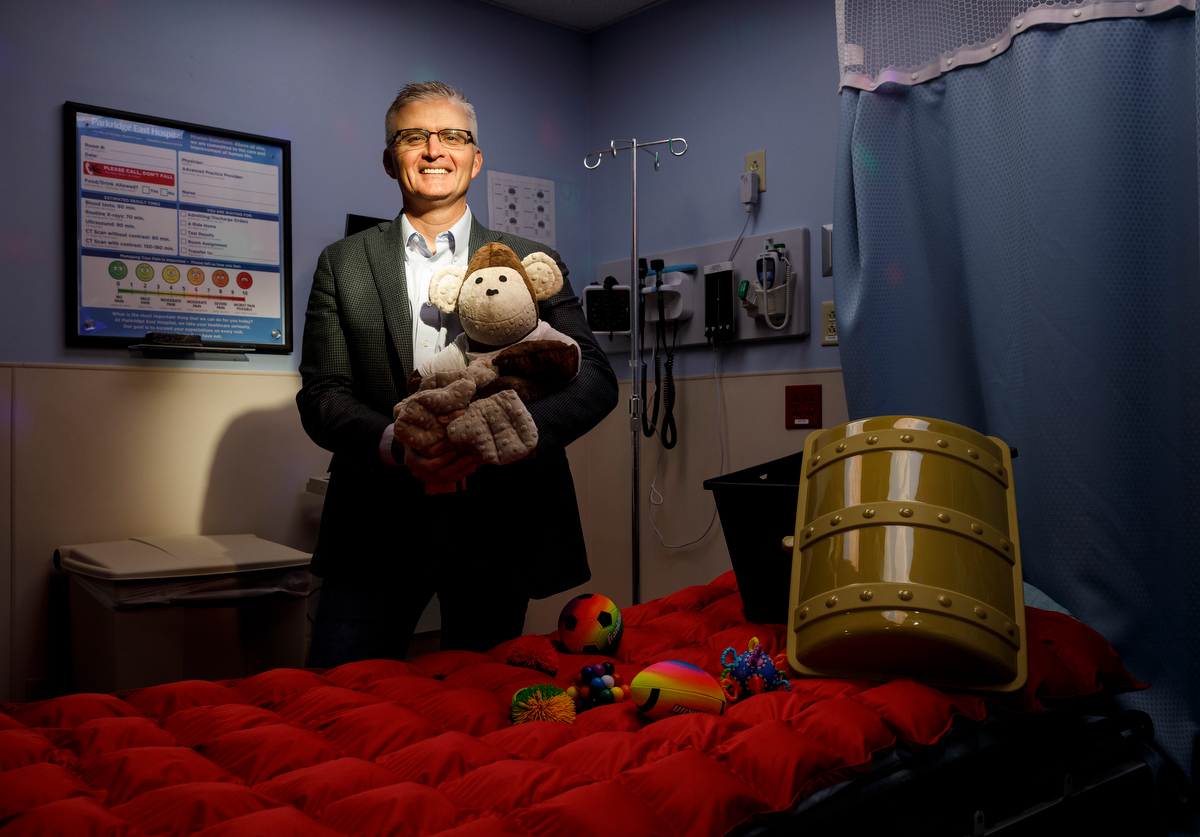
The time spent in a hospital emergency room can be stressful for anyone. But the bright lights, loud noises and fast-paced environment can be especially daunting for people with a sensory processing disorder, which is common in developmental conditions like autism.
People with autism spectrum disorder can be hypersensitive to everyday items – such as the faint flicker and hum of a fluorescent light – that may be imperceptible to others. That’s why Parkridge East Hospital, along with input from the Chattanooga Autism Center, recently introduced a sensory-friendly emergency room within its emergency department.
“ERs, almost by definition, can be chaotic places,” said Jarrett Millsaps, chief executive officer of Parkridge East. “So many of these families already face fear when they’re trying to tend to their family members who have sensory issues, whether it be children or grown adults, and we want them to know that this is a place where they don’t have to be afraid.”
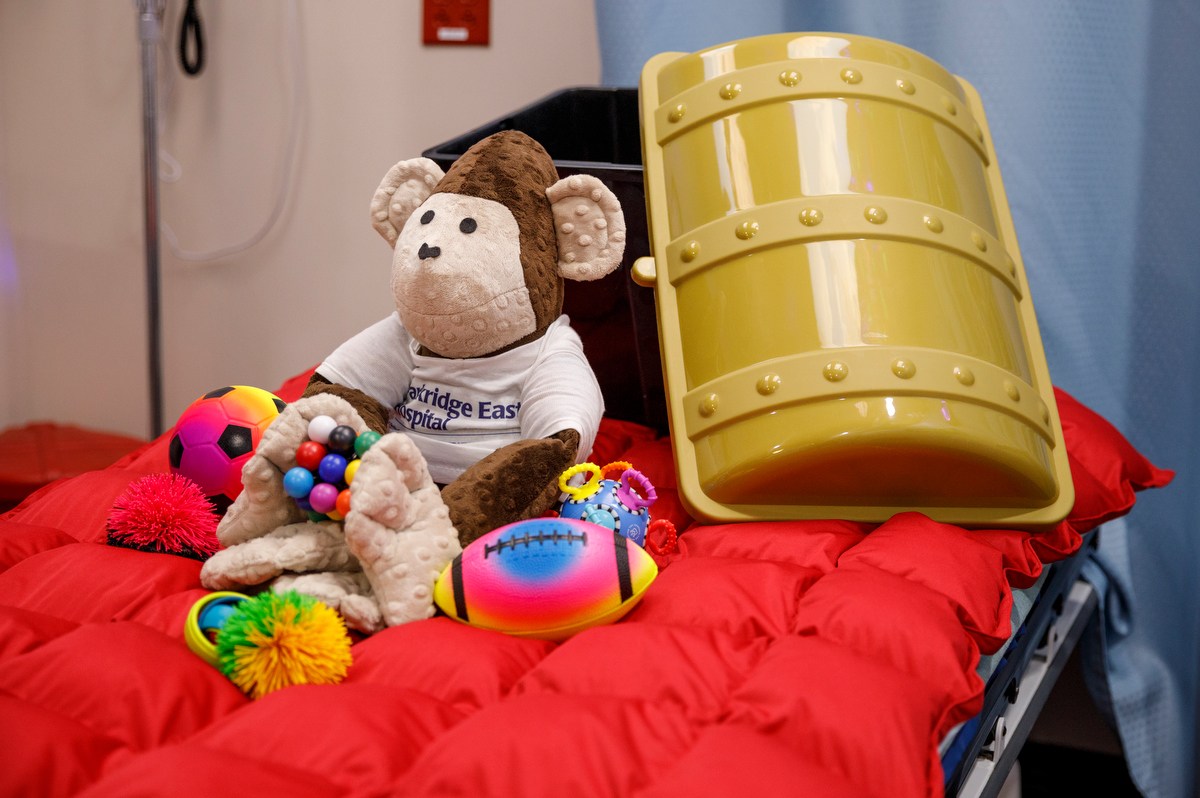
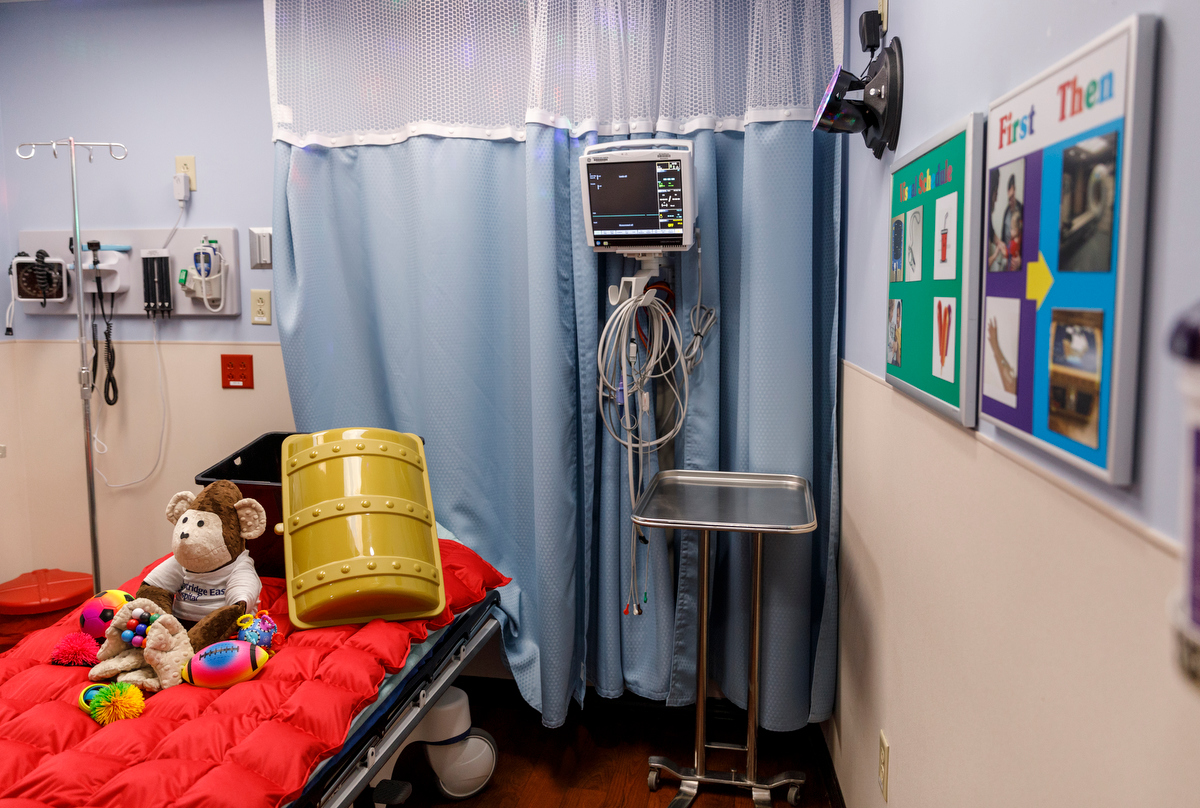
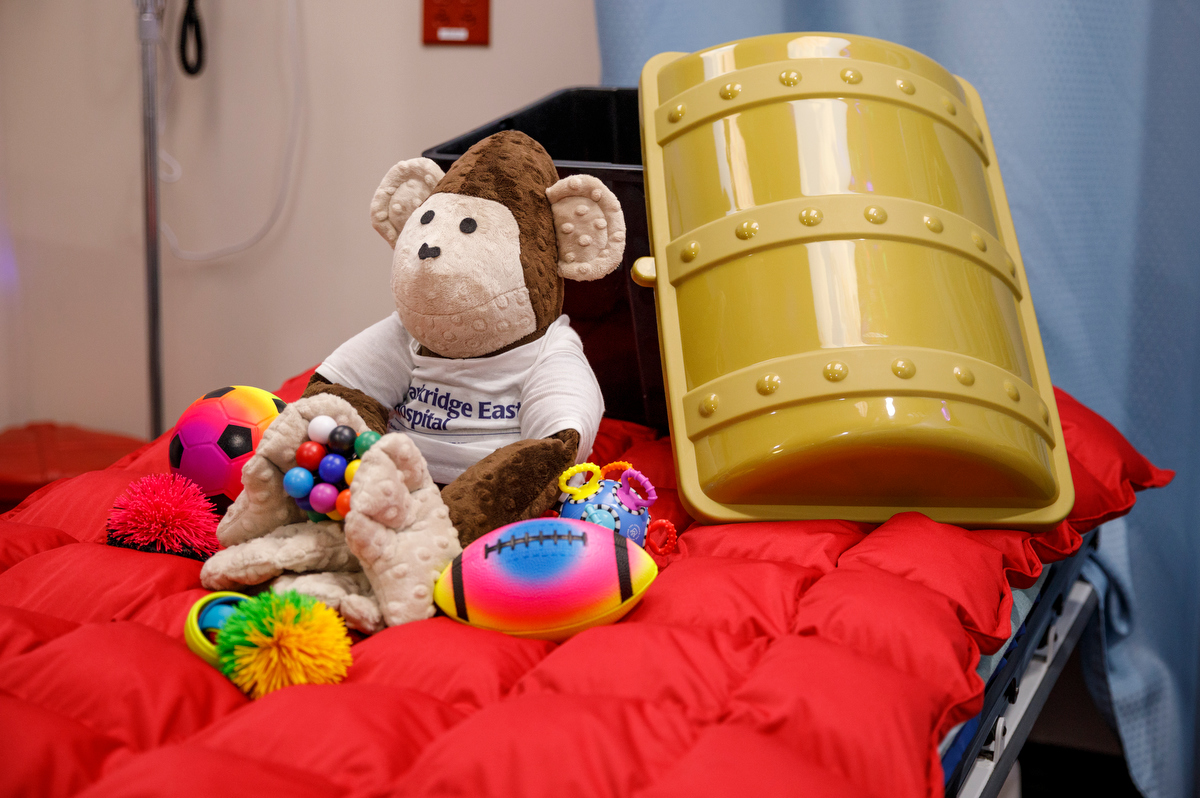
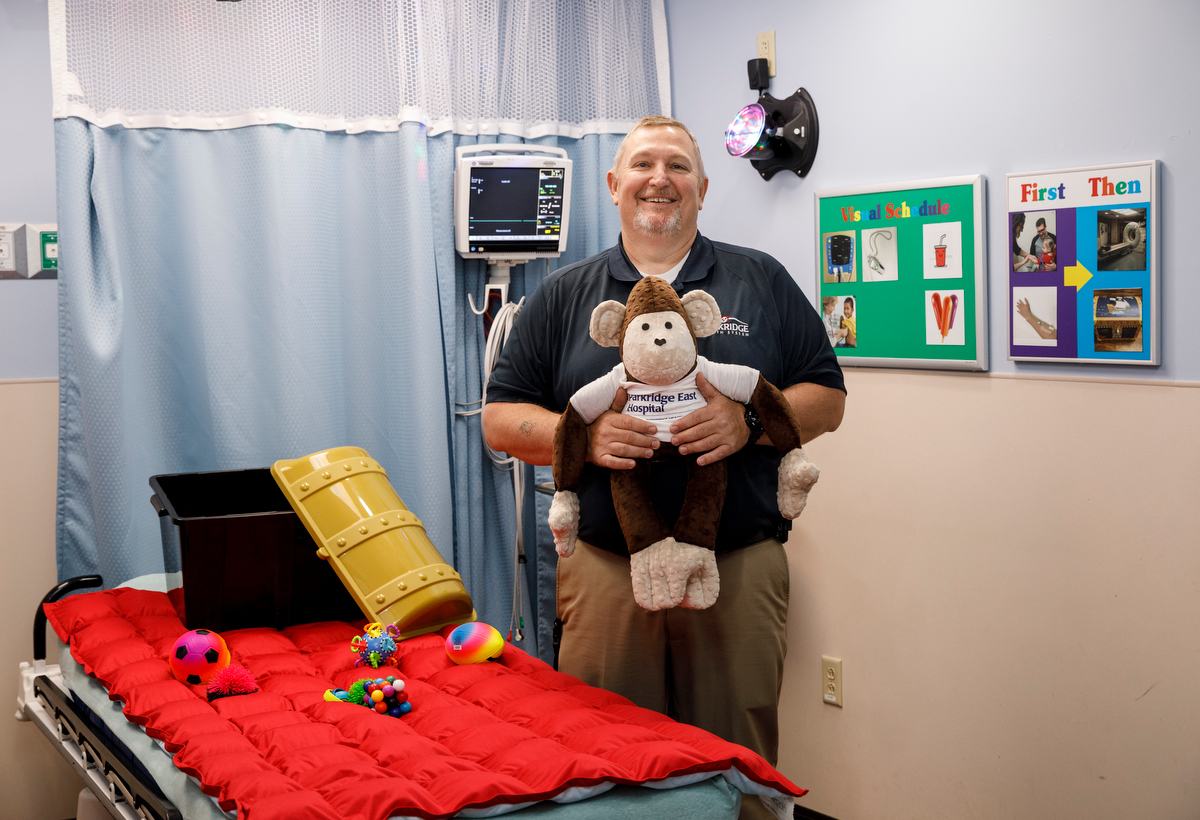
The room has adaptable lights, monitor and sound control and soundproof walls to minimize ambient noise. Breakaway curtains disguise distracting medical equipment along the soft-blue walls, and tools – including toys, weighted blankets and a visual storyboard – prepare patients for processes of care.
Dave Buck, executive director of the Chattanooga Autism Center, said the communication challenges that people with autism often face can complicate their medical care. For example, if a child isn’t able to describe symptoms to their parents, they may have an illness that goes too long without being treated.