
Tuesday, November 10, 2026Nov 10

Wreckage, bodies might hold clues in AirAsia crash

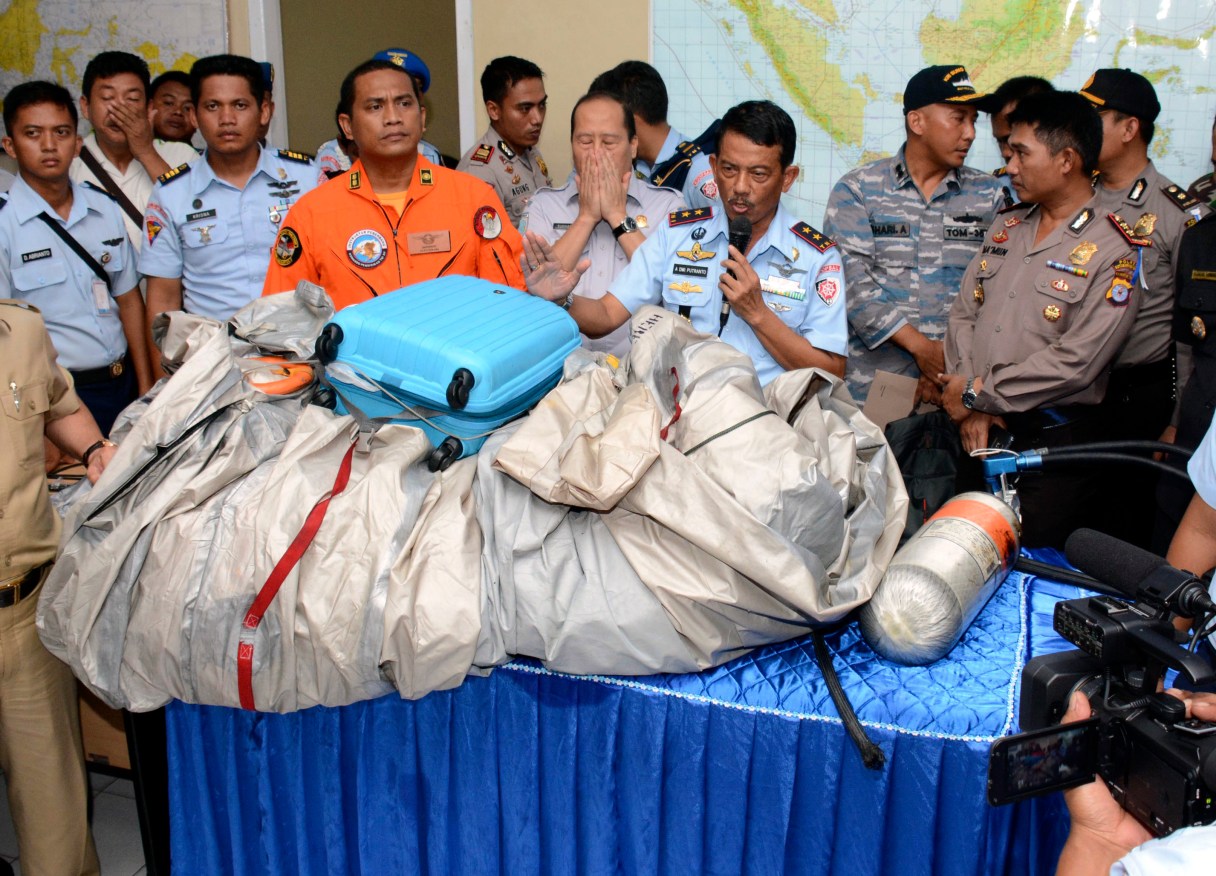
Commander of Indonesian Air Force 1st Operational Command Rear Marshall Dwi Putranto, center, shows the airplane parts and a suitcase found floating on the water near the site where AirAsia Flight 8501 disappeared, during a press conference at the airbase in Pangkalan Bun, Central Borneo, Indonesia, Tuesday, Dec. 30, 2014. Bodies and debris seen floating in Indonesian waters Tuesday, painfully ended the mystery of AirAsia Flight 8501, which crashed into the Java Sea and was lost to searchers for more than two days. (AP Photo/Dewi Nurcahyani)
Commander of Indonesian Air Force 1st Operational Command Rear Marshall Dwi Putranto, center, shows the airplane parts and a suitcase found floating on the water near the site where AirAsia Flight 8501 disappeared, during a press conference at the airbase in Pangkalan Bun, Central Borneo, Indonesia, Tuesday, Dec. 30, 2014. Bodies and debris seen floating in Indonesian waters Tuesday, painfully ended the mystery of AirAsia Flight 8501, which crashed into the Java Sea and was lost to searchers for more than two days. (AP Photo/Dewi Nurcahyani) Commander of Indonesian Air Force 1st Operational Command Rear Marshall Dwi Putranto, center, shows the airplane parts and a suitcase found floating on the water near the site where AirAsia Flight 8501 disappeared, during a press conference at the airbase in Pangkalan Bun, Central Borneo, Indonesia, Tuesday, Dec. 30, 2014. Bodies and debris seen floating in Indonesian waters Tuesday, painfully ended the mystery of AirAsia Flight 8501, which crashed into the Java Sea and was lost to searchers for more than two days. (AP Photo/Dewi Nurcahyani)

NEW YORK (AP) – With search teams pulling debris and bodies from AirAsia Flight 8501 out of the Java Sea, attention now shifts to the investigation to determine what happened as the jet was heading from Surabaya, Indonesia, to Singapore.

The most important piece of evidence will be the flight-data and cockpit-voice recorders. But the wreckage and the bodies of those aboard will also provide vital clues. Here’s a look at what investigators might learn.

___

EXTENT OF DAMAGE

If the plane came down relatively intact – possibly from a stall, pilot error or mechanical problem – the metal in the fuselage and wings would be under enormous pressure when it hit the water. Peter Goelz, a former managing director of the National Transportation Safety Board, says the wreckage would show signs of compression.