
Monday, November 9, 2026Nov 9

US moves pilot-rescue aircraft closer to battlefields

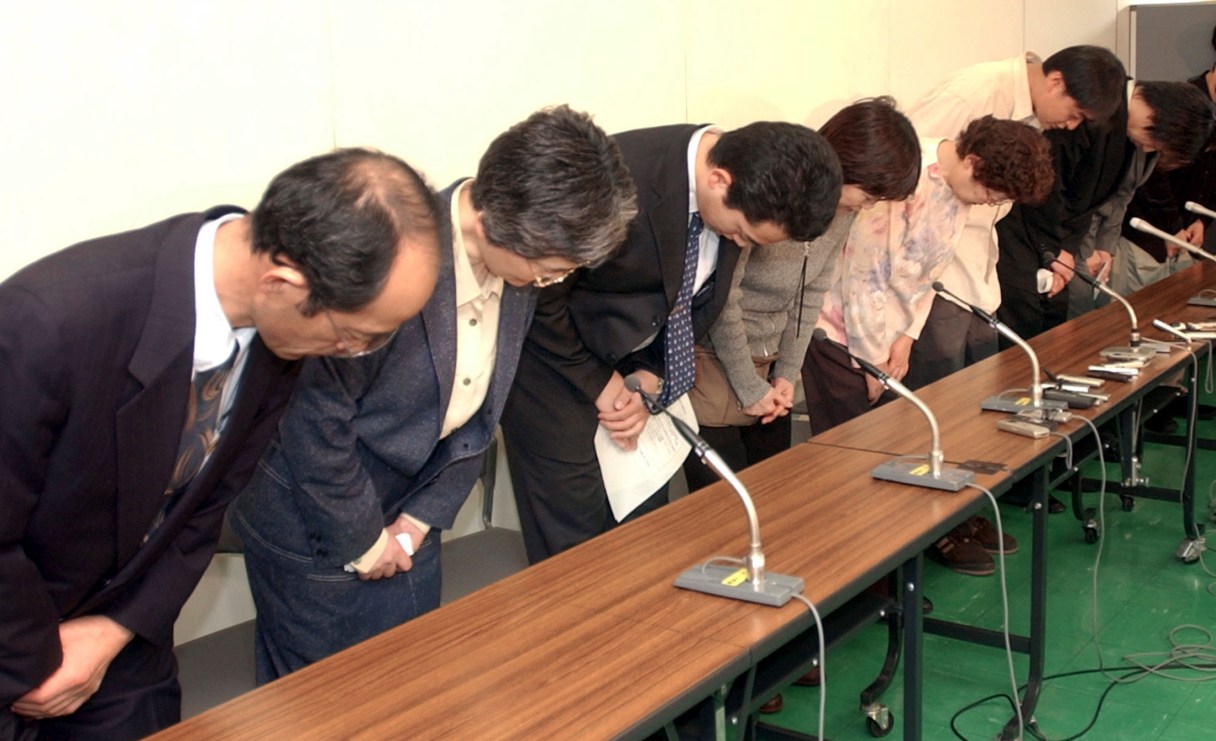
FILE - In this April 12, 2004 file photo, relatives of the three Japanese hostages being held in Iraq bow before reporters in Tokyo. When the young Japanese anti-war activists were taken hostage in Iraq and later freed in 2004, they faced nationwide bashing as troublemakers and had to cover their own medical check and part of chartered flight home. Behind the sympathy Japanese are voicing over their two countrymen, Kenji Goto and Haruna Yukawa, purportedly slain by the Islamic State group is a widespread view that they were “troublemakers.” Many feel that they wouldn’t have had to face this new sense of insecurity, unwelcomed attention from the Islamic State group and elsewhere in the world on the Japanese, if the two men had not ignored warnings against travel to Syria and were taken hostage by the militant and then purportedly beheaded. (AP Photo/Koji Sasahara, File)
FILE - In this April 12, 2004 file photo, relatives of the three Japanese hostages being held in Iraq bow before reporters in Tokyo. When the young Japanese anti-war activists were taken hostage in Iraq and later freed in 2004, they faced nationwide bashing as troublemakers and had to cover their own medical check and part of chartered flight home. Behind the sympathy Japanese are voicing over their two countrymen, Kenji Goto and Haruna Yukawa, purportedly slain by the Islamic State group is a widespread view that they were “troublemakers.” Many feel that they wouldn’t have had to face this new sense of insecurity, unwelcomed attention from the Islamic State group and elsewhere in the world on the Japanese, if the two men had not ignored warnings against travel to Syria and were taken hostage by the militant and then purportedly beheaded. (AP Photo/Koji Sasahara, File) FILE - In this April 12, 2004 file photo, relatives of the three Japanese hostages being held in Iraq bow before reporters in Tokyo. When the young Japanese anti-war activists were taken hostage in Iraq and later freed in 2004, they faced nationwide bashing as troublemakers and had to cover their own medical check and part of chartered flight home. Behind the sympathy Japanese are voicing over their two countrymen, Kenji Goto and Haruna Yukawa, purportedly slain by the Islamic State group is a widespread view that they were “troublemakers.” Many feel that they wouldn’t have had to face this new sense of insecurity, unwelcomed attention from the Islamic State group and elsewhere in the world on the Japanese, if the two men had not ignored warnings against travel to Syria and were taken hostage by the militant and then purportedly beheaded. (AP Photo/Koji Sasahara, File)

WASHINGTON (AP) – The gruesome killing of a Jordanian pilot who had crashed in Islamic State territory laid bare a problem of the U.S.-led coalition – there’s no sure way to rescue an airman who’s down behind enemy lines. Now, in response, the U.S. has moved search-and-rescue aircraft closer to the battlefield, defense officials said Thursday.

U.S. pilots are flying missions over Syria daily from bases in the region, including from Qatar, and partner nations, including Jordan, Saudi Arabia and Bahrain, are flying less often. The United Arab Emirates suspended its participation in airstrikes in December after the Jordanian pilot was captured, but it may reconsider after having given its aircrews extra training, two officials said.

The risk of capture is unavoidable in air combat missions anywhere. The danger is arguably greater for pilots flying over Syria with no U.S. troops nearby, even though the Islamic State has a very limited ability to shoot down planes.

The importance of finding the pilot before he is captured was highlighted by the video showing Islamic State militants burning Jordanian Lt. Muath al-Kaseasbeh alive in a cage.

The U.S. has flown nearly 900 combat missions over Iraq since last August and more than 900 over Syria since September – not to mention hundreds of reconnaissance and other support missions – without a single loss. Coalition pilots have flown more than 350 airstrike missions over Iraq and 80 or more over Syria, with al-Kaseasbeh the only casualty so far.