
Tuesday, November 10, 2026Nov 10

SKorea and Japan feel heat as NKorea aims nukes at US

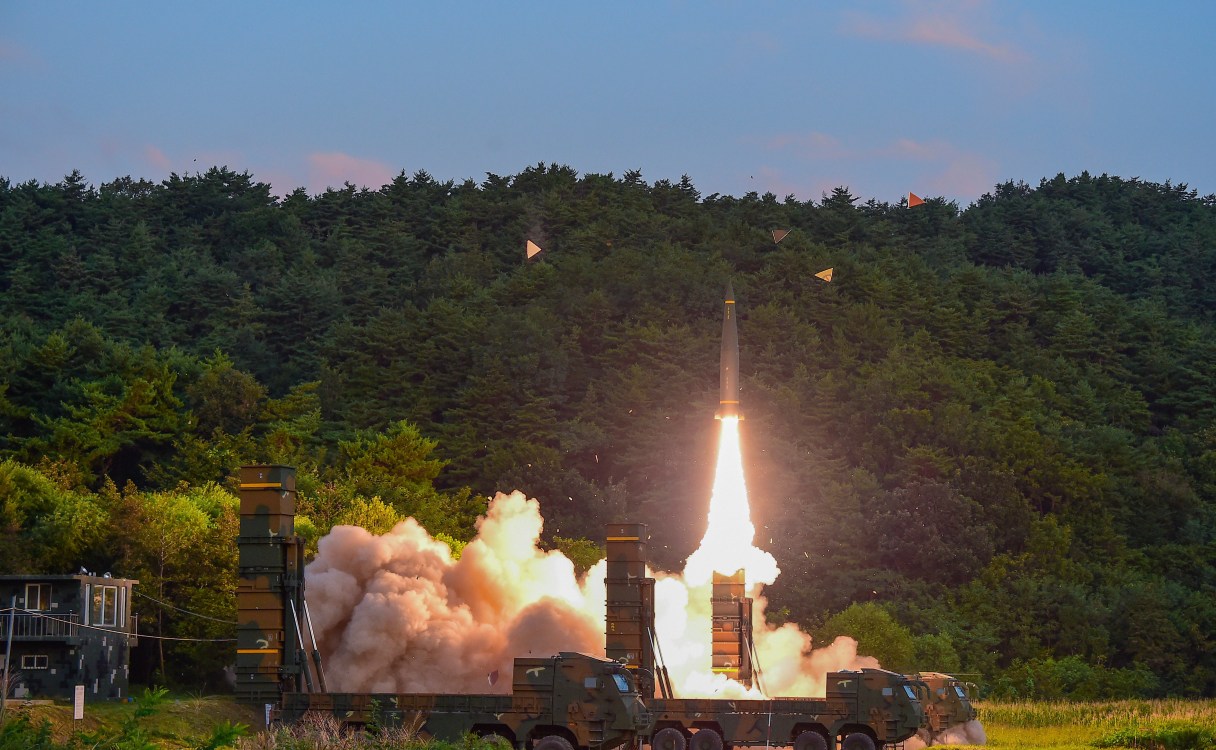
FILE, In this Monday, Sept. 4, 2017 file photo provided by South Korea Defense Ministry, South Korea's Hyunmoo II ballistic missile is fired during an exercise at an undisclosed location in South Korea. South Korean warships have conducted live-fire exercises at sea. The drills Tuesday, Sept. 5, mark the second-straight day of military swagger from a nation still rattled by the North's biggest-ever nuclear test. (South Korea Defense Ministry via AP, File)
FILE, In this Monday, Sept. 4, 2017 file photo provided by South Korea Defense Ministry, South Korea's Hyunmoo II ballistic missile is fired during an exercise at an undisclosed location in South Korea. South Korean warships have conducted live-fire exercises at sea. The drills Tuesday, Sept. 5, mark the second-straight day of military swagger from a nation still rattled by the North's biggest-ever nuclear test. (South Korea Defense Ministry via AP, File) FILE, In this Monday, Sept. 4, 2017 file photo provided by South Korea Defense Ministry, South Korea's Hyunmoo II ballistic missile is fired during an exercise at an undisclosed location in South Korea. South Korean warships have conducted live-fire exercises at sea. The drills Tuesday, Sept. 5, mark the second-straight day of military swagger from a nation still rattled by the North's biggest-ever nuclear test. (South Korea Defense Ministry via AP, File)

WASHINGTON (AP) – As worrying as North Korea’s nuclear advance is for America, the increasingly realistic threat of an atomic warhead striking a U.S. city might be even more unnerving for South Korea and Japan.

So much so that the United States is considering new ways to flex its nuclear muscle to defend its vulnerable allies as they ponder if they’ll one day need atomic arsenals of their own.

For decades, the United States has defended South Korea and Japan, the nations most directly threatened by the North’s missiles and massive conventional forces, through an extended “nuclear umbrella.” The basic premise is that an attack on either ally risked a devastating American response.

Pyongyang’s emerging capabilities are upsetting all calculations.