
Photo Gallery
Inspired and Energized: Local artists leave their comfort zones to create new collection at Hunter
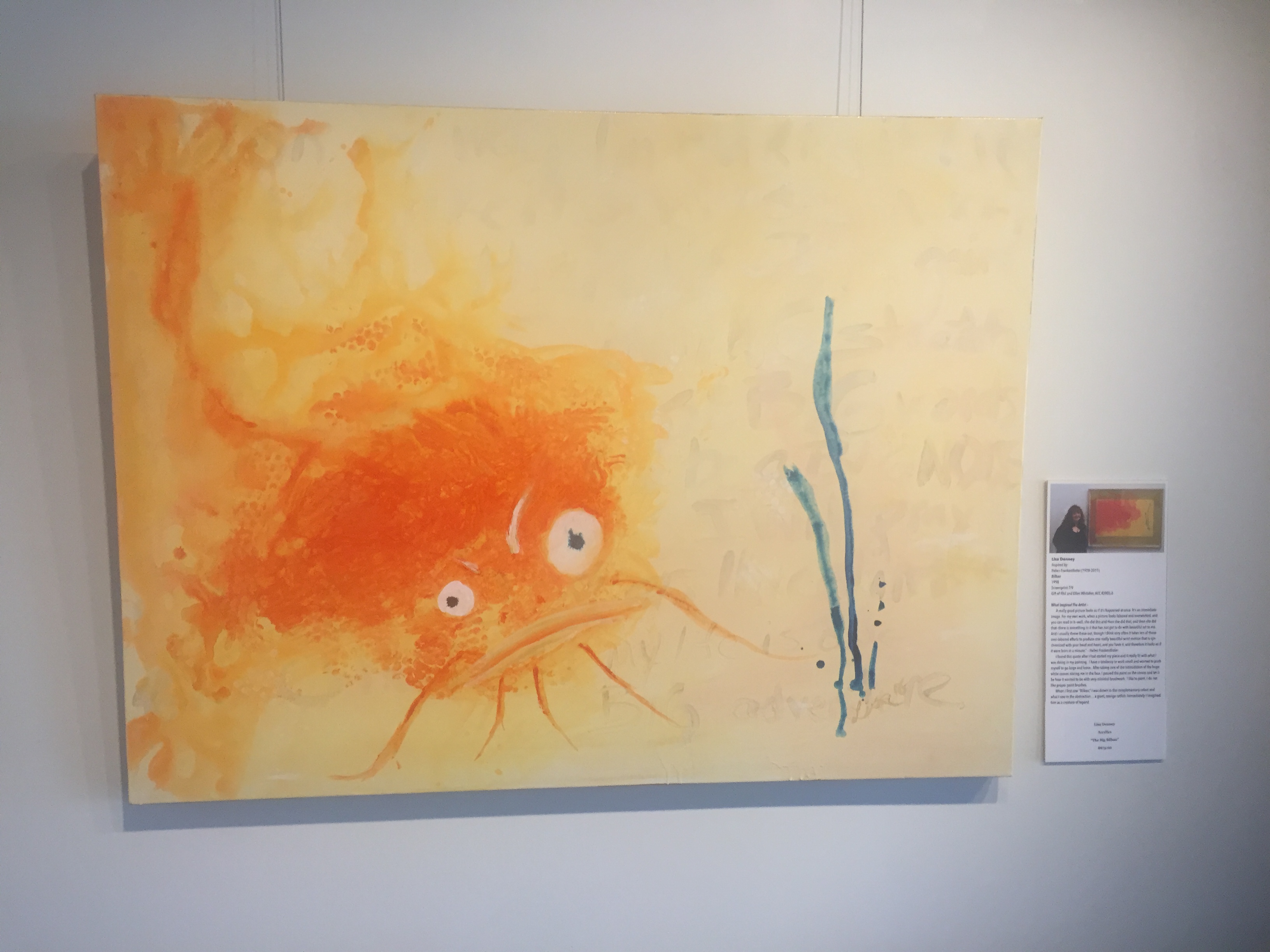
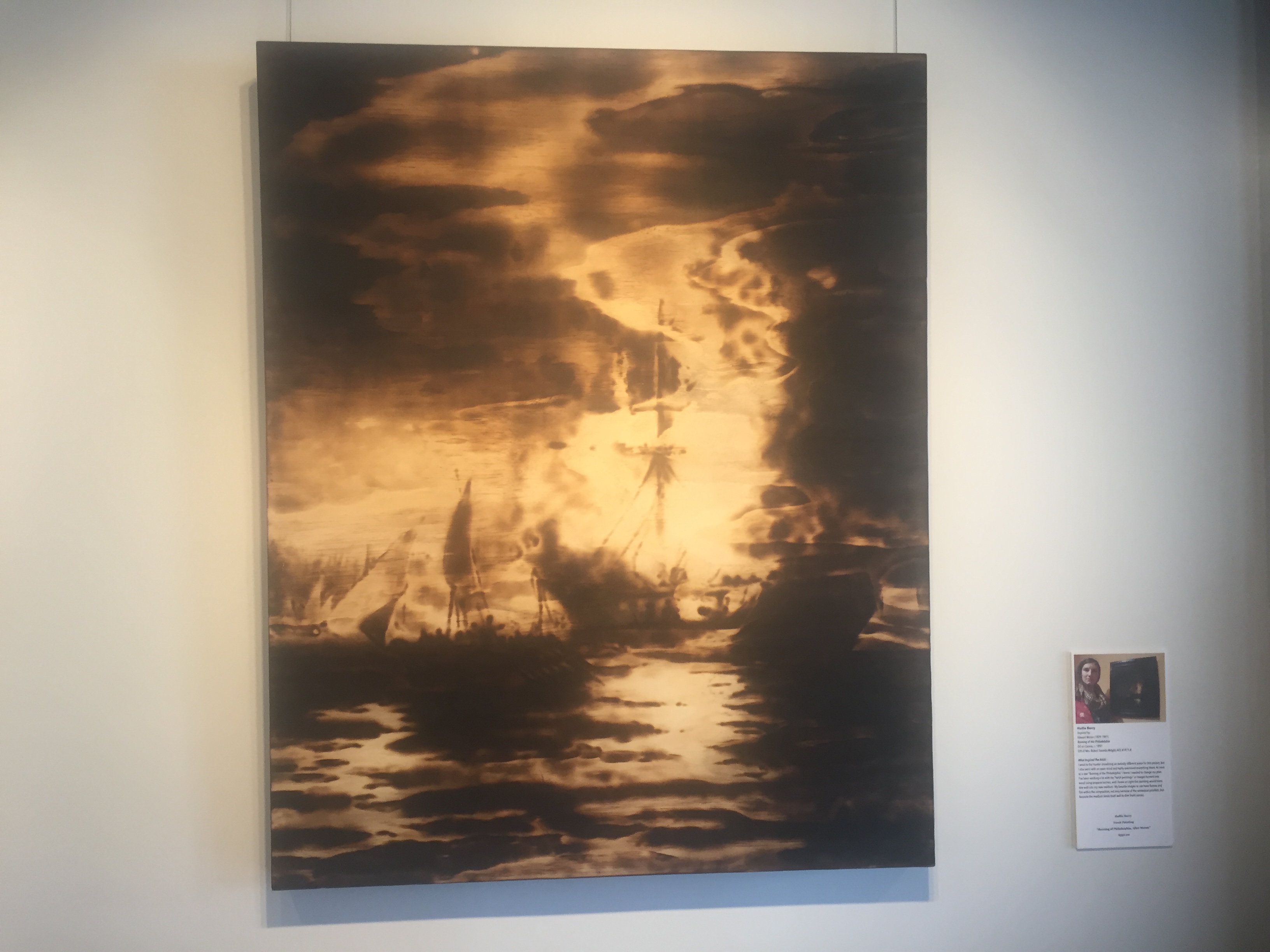
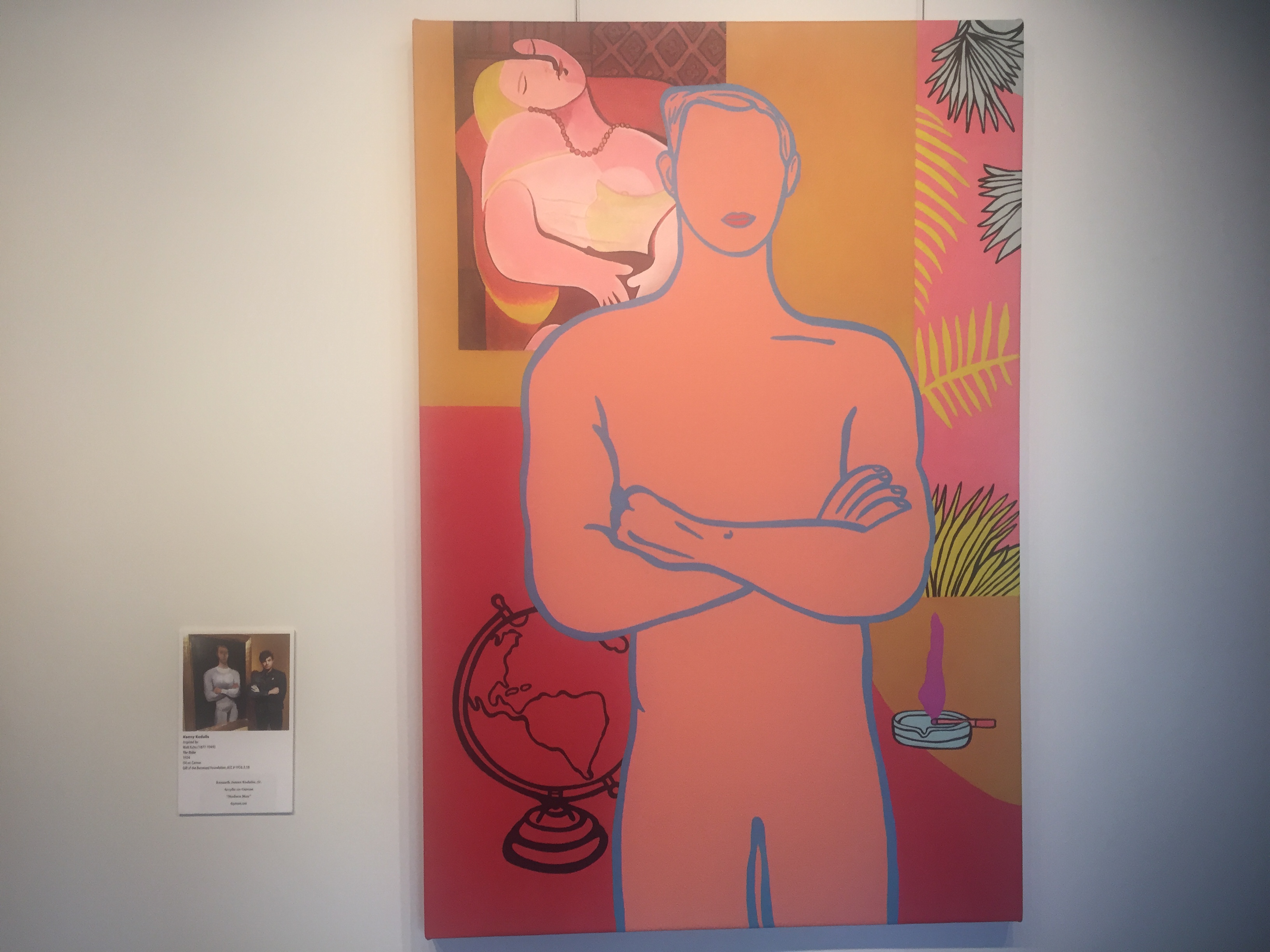
Local artists and their inspirational pieces
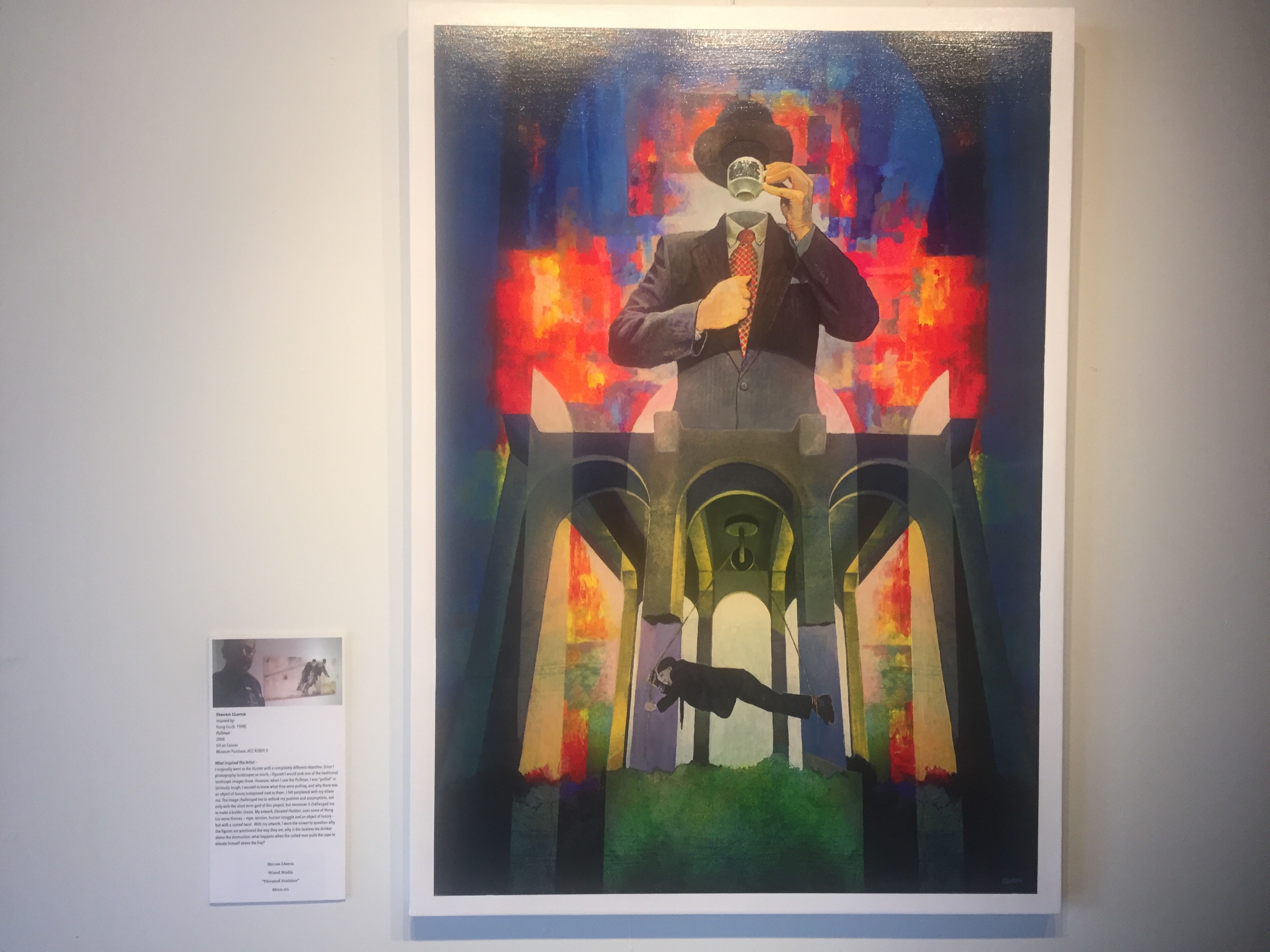
Artist: Lisa DenneyInspirational piece: “Bilbao” by Helen Frankenthaler, painting from 1998Frankenthaler medium: ScreenprintArtist: Olga de KleinInspirational piece: “The Prisoner” by Jack Levine, painting from 1965Levine medium: LithographArtist: Molly HusseyInspirational piece: “Torrid Lascivious Gasp” by Stephen Rolfe Powell, glass sculpture created in 2001Powell medium: Blown glassArtist: Rick RushingInspirational piece: “Huntsman’s Door” by Richard LaBarre Goodwin, painting from 1890Goodwin medium: Oil on canvasArtist: Kenny KudalisInspirational piece: “The Rider” by Walt Kuhn, painting from 1924Kuhn medium: Oil on canvasArtist: Sofia ArnoldInspirational piece: “Still Life With Muffins” by Alfred H. Maurer, painting from 1929-30Maurer medium: Oil on boardArtist: Susan BruceInspirational piece: “Form and Light, Motif in West New Jersey (Beattiestown)” by Oscar Bluemner, painting from 1914Bluemner medium: oil on canvasArtist: Steven LiorcaInspirational piece: “Pullman” by Hung Liu, painting from 2004Liu medium: oil on canvasArtist: Brandy RichmondInspirational piece: Untitled by Bessie Harvey, sculpture from 1980Harvey medium: found wood, spray paint, nails, plastic eyesArtist: Mary Lisa ChesnuttInspirational piece: “The Little Sisters” by Currier and Ives, date unknownCurrier & Ives medium: Hand-colored lithographArtist: Nestor ValdezInspirational piece: “Red Spar Buoy, Penobscot Bay” by N.C. Wyeth, painting from 1936Wyeth medium: Oil on canvasArtist: Colleen WilliamsInspirational piece: “Xtra Xtra” by John Himmelfarb from 2004Himmelfarb medium: printmaking and wood blockArtist: Hollie BerryInspirational piece: “Burning of the Frigate Philadelphia” by Edward Moran, painting from 1897Moran medium: Oil on canvas
Artists and other creative types can find inspiration from just about anything. A leaf, a color, a sound, a memory, a broken heart. But sometimes good old-fashioned pride intervenes.
Musician Rick Rushing’s main inspiration for a new song was a painting he found in the Hunter Museum of American Art. Depicting a hunting scene, the painting is named “Huntsman’s Door” and was created by Richard LaBane circa 1890.
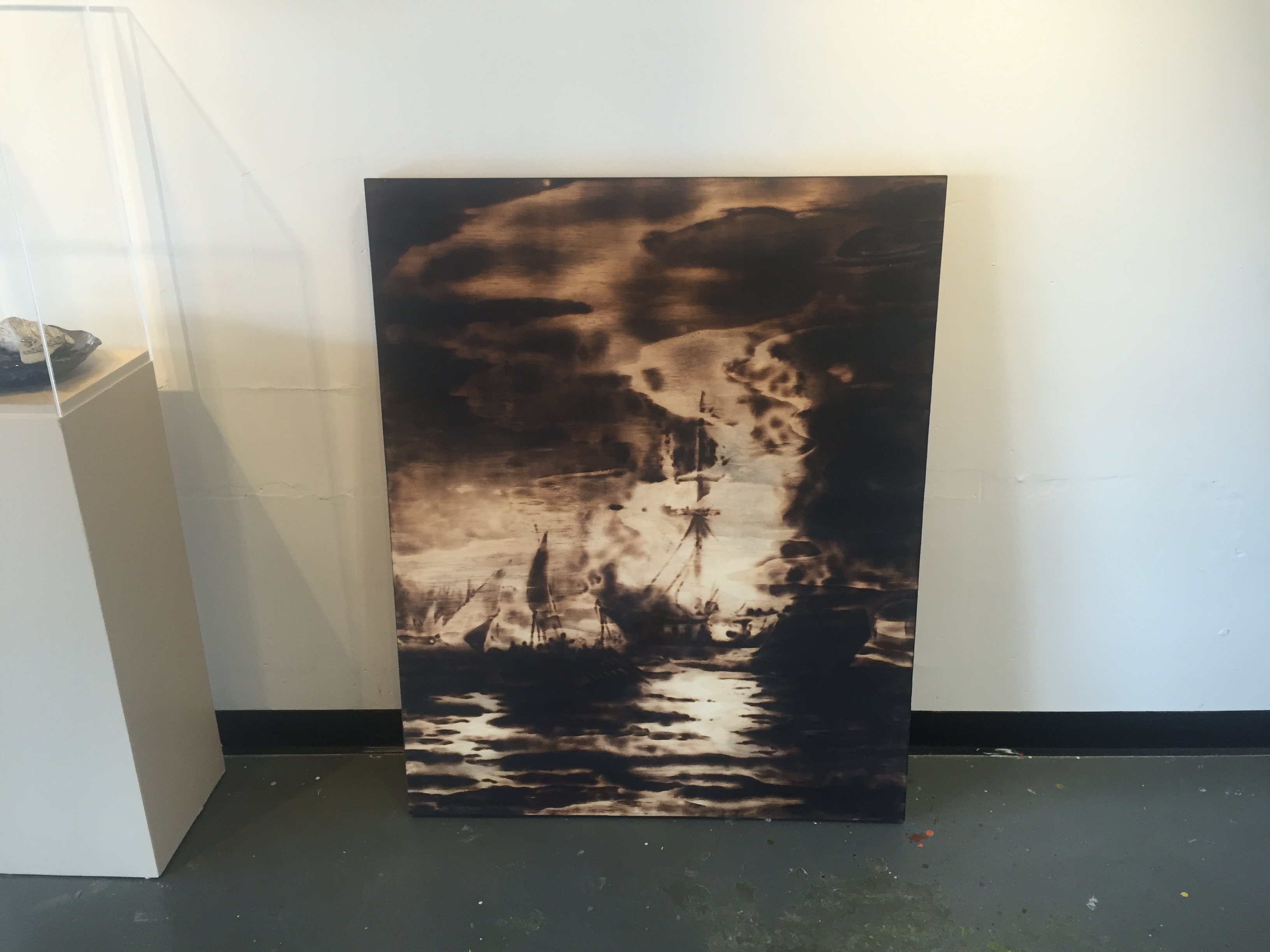
But it was a new, large, wooden piece – charred by propane torches – from local artist Hollie Berry that refined Rushing’s final work.
“Actually,” says Rushing, a fellow artist with Rushing at Chattanooga WorkSpace, “it was seeing Hollie’s piece and how good it was that caused me to say, ‘I need to up my game.’ Her piece is amazing.”
Rushing rethought his song and changed it from a moody Delta blues piece to an uptempo danceable number named after “Huntsman’s Door.”
Rushing, Berry and 12 other artists who rent studio space in the Workspace building on West Sixth Street all volunteered to be part of Inspired: WorkSpace Artists Inspired by the Hunter Museum of American Arts Collection. The informal challenge was a collaboration between the Hunter Museum and WorkSpace.
Originally 14 artists signed up for the project, but one chose not to present his finished work.
It was conceived by Hunter Curator of Education Adera Causey and Chris Thomas, executive director of Public Markets Inc., which manages WorkSpace. It was originally designed as a fun way to draw attention to both the Hunter’s collection and the WorkSpace artists.
“Like all of our Hunter collaborations, the idea is really to help different guests see the work in different ways and to see their own world differently, and there is no one better at that than artists,” Causey says.
The 13 finished pieces were first revealed on April 1 in the WorkSpace gallery as part of an open house event that WorkSpace hosts on the first Friday of each month.
For the artists – all of whom are professionals who know their way around their own studios and, in most cases, the medium in which they primarily work – the Inspired challenge helped reawaken their artistic muse, giving them a chance to study the work of another artist and shake up their own way of doing things.
They were asked to visit the Hunter and choose a piece from its permanent collection as inspiration for a new piece of artwork. They visited the museum in December and early January, then spent the last three months creating their new piece. Most chose a piece and/or a medium that was different from what they normally use, a conscious way to push themselves and get out of their comfort zones.
Inside Susan Bruce’s Hummingbird House Studio, she is listening to Frank Sinatra while discussing the floral design she planned to create based a 1914 oil-on-canvas piece by Oscar Bluemner called “Form and Light, Motif in West New Jersey (Beattiestown).”
“I’ve never done anything like this, but I would love to do it all the time, now,” she says. “The [Bluemner] painting is a little strong with a lot of form and structure and hard lines and the colors are not my palette, so it’s forcing me to stretch myself. I’m very interested in art in bloom and floral design.”
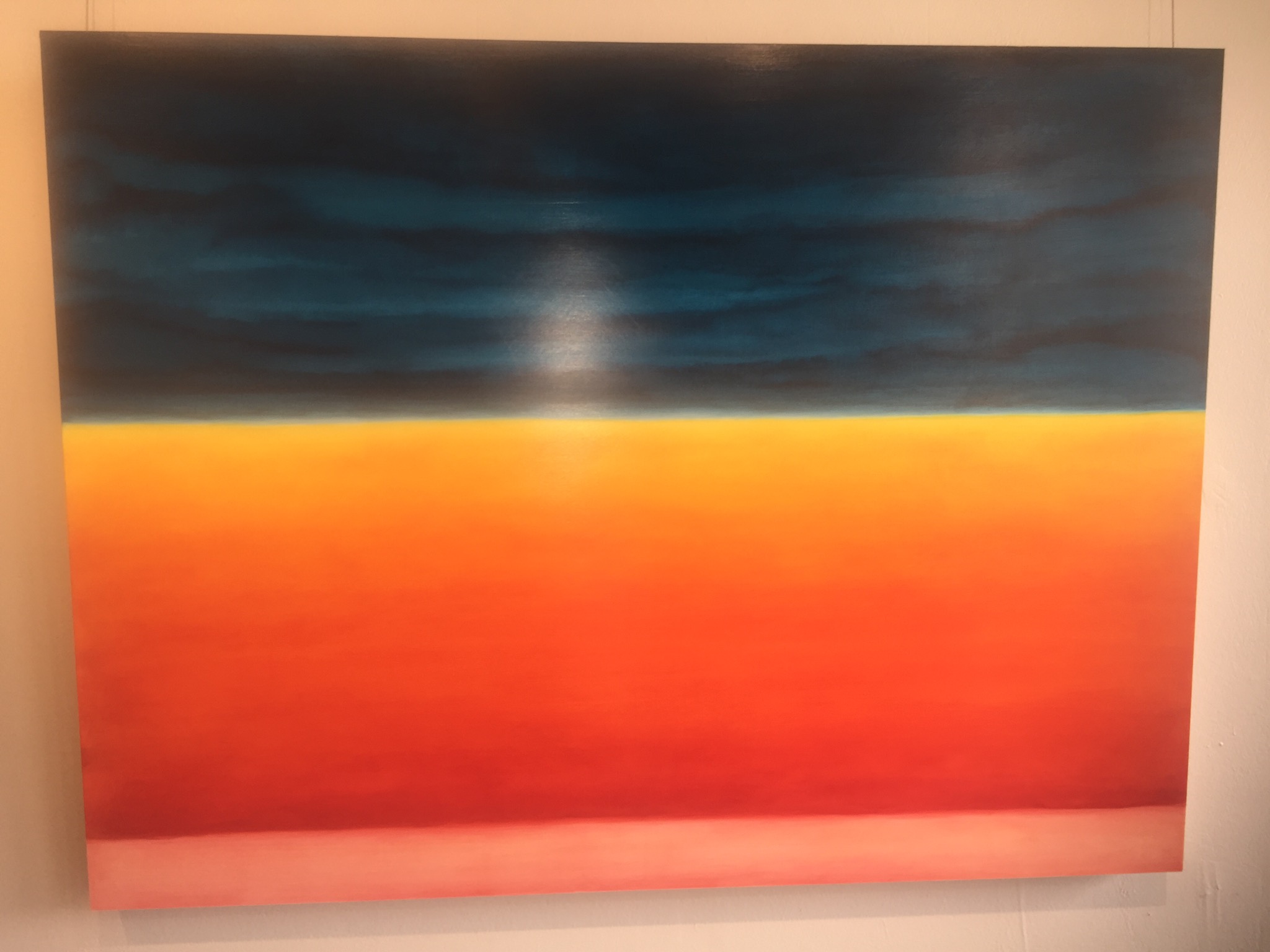
Molly Hussey normally paints landscapes, but for Inspired she chose a glass piece called “Torrid Lascivious Gasp,” created by Stephen Rolfe Powell in 1951. The multicolored piece was inspiration for her oil-on-panel piece. She says she chose the glass piece both because she’s fascinated by the medium, but also because the way she layers and stretches her oil paints is similar to what a glass artist does by layering colored glass.
“It speaks to me and I want to honor it and react to it in a way that honors it, but it’s a set-up for me because right now I’m thinking I’m going to get all the colors in I’m not,” she says
Not only did she not get all the colors in, she abandoned the idea of trying to include even a hint of the shape of Powell’s piece or the shapes within it; she came to that decision after starting and stopping four paintings, including a couple on canvas and two wood-panel versions. Eventually, she settled on the idea that her piece should be simple.
“I struggled with balancing, letting it in my head and letting it influence me and deciding how much of that was going to show up in my painting,” she says.
Standing in front of her finished piece, with its comparatively simple horizontal layers of colors, she says, “I’ve been with it so long I kept thinking of more and more ideas but, at the end of the day, I love the stillness about the piece. The stillness and the color. That’s what speaks to me.”
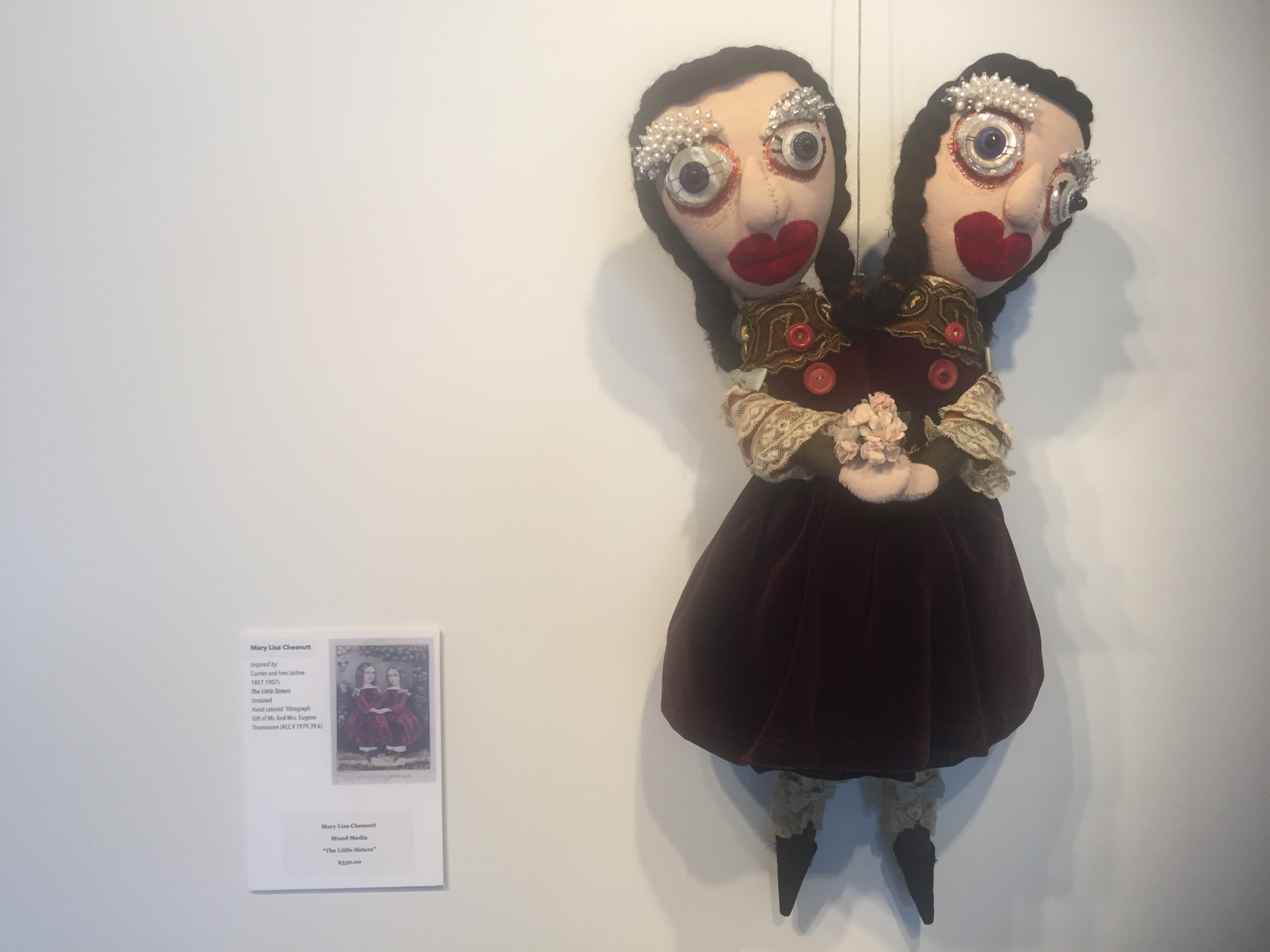
Mary Lisa Chesnutt creates figures out of found, donated, purchased and repurposed objects. Almost all have a bizarre or grotesque element to them. For her Inspired piece, she chose a hand-colored lithograph by Currier and Ives called “The Little Sisters.”
She says she chose the piece because “the way they are standing, they almost look conjoined. They’re sweet, but they also have, if you look, there is that side of them that is not so sweet.”
Her finished piece is a two-headed figure she hand-sewed. About halfway through the piece in March, the work was proving more technically challenging than she’d expected. The metal thread she was using was reacting with the paint she used to color the cloth material and was shredding it.
“Because the figure has two heads, I’m having to start and stop quite a bit or start over it seems,” she said at the time. “Everything I’m running into is not a visual thing; it’s a technical thing, and I’m sitting here thinking ‘Why did I pick this?’ But I’m too far along, so whatever.”
For Berry, the challenge was not only fun, it also was an excuse to buy more tools. Calling herself an equestrian artist, she has worked in several mediums, including painting the “Four Horse Women” mural done as part of the McCallie Walls Mural Project on McCallie Avenue between Holtzclaw Avenue and Holly Street.
Her latest endeavors use propane torches to char large pieces of plywood. By regulating the intensity and length of the burn and by celebrating the natural grain or patterns within the wood, she creates images on the panels.
For her pieces, including one of horse on a 4-by-6-foot panel, she’d been primarily employing a two-piece propane torch, the kind used for soldering pipes and other relatively small jobs. For the Hunter project, she added a much larger, 20-pound propane tank and torch attachment, the type used for burning off weeds alongside roads or melting ice on sidewalks. She also found a pencil-sized torch for doing fine-detail work.
The larger torch allowed her to quickly char a 36-by-48-inch piece of plywood while the other two torches were used for finer work. The finished monochrome piece has an old-world sepia tone to it.
“I love this,” she says while working on the piece out on the WorkSpace patio on a blustery March day.
Her piece was inspired by an oil painting called “The Burning of the Frigate Philadelphia,” which depicts the 1804 flaming destruction of the U.S.S. Philadelphia in the harbor of Tripoli in Libya; the painting was created in 1897 by Edward Moran.
“I’ve been working with fire scenes just because it works with the charring, so I knew that is what I wanted to choose as my inspiration,” Berry says.
Like a kid with a new toy at Christmas, her face lights up when she first ignites the large torch and goes to work charring the edges of the panel. “This would have taken a couple hours with the other torch,” she says.
She uses a three-inch putty knife as a straight edge to get the lines of the burning ships in the piece and a rounded piece of tin she customized and holds with locking pliers to make the rounder shapes of the fiery sails.
She holds the tools against the wood and chars around them to burn in the shapes. On this day, she’s using the pencil-sized torch and the larger one for the first time. Already she’s discovering new techniques and nuances.
For her – and really all the participating artists – the Inspired project has been an exciting opportunity to do something she loves.
“A project to pick out any piece in the current collection in the Hunter and use that as inspiration for an original piece that you made is just fun,” she says with giggle. “As an artist, there is no downside.”
Contact Barry Courter at bcourter@timesfreepress.com or 423-757-6354.